The Cost of Doing Nothing: Why Moving Today Adds Years to Your Life—and Life to Your Years
You can imagine what my daily conversations are like with friends and family — and for all the non-physios and trainers in my life, hearing my constant efforts to get them moving. I’m aware I live in a bit of an echo chamber; exercise is my entire life. Despite my best intentions though, sometimes “you can lead a horse to water, but you can’t make him drink,” as the old saying goes.
Most people don’t lose their health overnight. They lose it one skipped workout, one busy month and one postponed “I’ll start Monday” at a time. The cost of doing nothing compounds: less energy, more aches, lower confidence and a growing gap between the life you want and the one your health allows.
The physio in me doesn’t like focusing on “doomsday” messages. Negative reinforcement often highlights excuses and leaves people feeling worse in the process. But I’ve found this message hits home for some of my clients, providing a much-needed “system reset” and renewed motivation. So, if you’ve hit a wall with your commitment to your health and fitness, I hope this article helps you too. This is the cost of doing nothing.
Declining health
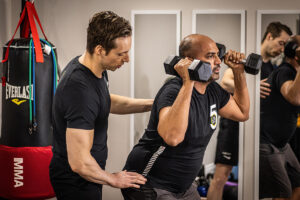
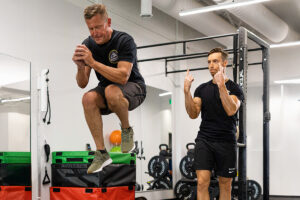
While some health conditions, such as congenital disorders, affect us regardless of how much we exercise, many diseases and disorders can be delayed — or even prevented — through a consistent, effortful fitness routine. Osteoarthritis, sarcopenia and age-related declines in heart and lung function are just a few examples. I’m grateful to work with international executives well into their 60s whose heart and lung function rivals that of men in their 30s — a testament to their continued investment in regular training with me by their side. That could be you too, if you’re willing to put in the time and energy to take care of yourself.
If the cost of doing nothing is declining health, then the reward of regular exercise — whether with me as your trainer or otherwise — is the ability to push back against Father Time, adding both years to your life and life to your years. For some clients, the “time bomb” of declining health following a difficult appointment with their doctor serves as a powerful external motivator to keep moving. Tick tock!
Energy levels
By definition, exercise requires you to expend energy, which might leave you with the impression that being active would give you less energy over time. Paradoxically, the opposite is true.
After a great personal training session, run, yoga class or whatever form of exercise you enjoy, you’ll likely go to bed tired — especially if you’re new to it. That’s an ideal outcome, particularly for those who struggle to fall asleep, stay asleep or get out of bed in the morning.
In terms of seeing this in action, you’re your own best barometer. Once you’re in a consistent training routine, you’ll often go to bed more tired but wake up feeling more rested. You’re less likely to reach for that extra coffee, more likely to want to exercise again and more likely to feel your best throughout the day.
This creates a positive upward cycle: the more consistently you exercise, the better you sleep; the better you sleep, the more rested and energized you feel. Embrace that cycle and watch your energy levels soar as your passion for exercise grows or returns.
Confidence
If you stopped doing your everyday work and life tasks, you wouldn’t lose the physical abilities immediately. Given enough time, however, your skills would decline. The same is true with exercise and fitness. Without regular practice and effort, not only does your physical and athletic capacity decrease, but your confidence in your ability to perform those activities declines as well.
In the case of exercise, this is even more significant than it sounds. By choosing to do nothing, you not only miss out on the immediate benefits of movement (see the energy section above), but you also lose confidence in your ability to exercise in the future. Over time, that loss of confidence becomes another barrier to re-engaging with your health and fitness, making it even harder to get back on track.
Sense of identity and belonging
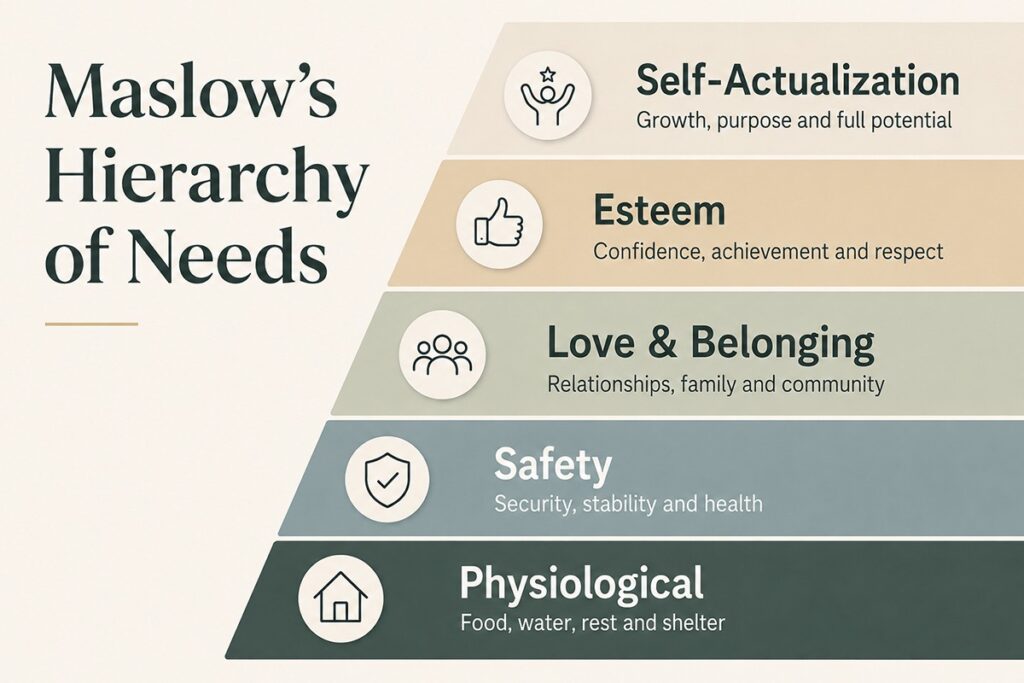
In 1943, American psychologist Abraham Maslow published his theory on the innate drivers of human behaviour: Maslow’s Hierarchy of Needs. In short, it’s a pyramid explaining why humans act in a hierarchical pattern. Above our physiological and safety needs sit our needs for social belonging and identity. These are especially important — and often more complex — for athletes, whose sense of self is frequently tied to their sport.
This connection between identity and activity applies to every athlete I’ve ever met, just to varying degrees. If you’re a runner, swimmer or lifelong participant in any sport, you’ve likely felt it yourself. It’s a natural human phenomenon, no different than a lawyer or doctor answering the question, “What do you do?” with the name of their profession. It feels good to work hard, develop skill and identify with the person you’ve become through that effort. If you spent years becoming a lawyer and lost your career overnight, you’d face an identity crisis. The athlete or weekend warrior who believes, “I am a runner,” and then suffers a significant injury preventing them from running finds themselves in a similar situation.
An injury can leave athletes afraid to participate in the sport they once loved. Their hesitation is often tied to unconscious social fears: someone might recognize them, notice they’ve lost a step or compare their current performance to the athlete they used to be. These fears may seem irrational, but they are no less real. It can be heartbreaking to watch someone who once embodied physical capability become afraid of the very activity that brought them joy, purpose and success. This feeling scales too. The higher the level of achievement, the greater this loss of identity can feel. Elite athletes and high-profile professionals often have even more of their identity tied to their accomplishments, reputation and public perception. When injury, age or circumstance takes those things away, the resulting drop in confidence and sense of self can be profound.
A big part of overcoming this identity loss seems to be maturation. I’m not the athlete I was 10 years ago, and most of us aren’t once we reach our mid-30s. The challenge is learning to grow up instead of simply grow old: accepting that while we may not be the athletes we once were, we can still find joy in the activities we love by continuing to participate as we age — regardless of what anyone else might think.
So, to the weekend warrior who no longer runs marathons despite doing so in their 20s or 30s, understand that the cost of doing nothing may not only be declining health and lower energy. It may also be the gradual loss of confidence in your physical ability and the active identity that once meant so much to you.
Conclusion
The blessing in all of this is that once an athlete — whether a weekend warrior or a professional — gets past that mental hurdle and matures their perspective, they often fall in love with their sport all over again. In many ways, that second chapter is even more beautiful than the first, because participation as an adult is a choice. It’s no longer your parents’ decision or the result of external pressure — it’s something you choose for yourself.
My goal with this article was to highlight that while the advice to “move now” can feel unappealing — because it’s hard, and many of the benefits come later — the rewards are worth it. Like most good things in life, the benefits compound over time. Better yet, the discomfort you feel at the beginning often transforms into something you genuinely look forward to, whether through the endorphin-driven “feel good” effect of exercise or the “flow state” that comes from consistent effort and training.
My mission at Summit Performance is to help the world’s busiest and highest-performing individuals stay strong, healthy and energized — no matter where the world takes them. If you’re ready to make your health and fitness goals a reality in 2026 with a personal trainer who comes to you, on your schedule, wherever you are in the world, you can reach me through my website, on LinkedIn or in person in Japan this fall.