
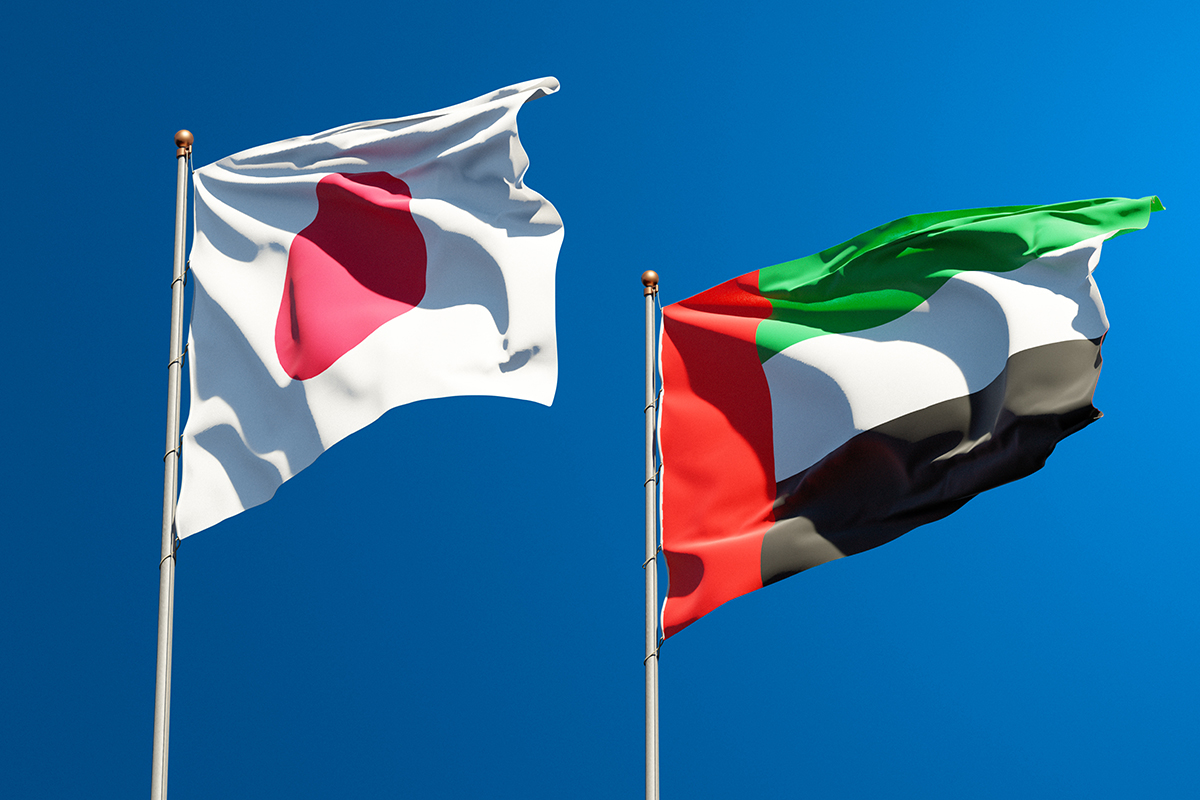
Japan and the UAE Since CEPA: Timeline of Economic Progress
Why are Japanese investors paying closer attention to the United Arab Emirates this year? It begins with Japan and the UAE’s growing economic ties, which were first forged on March 5 in Tokyo when Japan and the UAE concluded their negotiations on a Comprehensive Economic Partnership Agreement (CEPA).
Seven months later, governments, ministries and companies on both sides have moved from talks to projects that are bringing growth and innovation from Asia to the Middle East.
Companies in the UAE have benefitted from CEPA. Want to join them?
Tall Bricks is holding a seminar for property investors in Japan to showcase the UAE as an investment destination. Learn more from a personal 1-to-1 consultation at their event on November 7–8.
Before CEPA: Relationship of three needs
Before this agreement, trade between the two countries was heavy but narrow in scope. Based on 2022 and 2023 averages, petroleum made up 96.4 percent of Japan’s imports from the UAE, worth about 5.6 trillion yen. Transport equipment, including cars and auto parts, made up 59.1 percent of what Japan sold to the UAE in return, and machinery added another 24 percent. These three were the core of the relationship between Japan and the UAE, but both governments sought to strengthen the trade links that the two countries shared.
Then-Prime Minister Fumio Kishida and UAE President Sheikh Mohamed bin Zayed Al Nahyan announced the start of negotiations in September 2024, and made it clear the goal was not to argue the minutiae of petrol or transport tariffs. Instead, the talks covered digital trade, services, customs procedures, intellectual property and government procurement. This was in line with the agreements the UAE has negotiated before: since launching its CEPA program in September 2021, the country has made similar agreements with more than 35 other economies.
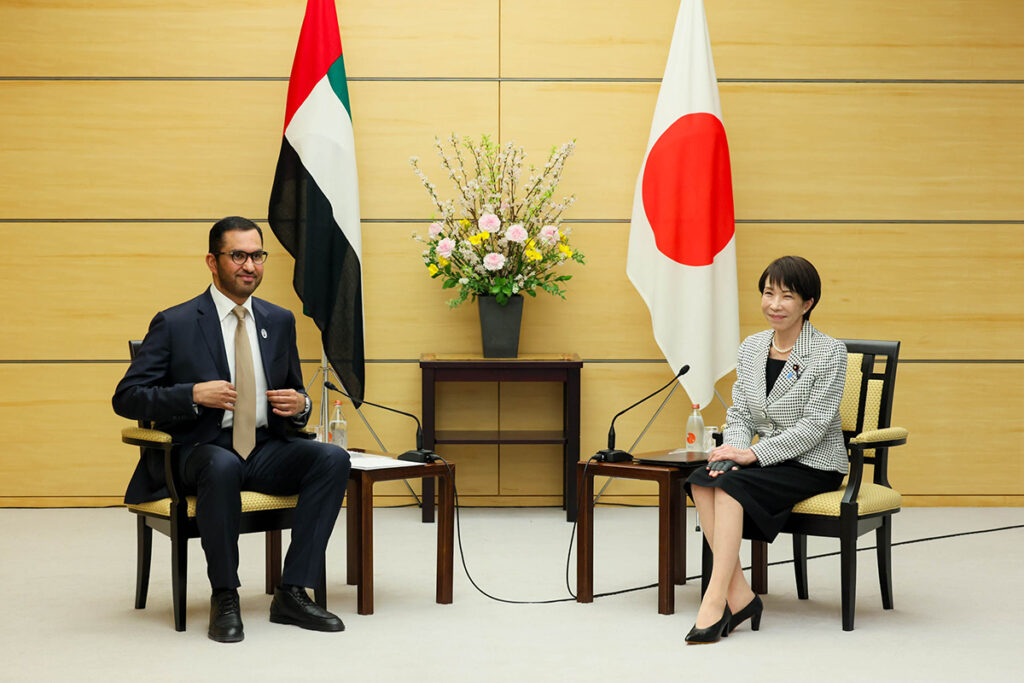
March 5, 2026: Agreements on tariffs
Talks were concluded during a visit to Japan by UAE Minister of Industry and Advanced Technology Sultan Al Jaber and Minister of Foreign Trade Thani Al Zeyoudi. On March 5, they announced a deal after meeting Foreign Minister Toshimitsu Motegi. The result is Japan’s first economic partnership agreement with an Arab nation, which Al Zeyoudi called “a significant step forward in enhancing UAE-Japan relations.”
There were plenty of mutual victories from the agreement, as Japan secured lower or zero tariffs on automobiles, auto parts and steel. Within 10 years of entry into force, the share of UAE imports entering tariff-free should rise from about 11.5 percent to 96.4 percent, according to Japan’s Ministry of Foreign Affairs. In addition the UAE also agreed to remove tariffs on beef, seafood, miso, soy sauce and packaged rice.
Meanwhile, the countries both continue to benefit from trade diversification. Non-oil trade between the two countries reached $20.3bn in 2025, up 16.7 percent from 2024, and the UAE now accounts for 39 percent of Japan’s trade with Arab and African nations. Both governments also focused on advanced technology, logistics, cybersecurity, healthcare and education as priority sectors for private-sector cooperation.
April 7: Both leaders respond directly
A month later, Prime Minister Sanae Takaichi held a phone call of about 30 minutes with UAE President Sheikh Mohamed bin Zayed Al Nahyan. The call focused largely on Iran’s attacks on the UAE and the safety of the Strait of Hormuz, while Takaichi asked for continued cooperation on stable crude oil supply. However, the two leaders also agreed to work toward early de-escalation, welcomed the conclusion of the CEPA negotiations and agreed to expand cooperation in a wide range of areas.
July 28: Japanese companies start to pay attention
Over time, this attention began to trickle through to the economy. Khaleej Times reported that the UAE drew a record 177.3bn dirhams ($48.3bn) in foreign direct investment in 2025, the fourth straight record year. Dubai’s D33 agenda sets their eventual goal to raise yearly foreign direct investment from an average of 32 billion dirhams to 60 billion dirhams by 2033.
Japanese companies, emboldened by CEPA and opportunities it presents, have begun to eye the UAE for investment potential. A good example is Kasumigaseki Capital, a Japanese-listed developer active in the UAE since 2022. It has set up regional headquarters in Dubai and develops projects through Kasumigaseki Properties Development.
Their local chairman, Mohammad Khalifa Majid Alabbar Alfalasi, said Japanese companies look for “structural demand, regulatory certainty” and institutions to partner with for decades, which CEPA seems in good stead to create over the coming years.

Dubai property: The real estate market responds
Dubai’s 2025 property figures, which predate the CEPA’s conclusion, show the market that Japanese investors are looking at. Reports show total real estate transactions reached 917bn dirhams in 2025, a 20 percent increase in value and volume. At current exchange rates, that is about $249.7bn, according to Dubai Land Department data, with the number of new investors rising to about 129,600. And perhaps most significantly for the Japanese looking abroad, non-resident investors now make 14 percent of the property market.
October 10: What next?
The most recent update came on October 10, when the UAE Ministry of Industry and Advanced Technology said its delegation, led by Undersecretary Hasan Jasem Al Nowais, had concluded a working visit to Japan. He took part in the UAE-Japan Technology and Artificial Intelligence Roundtable in Tokyo and a Science and Technology in Society Forum ministerial roundtable in Kyoto. And to cap off their commitment to stronger innovative ties between the countries, the visit ended with an invitation to Japanese companies, investors and industrial leaders to attend Make it in the Emirates in Abu Dhabi on May 3-6, 2027.
The final things needed are the rubber-stamping and formalities. The tariff cuts begin only after the agreement enters into force, so both governments still need to complete the paperwork before these new economic boosts hit both countries.
Interested in the UAE as an investment destination? Tall Bricks, a UAE-based property investment firm, will be offering private consultations at the Westin Tokyo on November 7–8. Sign up here.