
SusHi Tech Tokyo 2026: PM Takaichi, Urban Tech and the Future of Japan’s Startups
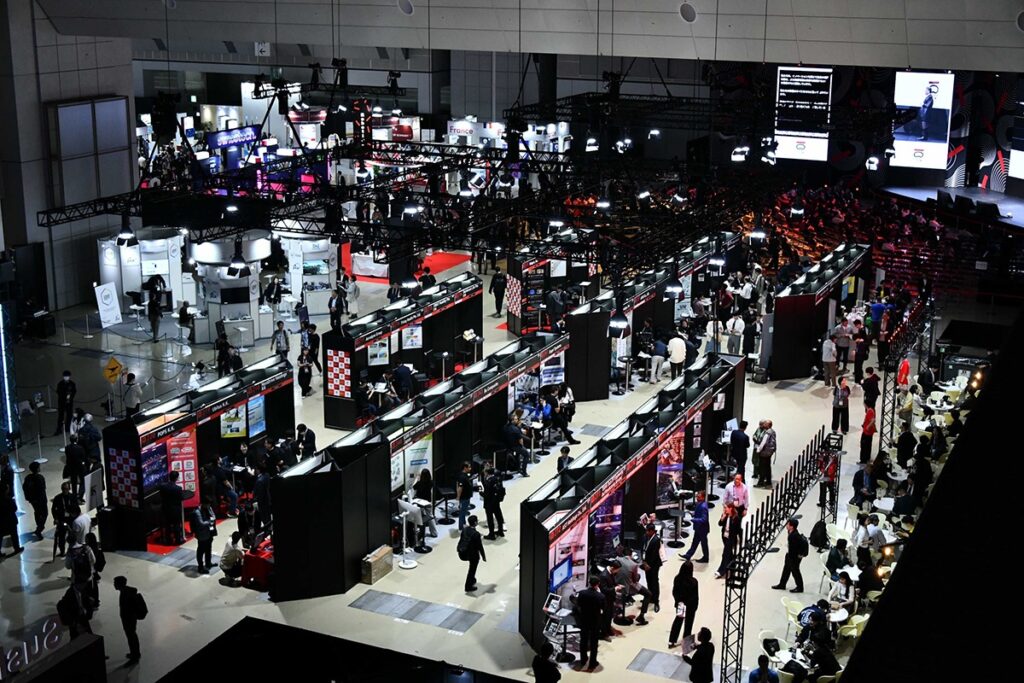
There’s a walking dinosaur on the second floor. That’s the first thing a lot of people remember when you ask them about SusHi Tech Tokyo 2026, and it’s a fair place to start because it captures something about what the event is now. It’s not just a startup expo anymore. It’s part trade show, part city-wide statement, part spectacle.
The dinosaur was animatronic, obviously, but it shared floor space with functional humanoid robots and a full-scale lunar lander, none of which seemed out of place by the second day. When 60,000 people pass through a venue over three days and nobody blinks at a moon module in West Hall, you know the organizers have gauged their audience well.
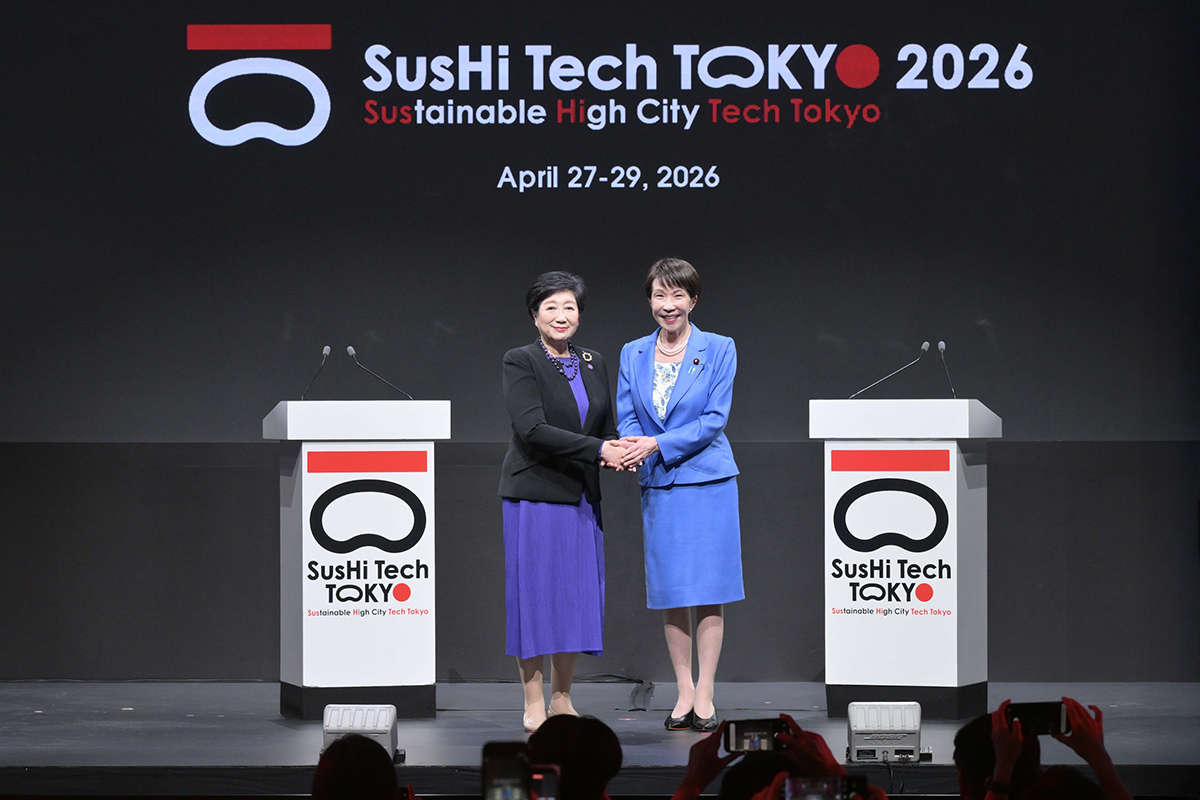
This was the fourth edition of the conference: Sustainable High City Tech Tokyo, to use the full name, though it is commonly known as SusHi Tech. It ran from April 27 to 29 at Tokyo Big Sight in Koto Ward, with 770 startups exhibiting, 151 sessions on the program, and officials from 55 cities across five continents in attendance. The numbers keep climbing every year, but the more interesting shift in 2026 wasn’t scale, it was tone. The conversation has changed. Startup support in Japan used to feel like something the government applauded from a safe distance. This year it felt like policy.
PM Sanae Takaichi & Governor Koike: Japan’s new startup policy
It wasn’t until the weekend before the conference that organizers announced Prime Minister Sanae Takaichi would be joining Tokyo Governor Yuriko Koike for a joint keynote on the opening afternoon. Schedules had to be reshuffled at short notice. The question on everyone’s mind heading in was: what would the Prime Minister actually say? Concrete commitments, or the usual encouragement?
She was fairly concrete. Takaichi laid out a three-pillar push:
- Deeper government procurement from deep-tech startups.
- A scaled-up version of Japan’s SBIR program.
- Expanded grants for basic research at universities and national institutes.
She noted that startups now represent 4% of Japan’s nominal GDP, up 32 percent over two years, and framed the whole thing under the government’s existing five-year startup nurturing plan. The commitments around procurement are worth watching. Lowering the barrier for government agencies to actually buy from startups, rather than just fund them, would be a meaningful shift if it holds.
Governor Koike, who opened with her now-four-year-running explanation of the “SusHi” acronym, Sustainable plus High-Tech, used the occasion to announce key milestones and initiatives:
- Tokyo hit its billion-dollar startup investment target a year ahead of schedule.
- SusHi Tech Global: A new program aimed at helping domestic startups expand internationally.
- Tokyo Startup Database: A platform that pulls ecosystem metrics into a single public space.
The speech had the feel of a report card as much as a vision statement, which is probably how it should be at year four. There’s something refreshing about watching a policy initiative actually show up to account for itself.
For people who’ve watched Japan’s startup ecosystem up close for the past decade, the session carried weight beyond its contents. The Prime Minister of Japan standing on this stage and calling startups “a growth engine of the nation” is a different image than what 2016 looked like. The atmosphere in the room when she spoke up showed what it meant to the attendees.
Enterprise AI in Japan: Key insights from NEC and Fujitsu
Not all 151 sessions were worth the walk across the venue. But a few stood out.
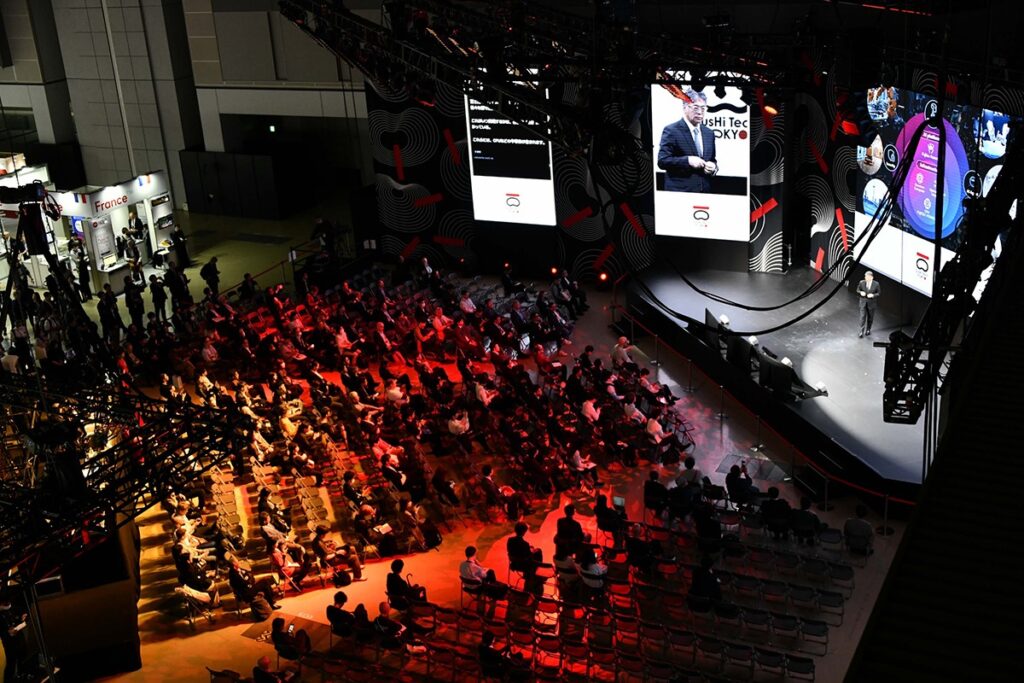
NEC President and CEO Takayuki Morita gave what turned into one of the more debated talks of the conference, under the question “Who Will Build Trustworthy AI?“ His argument wasn’t particularly flashy: that trust in AI is an engineering problem rather than a branding one, and that Japan’s track record with high-reliability infrastructure such as rail systems, public safety networks, healthcare gives domestic companies a real and underexploited advantage when institutions are deciding which AI vendors they’re willing to depend on. It’s a reasonable case, and it generated enough hallway conversation afterward to foster debate among people depending on where they stood on Japan’s global competitiveness in the sector.
Fujitsu CTO Takagi’s session on what he called the “AI-Driven Society” was more operational in feel. The core of it was that model capability is no longer the bottleneck but integration:
- Getting AI systems to talk to legacy enterprise infrastructure.
- Running domain-specific models on proprietary data.
- Building governance layers that organizations can actually use to act on outputs.
Fujitsu’s examples came mostly from healthcare and public-sector projects. It wasn’t a visionary talk so much as a practical one, which, given where most enterprises actually are on AI adoption, was probably more useful.
Urban tech and “Human-centered AI”
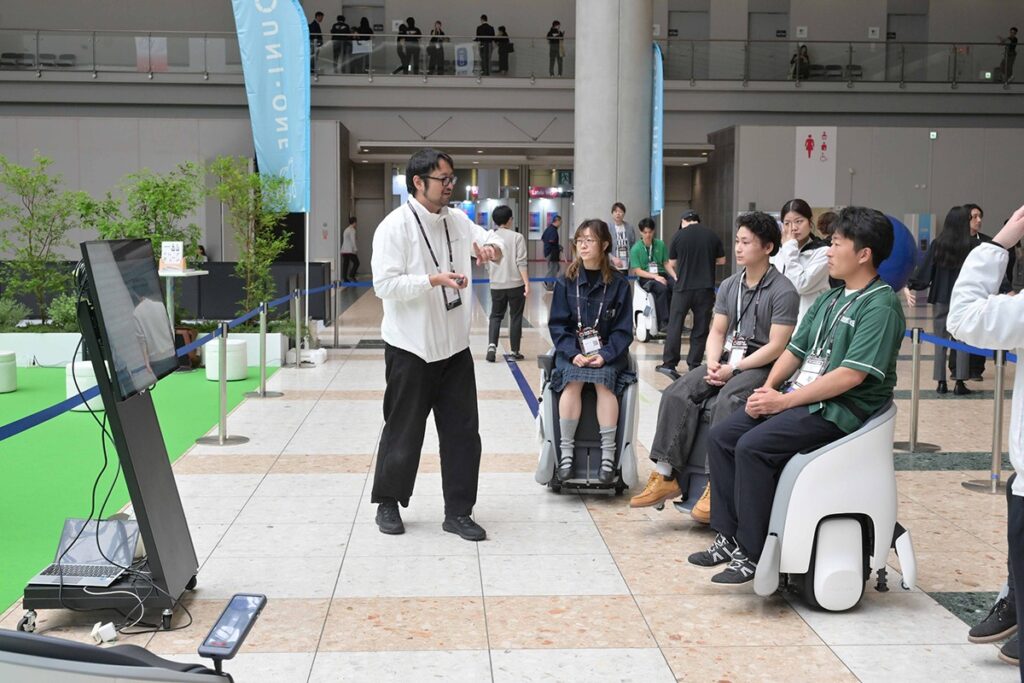
A panel featuring urban tech leaders from Seoul, Barcelona, and Tokyo did something rare in conference programming: it got specific. Rather than debating the idea of the “human-centered AI city” in the abstract, the three cities compared real implementation details:
- Seoul: AI-managed traffic systems at scale.
- Barcelona: Governance frameworks built in response to smart city backlash elsewhere.
- Tokyo: The Urban OS project, which is trying to build a unified data layer for the metropolitan government.
It was less polished than some of the keynote-stage moments, more like watching people who actually run these systems try to figure something out together.
AI in education and autonomous driving
University of Tokyo President Teruo Fujii appeared in a session on AI and education that took an unsentimental line. Rather than treating AI as a threat to academic integrity, Fujii framed it as pressure to clarify what universities are actually for: what skills matter when the tool that can pass most standardized assessments costs twenty dollars a month. The session covered personalized learning, UTokyo’s lab-to-startup pipelines, and what it means to maintain scientific literacy in a media environment where generative models are doing the summarizing. It was a different tone from the corporate sessions on the main floor, and the room responded to that.
One session that drew a more specialist crowd focused on autonomous driving, specifically the argument that the competition has shifted decisively from hardware to software. The sensors are no longer the differentiator; the training data, simulation environments, and edge-case handling are. No dramatic conclusions, but a cleaner framing of where the actual race is happening than most coverage of the sector tends to offer.
Many attendees funneled away from this session to the robotics sector, where companies such as Xela Robotics put the session’s theory into practice with their sensor tech and software packages designed for real-world applications. CEO and Founder Alexander Schmitz, demonstrating the care with which their sensors could lift delicate origami cranes, highlighted the practical applications of the sensors in everything from factory automation to assembly, noted that with this level of precision, the differentiators are razor thin.
Global expansion and Italy’s debut at SusHi Tech
The speaker lineup was genuinely international this year in a way that SusHi Tech hasn’t always managed. Nvidia’s Howard Wright, AWS’s Rob Chu, and 500 Global’s Christine Tsai were all on the program. TechCrunch came not just as media but as a partner — Isabelle Johannessen judged the SusHi Tech Challenge, with one of eighteen finalists earning a spot in the TechCrunch Disrupt Startup Battlefield Top 200. That’s a real door to walk through. Dropbox and Mint both came out of that program.
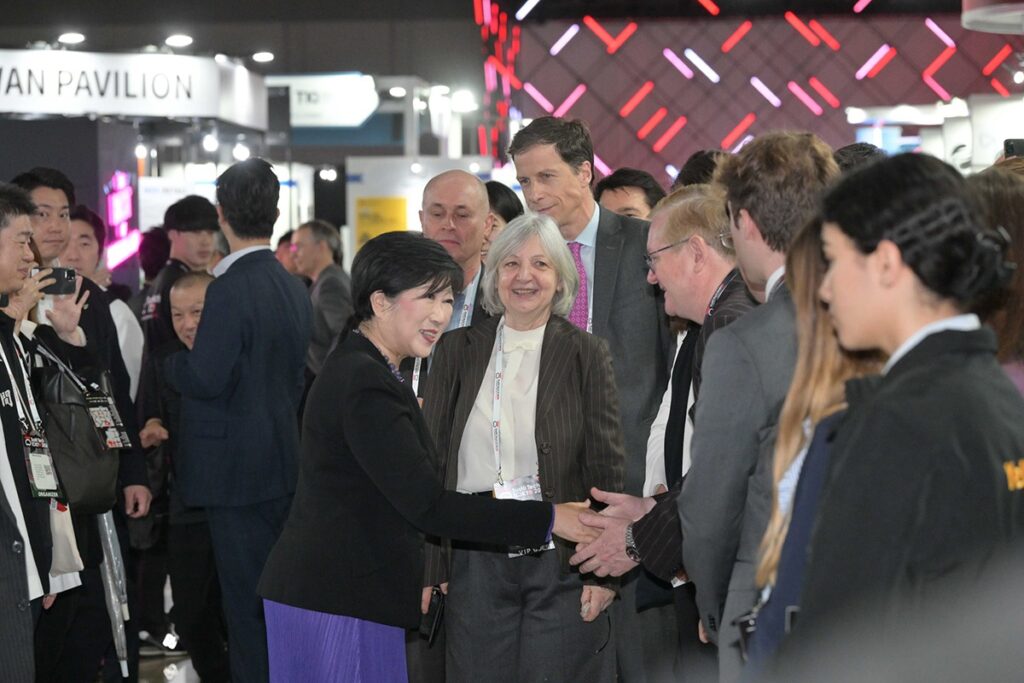
Italy made its first appearance at SusHi Tech this year, with nine startups in a dedicated pavilion organized around what the delegation called “the human edge” — deep technology built for human-scale problems rather than enterprise or government infrastructure. Turin Mayor Stefano Lo Russo was in Tokyo for both the startup exhibition and the concurrent G-NETS Leaders Summit, where senior officials from 55 cities spent time on the question of how urban governments prepare for climate disasters conceptually and operationally. Lo Russo pointed to Turin’s designation as European Capital of Innovation in 2025 as a basis for concrete exchange, rather than just diplomatic presence.
SusHi Tech Tokyo 2026 ran April 27–29 at Tokyo Big Sight, West Halls 1–4.
To stay updated on more insights about business and investment in Japan, subscribe to the GoConnect newsletter.
If you enjoyed this article, please let us know and share your thoughts at hello@goconnect.jp.