Best English-Speaking Banks in Japan
When I first started looking into Japanese banks as a foreigner, I didn’t understand a few things. For example, some banks talk about needing a hanko, which is a custom ink stamp you usually have to buy and register to use instead of a signature.
Coming from a country where everything is digital and seamless, walking into a physical branch and trying to explain myself in broken Japanese while stamping pieces of paper was incredibly intimidating. I just wanted a simple place to keep my cash, pay my rent, and maybe send some money back home without losing half of it to hidden fees.
SBI Shinsei Bank
Reading about SBI Shinsei Bank for the first time sounded pretty good, though it came with a catch. At first glance, it sounded like a good bank for foreigners because you can skip the stamp and just use a regular pen signature. Plus, they actually have English customer service and a website that doesn’t require any type of translation. You can even mail in your application forms in English to save yourself a trip to a branch.
But as I kept reading, I noticed strict regulations:
- The six-month rule: Shinsei forces foreigners to live in Japan for at least six whole months before they can open an account.
- The exception: The only way around this is to have a job with a company in Japan to waive the wait.
- The trade-off: If you have that job contract, it’s free to hold and lets you send money home for a flat 2,000 yen fee, but their smartphone app is strictly in Japanese, which definitely felt like a roadblock.

Prestia SMBC Trust Bank
If you want a premium account with multi-currency options similar to Shinsei but don’t mind trading a free tier for high-end perks, Prestia SMBC Trust Bank is the next obvious stop. Like Shinsei, they don’t require a name stamp and offer full English support over the phone and online. They also let you hold up to 17 different foreign currencies, which is great if you are moving with large balances from back home.
However, the account rules are incredibly strict for an average user:
- They charge a steep monthly maintenance fee of 2,200 yen.
- You can only get this fee waived if you keep an average monthly balance of at least 500,000 yen.
The documentation explicitly notes that their best perks are geared toward people on fancy corporate expat packages, making it clear that it isn’t the best option if you are just starting out with a normal budget.
Japan Post Bank (Yucho Ginko)
Now, if you don’t have a corporate job lined up to skip the wait time, and you don’t have the massive cash balance needed to make Prestia free, you have to pivot to a completely different starter strategy. That is where Japan Post Bank, or Yucho Ginko, comes into play.
This bank run by the post office is a total lifesaver for new arrivals because it is one of the only traditional banks that completely ignores the six-month residency rule. You can apply online in English right when you land, and while you don’t get a traditional paper bankbook, they mail you a debit card to use.
The massive downsides are:
- For your first six months, your account is heavily restricted to basic deposits and withdrawals.
- If you need to send money back home, they hit you with a truly brutal flat fee of 7,500 yen per transfer.
It works perfectly for your very first paycheck, but the fees make it a bad option for long-term global transfers.
Sony Bank
If you like the idea of managing everything online without the restrictions or high wire fees at the post office, the most practical, modern setup is Sony Bank. They don’t have any physical branches, operating entirely online through a 100% English smartphone app.
Key features include:
- No monthly account fees.
- A decent interest rate on savings and the ability to manage 12 foreign currencies directly from your phone.
- A Visa debit card that uses the bank’s preferential exchange rates when you shop or travel overseas, making it much cheaper than using a standard Japanese cash card abroad.
- Four free domestic ATM withdrawals a month.
You can’t use it for business purposes, but for a personal account that just works in English, it’s easily the best digital option I found.
Seven Bank
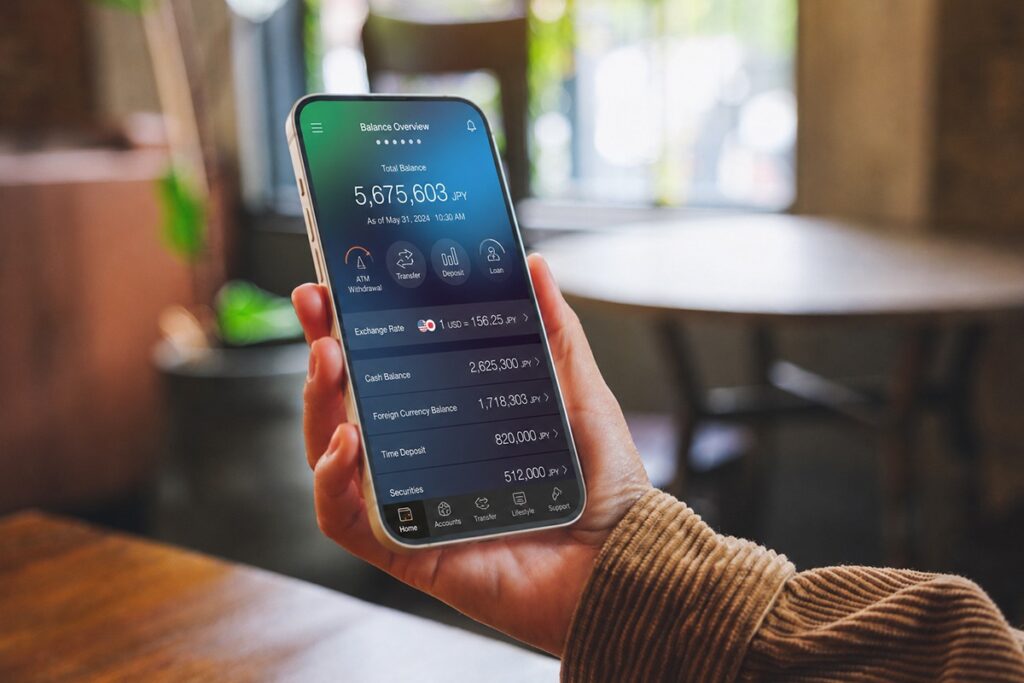
However, if you love the idea of a purely digital bank like Sony but want the absolute maximum amount of daily convenience while living in the city, Seven Bank is a nice alternative. Owned by the company behind 7-Eleven, it operates entirely online but with an incredible physical footprint — there is a Seven Bank ATM inside basically every convenience store in the country.
You can apply completely in English via their app, and they offer a dedicated international transfer service built right into the platform. It is an amazing tool if you find yourself needing to send cash overseas frequently at low, tiered rates.
The big trade-off is that they rely entirely on convenience store infrastructure. If you pull cash out during off-peak hours, you face a 110 yen fee per withdrawal, meaning it works best as a secondary account for quick transfers rather than a primary financial hub.
Rakuten Bank
If you are a heavy online shopper and want a digital banking setup that rewards you for everyday spending rather than just saving currency, you will inevitably run into Rakuten Bank. Rakuten is Japan’s largest online bank, and opening an account is incredibly fast since you just upload your IDs through your phone.
- The rewards: The real pull here is the ecosystem. If you use their credit card, phone plan, or shop on their marketplace, you earn points that act like real cash.
- The fees: They also have one of the cheapest individual international transfer rates around at just 750 yen plus fixed intermediary fees.
- The catch: The major roadblock for a foreigner is that the user interface is completely in Japanese.
If you are comfortable using browser translation tools to navigate your online portal, the savings and rewards are massive. But if you need something in English to help you when you get locked out, you will find it completely inaccessible.
Tokyo Star Bank
Finally, while online banks like Sony, Seven, and Rakuten are great for everyday life, your long-term plans in Japan might eventually shift toward staying permanently and buying property. This brings you to a very specific niche option called Tokyo Star Bank.
Like the major banks, they enforce the standard rule that you must be a resident for at least six months to open a normal account. They do offer a helpful English and Chinese online portal for checking your balances, but their physical branch counters operate strictly in Japanese.
The main reason this niche bank belongs on your radar as a foreigner is their specialized Star Mortgage program. It is one of the rare financial institutions in Japan that will actually consider giving home and property loans to foreign residents who do not yet possess a permanent residency visa. It’s definitely a weaker starter bank for a newcomer, but if your long-term goal is putting down roots and buying a house, it becomes one of the most important names to know.
At a glance: Top banks for foreigners compared
| Bank | Best For | Standout Features | Main Drawbacks |
|---|---|---|---|
| Japan Post Bank | New arrivals | Ignores the six-month residency rule | 7,500 yen international transfer fee; early restrictions |
| Sony Bank | Digital experience | 100% English app; zero monthly fees; 12 currencies | Cannot be used for business purposes |
| Prestia SMBC | High earners | 17 currencies; full English support | 2,200 yen monthly fee (unless balance is 500,000 yen) |
| Seven Bank | ATM access | Accessible in nearly every 7-Eleven | 110 yen fee for off-peak ATM withdrawals |
| Rakuten Bank | Rewards | Strong points ecosystem; low transfer fees | User interface is entirely in Japanese |
| Tokyo Star Bank | Future homeowners | Mortgages for non-permanent residents | Physical branches operate strictly in Japanese |
| SBI Shinsei Bank | English support | English customer service and web portal | Requires six-month residency or job contract |
| Bank | Best For |
|---|---|
| Japan Post Bank | New arrivals |
| Sony Bank | Digital experience |
| Prestia SMBC | High earners |
| Seven Bank | ATM access |
| Rakuten Bank | Rewards |
| Tokyo Star Bank | Future homeowners |
| SBI Shinsei Bank | English support |
| Bank | Standout Features |
|---|---|
| Japan Post Bank | Ignores the six-month residency rule |
| Sony Bank | 100% English app; zero monthly fees; 12 currencies |
| Prestia SMBC | 17 currencies; full English support |
| Seven Bank | Accessible in nearly every 7-Eleven |
| Rakuten Bank | Strong points ecosystem; low transfer fees |
| Tokyo Star Bank | Mortgages for non-permanent residents |
| SBI Shinsei Bank | English customer service and web portal |
| Bank | Main Drawbacks |
|---|---|
| Japan Post Bank | 7,500 yen international transfer fee; early restrictions |
| Sony Bank | Cannot be used for business purposes |
| Prestia SMBC | 2,200 yen monthly fee (unless balance is 500,000 yen) |
| Seven Bank | 110 yen fee for off-peak ATM withdrawals |
| Rakuten Bank | User interface is entirely in Japanese |
| Tokyo Star Bank | Physical branches operate strictly in Japanese |
| SBI Shinsei Bank | Requires six-month residency or job contract |