
Black in the USA: Performance Lecture on Overcoming Adversity
Mission of Inspiration
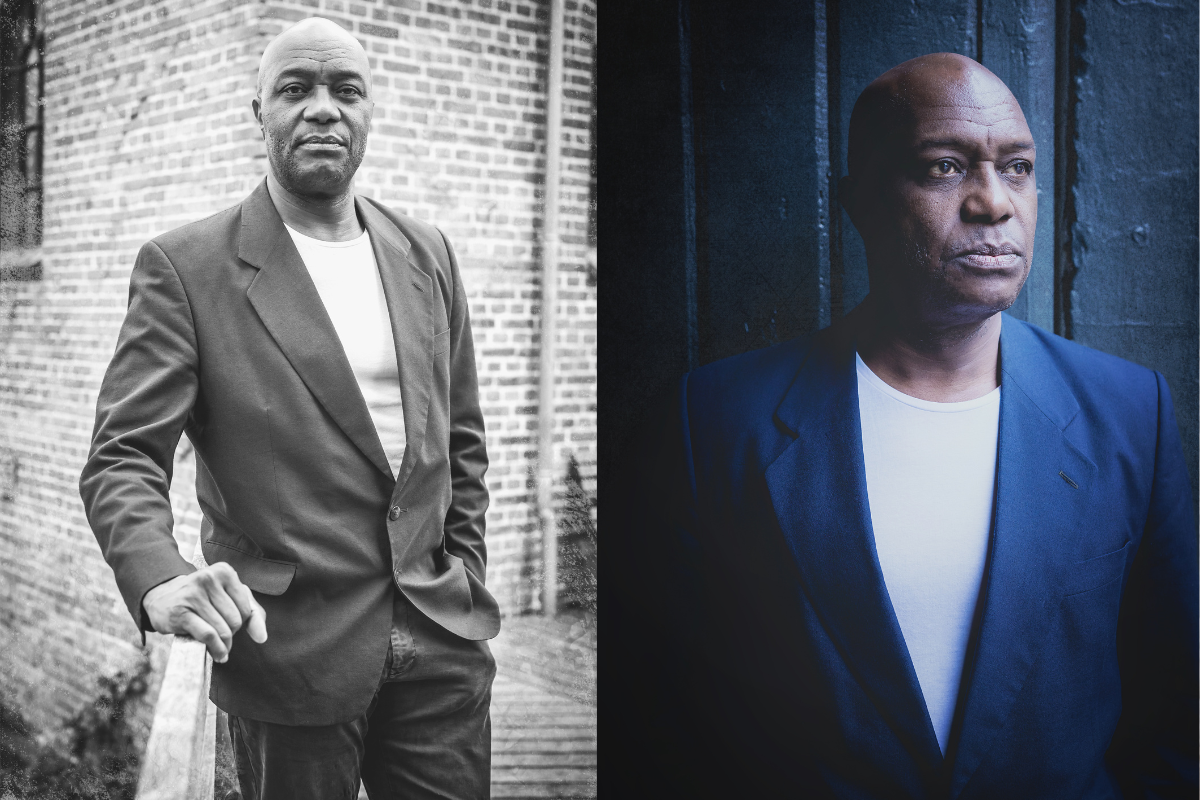
My name is Gregory Boyd. For 10 years, I have had the privilege of changing lives through my “Black in the USA” performance lecture, a program designed to move young people, their parents and teachers. I began this work with one mission: to help young people overcome obstacles by using my own life as a backdrop.
Sharing my life has been a journey of difficulty and massive overcoming, but it is indeed my calling. My goal is to find common ground and tie my experiences to the universal human experience—opening a way for success in any endeavor. By giving young people inspiration for a life of success, I encourage them to truly chase their dreams.
Historical Roots and Inherited Resilience
The foundation of this performance lecture lies in the history of my family. My parents both come from the south of the United States and suffered experiences with racism, the Jim Crow system and the sharecropper system still in use in much of southern rural society. These events had a profound effect on me due to inherited trauma.
My mother once witnessed a lynching in her hometown of Little Rock, Arkansas. She attended a segregated, all-black high school—a one-room shack heated by an old-fashioned “potbelly stove”—while located only blocks from an all-white high school equipped with a new science wing, tennis courts and a swimming pool. Despite this inequality, my mother always said “you have to work with what you have.” This ethos has stayed with me to this day.
My father faced similar trials. He once was arrested in the south for no other reason than owning an unopened bottle of alcohol, which the officer drank before arresting my father, who was but a teenager, and sending him to the infamous Pulaski work farm. While in custody, he was beaten viciously daily. The only reason he could secure a release was because he had bartered his watch, a gift from my grandfather.
Turning Adversity into Strength
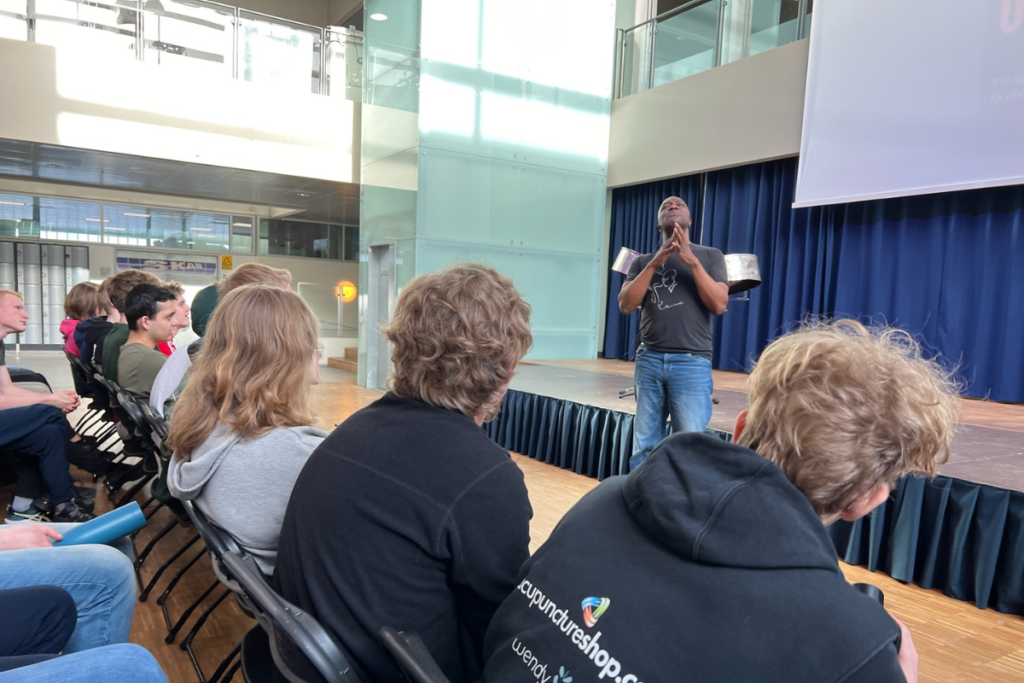
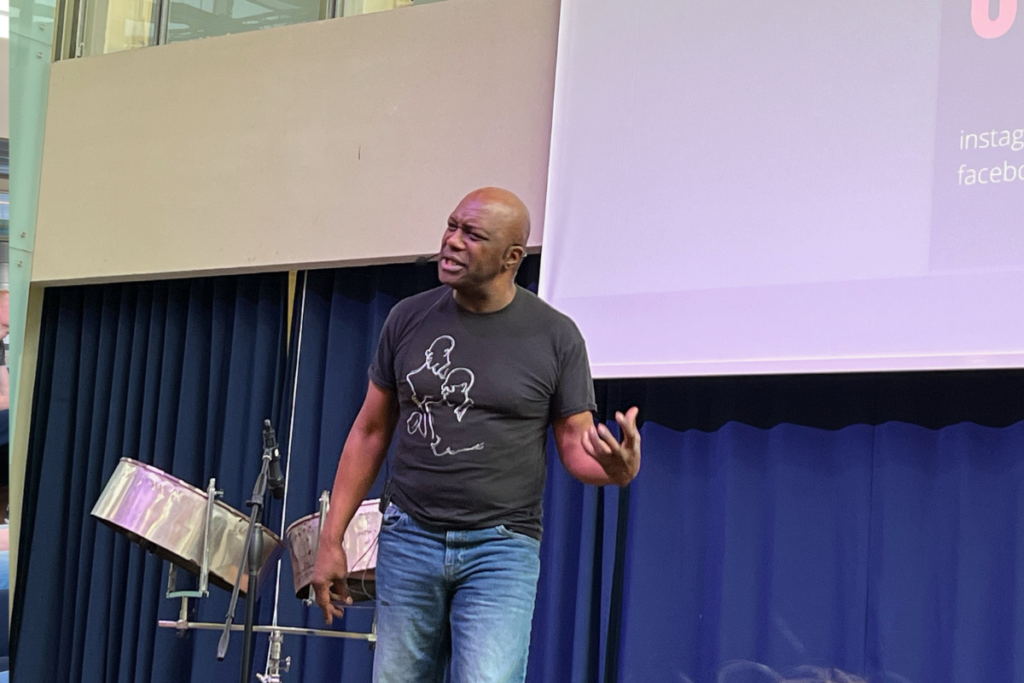
In my performance lecture, I use these stories to focus on overcoming adversity. I also have been subjected to racism and to a large degree of adverse experiences. I talk to young people about poverty—how it affects them, how to overcome it and, most of all, how to use it as a superpower through understanding how to utilize available resources.
The discussion extends into difficult family dynamics, which include alcohol and physical abuse. I explain how things that look normal sometimes are not normal. We discuss the importance of expressing opinions and feelings, and the vital necessity to seek out those who will listen.
Bullying is another of my central themes. I share how bullying deeply affected my self-esteem, how I dealt with bullies and how these interactions made me feel. I relate several stories of the many times I have been called racial slurs by students, teachers and strangers or was simply ignored—and how these deeply affected me emotionally.
The psychology of self-esteem is tied to all of these experiences. I speak about how I decided to define my life and change my own esteem by writing a book. I discuss how negative stereotypes of Black people in the media have shaped my worldview. This is illustrated by relating a story of taking a lower scale job merely because I felt unworthy of a higher one, and how I later changed my trajectory by claiming the job for which I knew I was qualified.
Healing Power of Music
Music is the heartbeat of my performance lecture. I weave four musical numbers into the presentation to demonstrate the power of the art in healing.
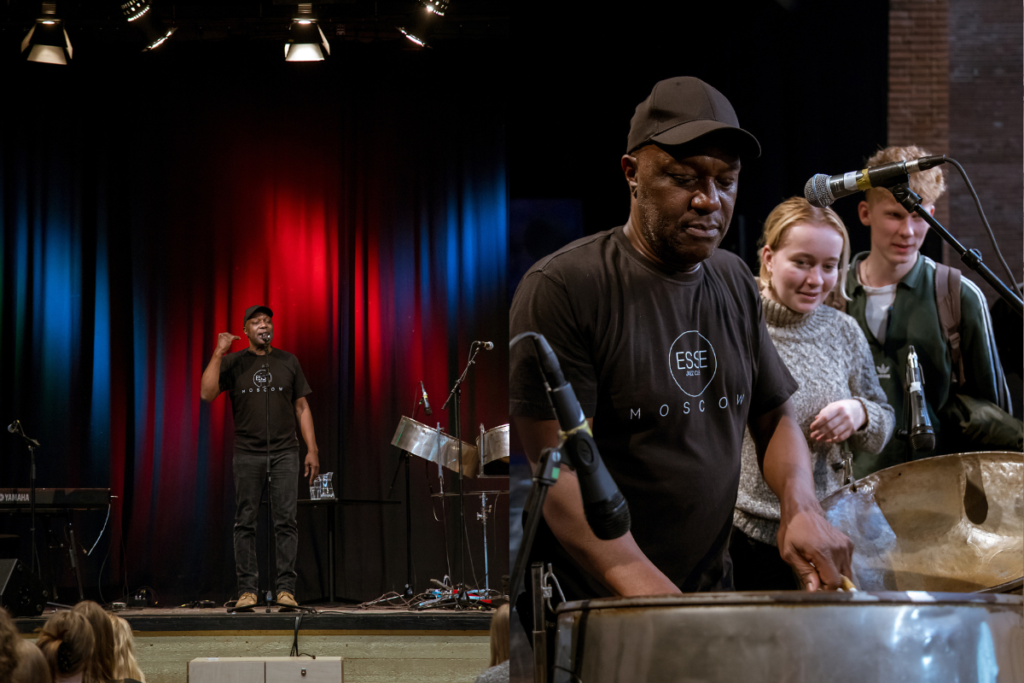
First, I perform Bill Withers’ Lean on Me on the piano. This is a song my mother taught me, a song that soothed my heart. I also talk about my mother’s musical influence and how she instilled songs in my head that helped me along the way.
Next, I perform an original Gospel song called Promised Land to talk about the African American experience in Gospel music, showcasing how it played a heavy role in family unity. I share a specific occasion involving Gospel music that changed my mind forever about poverty.
Finally, I perform on steelpans, an instrument I learned while performing with the US Navy Steelband to earn my way through college. I explain that the steelpan was invented by poor young people in Trinidad and Tobago who were monetarily poor but rich with ideas, dreams and desires. This cultural story moved me to become one of the first singer-songwriters of the instrument.
Global Impact and Future Vision
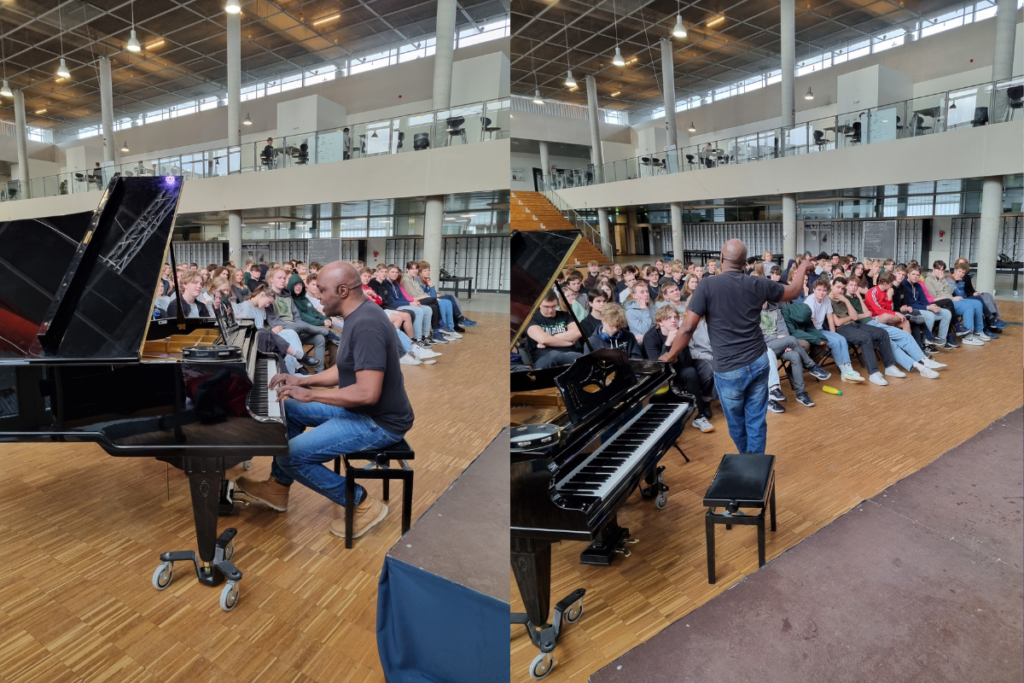
For the past 10 years, my main focus has been the young. Denmark has been fertile ground for this message. I remind students there—who benefit from free college and medical care—that they are privileged and have a responsibility to tell the world about the system their country has. I remind the young Danes that laws can be changed in a day if everyone is in agreement. This work has been equally impactful in Germany.
The internet has exploded with interest in these sessions. One clip reached 250,000 views, and adults and students alike commented on my Instagram pages, affirming the message.
I now wish to expand this performance lecture on overcoming adversity to Japan. Having visited the country on four distinct occasions, I see how young people are developing. I believe this lecture could bring inspiration to the Japanese youth who are trying to find and navigate their way through life.
Commitment to Self-Worth
I end every session with a powerful affirmation called “I am somebody.” At this moment, the students commit to the reality that they are important, necessary, loved and essential for those in and outside of their world.
I leave them with this thought: “You are not a product of your past but a gift for your future.”
Booking Information: To bring the “Black in the USA” performance lecture to your school or organization and help your students learn the art of overcoming adversity, please visit his website for more information or contact Gregory Boyd at Boydpan@gmail.com for availability.