
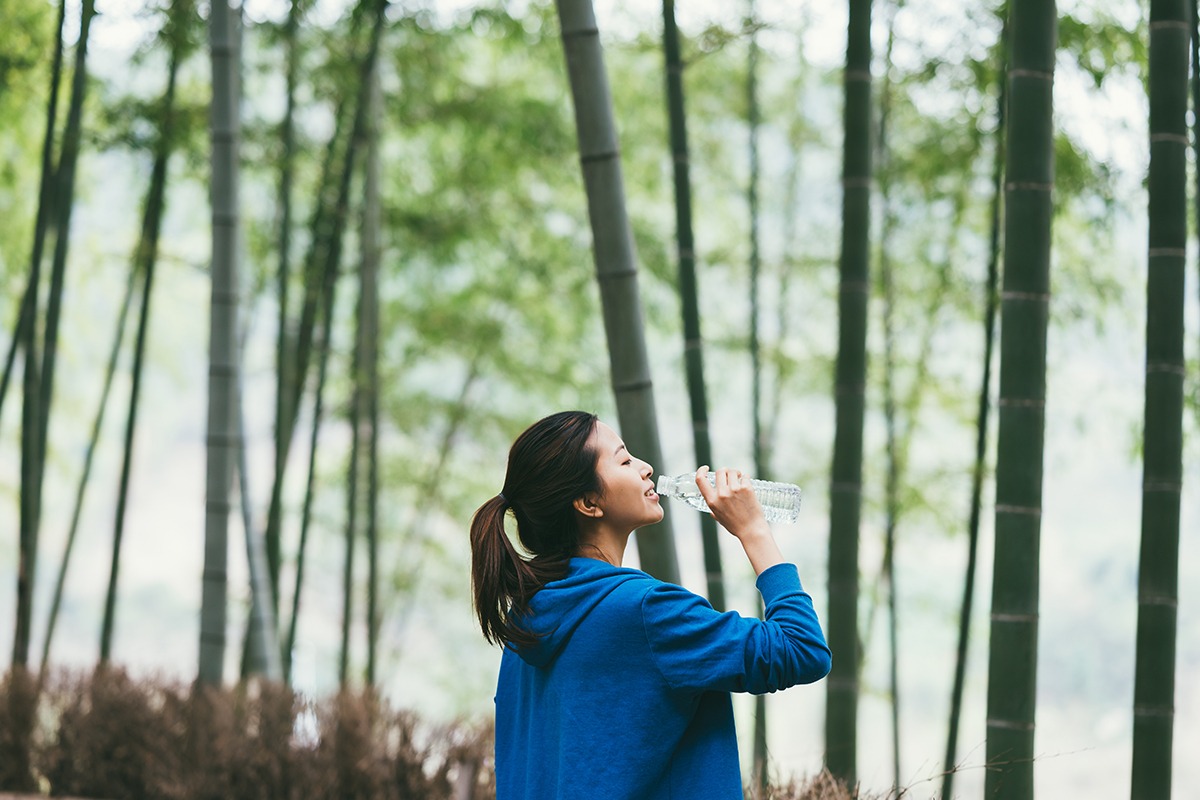
Premium Japanese Water for Fitness and Fine Spirits
In sports bags or alongside treadmills are always bottles of water. And after a healthy workout, the bubbly jacuzzi or steamy spa can complete the session. To top everything off, a sip of your favorite sake or whiskey brand can be the perfect way to celebrate. Whether for hydration or libation, the common element defining quality is the origin of the premium Japanese water used in production.
Home-Delivery Water Servers
Accessing premium Japanese water at home has become seamless through specialized delivery services. Established on May 22, 1963, Toell is based in Yokohama and services over 250,000 customers in the Kanto region. The company is well-known for two ISO 22000-certified brands: Alpina and Shinano Spring Water from the northern Japan Alps, and Pure Hawaiian Water tapped from rainwater found 200m below on Oahu. A fourth product is the Pure Water+H2 water servers. Toell’s logistics capability is rooted in its original business of liquid petroleum gas (LPG), which enabled the company to be the first to deliver much-needed LPG immediately following the Great East Japan Earthquake’s triple disaster on March 11, 2011.
For those prioritizing design, Aqua Clara offers both floor-standing and tabletop water servers, including a model that can be integrated with a coffee machine. The company invited Seitaro Yamazaki, a Good Design Award winner active in Japan and overseas, to design the Aqua Fab water servers to fit into any space. The company is headquartered in Shinagawa with branches in Osaka and Nagoya.
Another historic option is Fuji Mineral Water, the first in Japan to manufacture and sell non-carbonated mineral water. Founded on Aug 18, 1929, with a head office in Shibuya, the company offers products including a Thomas the Tank Engine and Friends lineup. Fujinogensui, established on Oct 5, 2017, in Yamanashi prefecture, acquired permission to bore wells and collect water from the area around Mt. Fuji. In response to many requests for mail orders to homes, the company commenced delivery directly from the factory at the Fujinogensui store.
Highly accented for its technology, Cosmo Water has been awarded the highest accolades at international water competitions for several consecutive years, including the Grand Gold Award at the Monde Selection 2025 and the Golden Drop at the International Taste Awards 2021. The Smart Plus Next lineup features added high-end functions such as selectable water temperature with the push of a button and two USB charging ports. It also includes an emergency power supply unit to the back of the server to keep water at room temperature even during a power outage. For purification lovers, the company’s Humming Water system offers sustainable purification that produces safe, delicious water simply by pouring tap water into the tank.
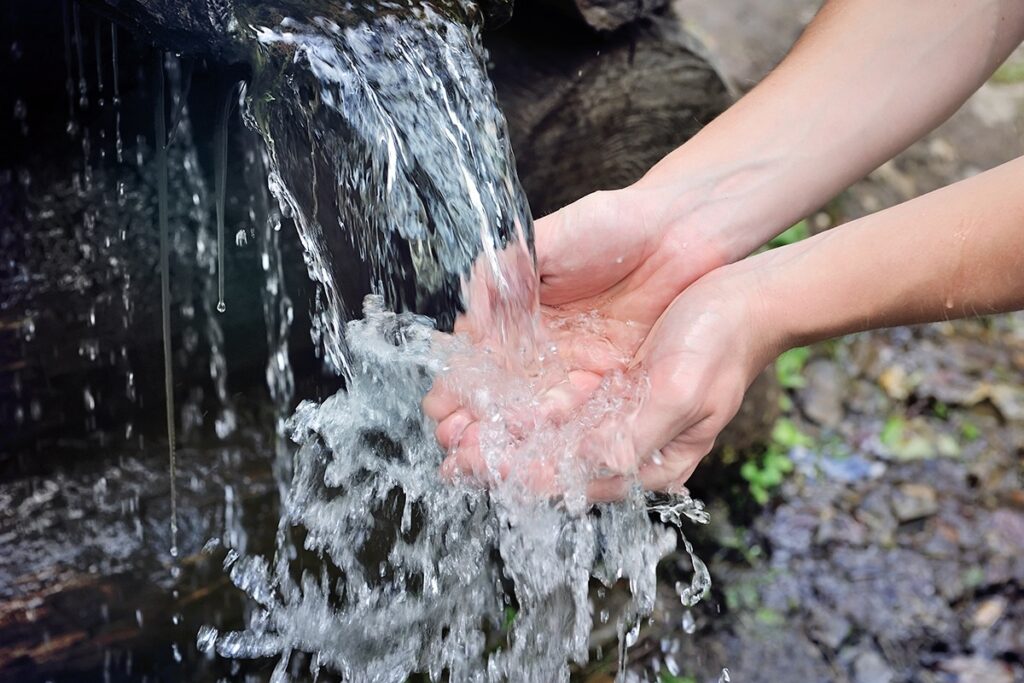
Pristine Water Sources for Sake
The character of premium Japanese water varies by region, deeply influencing the flavor profile of sake. Water for Taka comes from rainfall on the Chūgoku mountains on Honshu that runs through the limestone karst plateau of Akiyoshidai in the center of Yamaguchi prefecture. As it flows down the Koto River to the Seto Inland Sea, it picks up minerals before being drawn from a spring bubbling up from an aquifer 150 meters below. This lends Taka sake a distinct acidity and a clear, sharp dryness allowing for the natural umami of the rice to come through. The brand is known as Noble Arrow in America.
In contrast, Fushimi in Kyoto uses high-quality groundwater springing from the base of the Momoyama Hills, where the Ujigawa, Kamogawa and Katsuragawa rivers flow. Breweries here include Masuda Tokubee Shoten, founded in 1675. The groundwater is of medium hardness and full of moderate amounts of calcium and potassium, resulting in a characteristic delicate flavor and mellow mouthfeel known as onna-zake (woman sake). One of the seven wells here is said to have been protected for over 1,000 years.
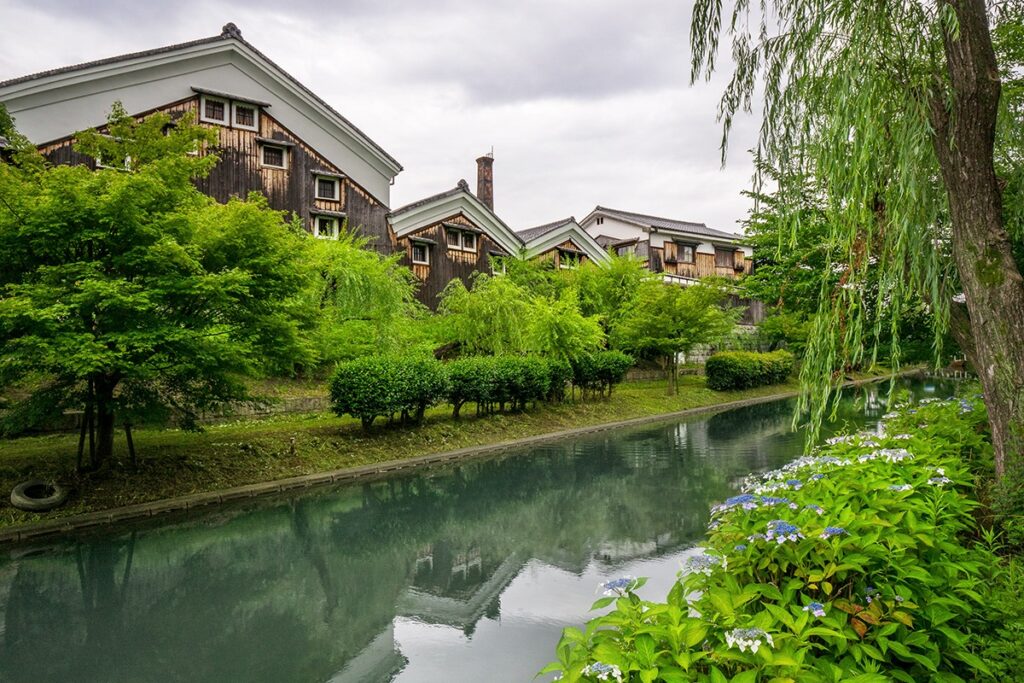
Other regions produce distinct varieties based on their water hardness. The strong sake from Nada in Hyogo prefecture has a dry taste due to the use of hard groundwater from the lush Rokko mountains and is known as otoko-zake (man sake). Meanwhile, Saijo in Hiroshima prefecture is a leading sake capital where medium-soft water springs from the Chūgoku mountains and Mount Ryuo, producing a soft, rich and umami-flavored sake through the soft water brewing method.
Additional celebrated sources include the Shirakawa Springs of Kumamoto prefecture, selected as one of the 100 best spring waters in Japan for its high clarity and constant temperature. In Niigata prefecture, Junmaishu Imayo Tsukasa uses natural spring water that brings out flavors in food, earning it the Bronze medal at the 2015 International Wine Challenge.
Sake Production and Storage Essentials
The role of water is critical throughout the production cycle. According to Hakutsuru Sake (since 1743), the process involves polishing, steaming, culture, cooling, seed mashing, main mashing, pressing and filtering. Once this premium Japanese water has been transformed into sake, proper storage is vital. Bottles should be stored at less than 59 degrees Fahrenheit, avoiding places subject to vibration, strong smells or ultraviolet light from sunshine and fluorescent lamps. After opening, one should replace the cap firmly, store the bottle in a cool, dark place and consume the contents within one week.
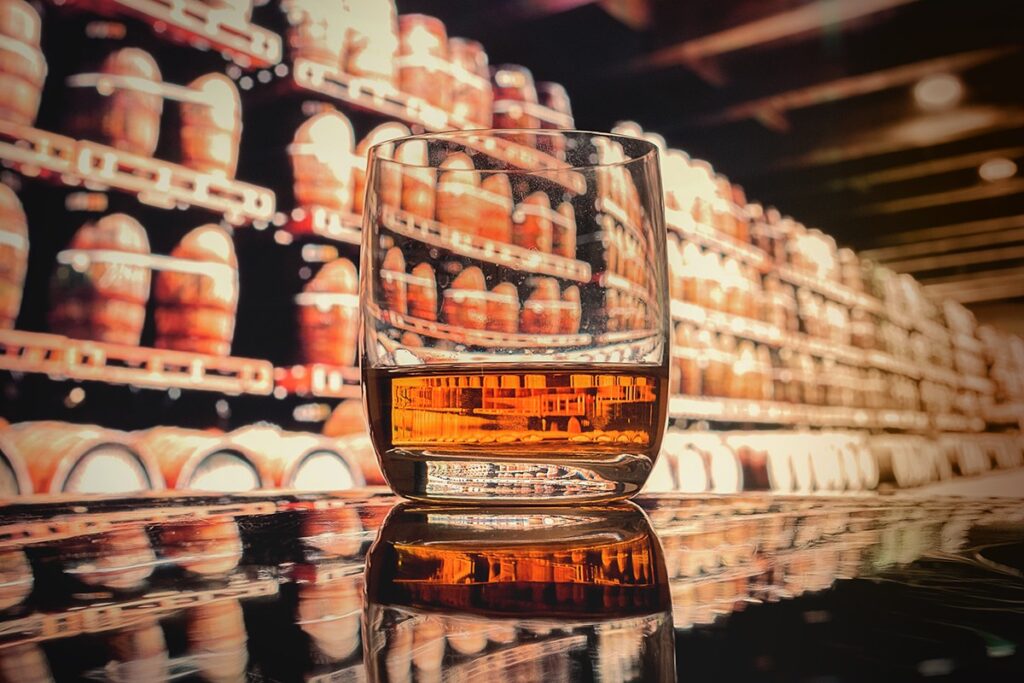
Japanese Whisky Distilleries
The Japanese Whisky International Council notes that while initially inspired by Scotch, Japanese whisky has chartered its own course, often utilizing Mizunara oak from Japan’s lush forests to impart unique flavors. Suntory’s Yamazaki Distillery, Japan’s first of its kind, utilizes the Rikyu-no-mizu water source, which is nurtured deep underground in the mountains on the outskirts of Kyoto. This water originates as rainfall and gains refinement as it flows through sedimentary rocks such as sandstone, mudstone, chert and limestone. The surrounding Tennozan area features bamboo groves and plantation forests of cedar and Hinoki cypress.
Suntory’s portfolio showcases how this water shapes the final spirit. Yamazaki is the flagship single malt, multi-layered with fruit and Mizunara aromas, while Hakushu, introduced in 1994, is recognized for its silky taste with floral notes. Hibiki has become Japan’s most highly awarded blended whisky since 1989. Kakubin, created in 1937, remains a signature brand with its iconic square cut, tortoise-shell bottle and delicate taste. Finally, Chita is an outstanding single grain whisky aged in wine, Spanish Oak and American White Oak casks, featuring a light taste and delicately sweet fragrance.
Sake Production and Storage FAQs
How is sake produced? According to Hakutsuru Sake (since 1743), the process is extensive. It involves polishing, steaming, culture, cooling, seed mashing, main mashing, pressing and filtering.
How should sake be stored? Bottles should be stored at less than 59 degrees Fahrenheit, avoiding places subject to vibration, strong smells or ultraviolet light from sunshine and fluorescent lamps.
How long does sake last after opening? After opening, one should replace the cap firmly, store the bottle in a cool, dark place and consume the contents within one week.
Summary
The premium Japanese water remains intrinsic to good health and good times in Japan. Whether you are selecting a high-tech server for your home gym or choosing a beverage to unwind, the water source defines the experience. For further insights into the best of Japan’s wellness and lifestyle offerings, please subscribe to the GoConnect newsletter.
If you enjoyed this article, please let us know and share your thoughts at hello@goconnect.jp.