
Issa-an and Sencha: Discovering Matcha’s Spiritual Sibling in Osaka With Gold-Guide
Tea is a creed in Japan. From bottles of commercially prepared jasmine and barley teas in convenience stores, to the steaming cups of hojicha, roasted green tea, served with traditional meals, tea is rarely distant. But while tea is now affordable and accessible, there are those who still prioritize the culture and history behind authentic tea ceremonies. At Issa-an, a traditional tea salon in the shadow of Osaka Castle, one family, through the efforts of Shio Tsukuda and his father, continues a legacy of marrying tea with art and philosophy.
Welcome to Issa-an’s tea salon and the Edo Period
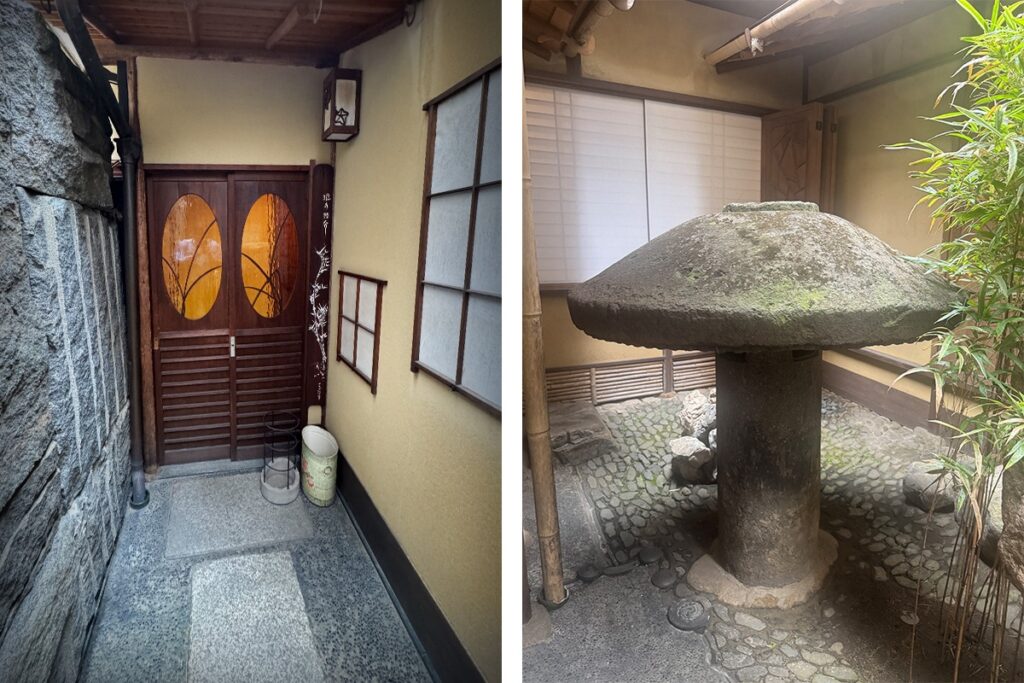
Walking down the stone-paved alleyway leading to Issa-an, each step draws travelers away from modern Osaka. The sounds of the road fade away, and the wooden doors pull open as Shio Tsukuda welcomes visitors into the hall. Each guest is there at his invitation, arranged by Gold-Guide, to ensure an intimate experience. As the last guest steps over the threshold, Tsukuda invites them into the lavishly appointed study, the first step in their sencha (most popular green tea) journey.
It is decorated in a traditional Chinese style with wooden lattice fretwork decorating the walls, while the guests sit on simple wooden stools. Tsukuda greets each visitor personally, with a Gold-Guide translator fluently accommodating English speakers. Settling guests into the background, he begins with a history of Osaka, centering on his family, Issa-an and finally sencha, whose heritage his family has fostered for centuries.
While matcha is associated with solemn ceremony and, more recently, trendy drinks and desserts, sencha has a divergent but equally fascinating history. During the Edo period in mid-1700s Japan, wealthy merchants and samurai would gather to socialize and drink sencha as a sign of status. Unlike the silent, solemn matcha ceremonies rooted in Zen practice, however, sencha salons were full of conversation, discussion and contemplation of art and poetry. The stage thus set, Tsukuda ushers visitors through the hallway to the tearoom.
An Osaka riverside tea salon: Sencha and simplicity
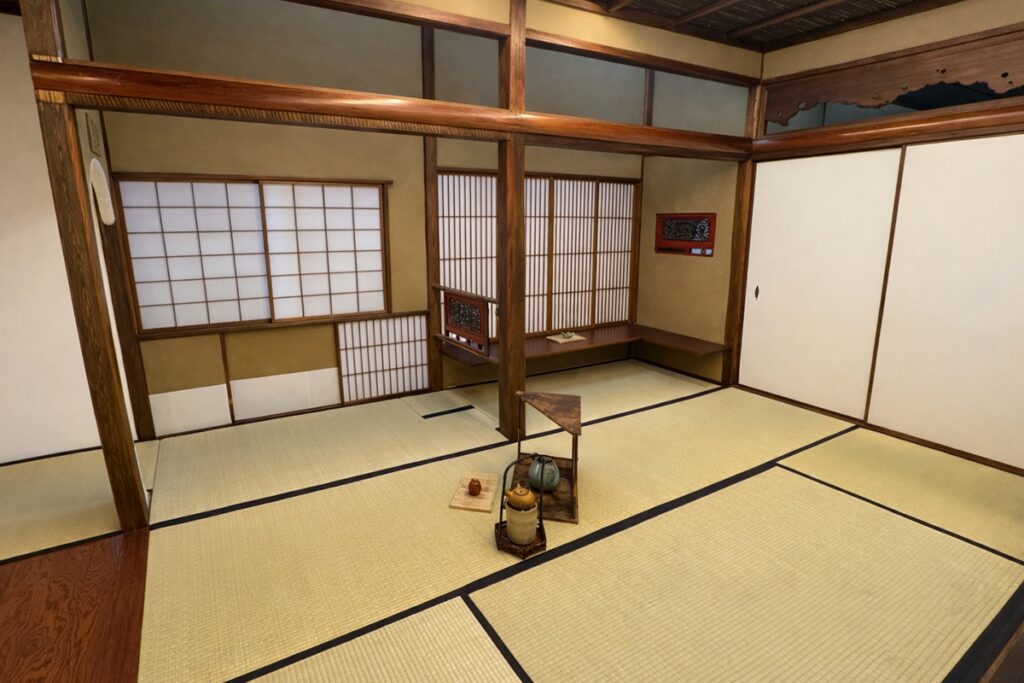
He pulls back the sliding doors, revealing the tea salon — a warm, light room lined with tatami, traditional Japanese straw mats. A dark mahogany table is surrounded by a simple chair for each guest, with Tsukuda across the table from them, standing to ensure a precise pour over each cup. The room is otherwise simply appointed, with a minimalist shelf holding tea-making implements and an elegantly painted wall scroll. It is to this scroll that Tsukuda draws everyone’s attention — a scene of two wild geese intertwined in the reeds beside a river.
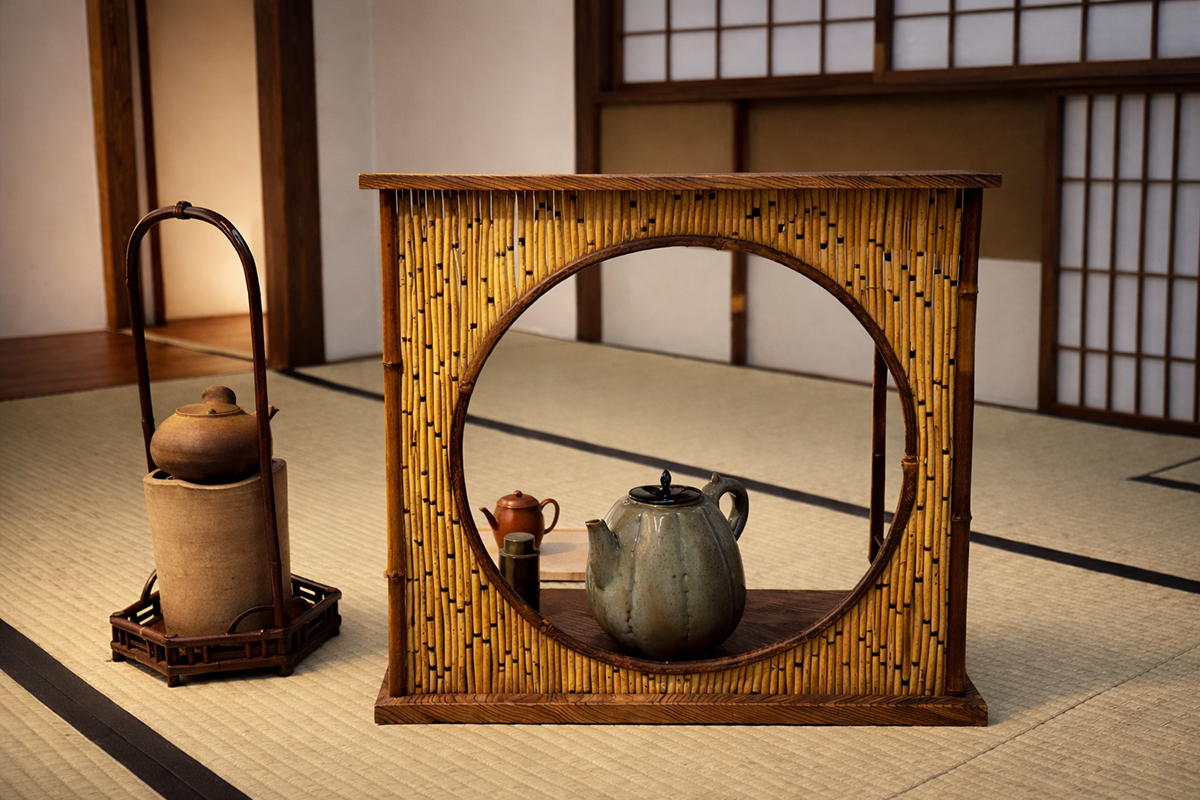
“For each tea salon, I choose a theme, and select a wall scroll to embody that theme,” Tsukuda explains. “Osaka was known as a city of rivers, with boats ferrying people, animals and cargo around the city. There are still hundreds of piers along the river, so for today I chose the riverside as our theme.” He sweeps his hand down to the tea shelf, where a stone kettle, tea brazier, tea scoop and tea holder are visible through a circular aperture in the shelf.
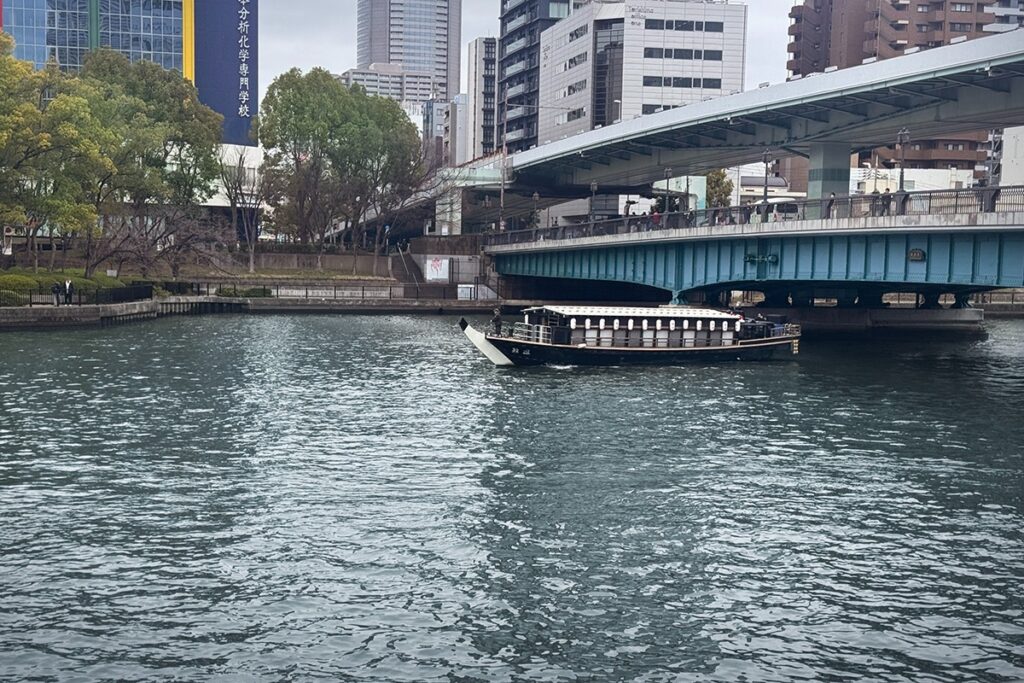
“This shelf was created in the style of a river hut, where fishermen or dockhands would look out over the river. Looking through it, at the scroll, is a way to draw yourself back into the Osaka of earlier days,” Tsukuda says. He also moves the singular piece of ornamentation onto the center of the table — a late Ming Dynasty ceramic water dropper shaped in the likeness of a riverboat.
Together, these unique treasures lend the salon a historical weight, transporting guests to the world of wealthy Osaka merchants from the Edo period. While guests immerse themselves in the atmosphere and history, Tsukuda places antique cups before each guest, and begins to pour sencha with a practiced hand.
Rather than a waterfall of tea, the liquid drips out of the spout, each cup being filled with a few drops of tea. Tsukuda fills each cup by turns, returning to ensure none is wasted or left in the teapot. The tea is a pale gold, contrasting the white porcelain. As he returns the teapot to the tea tray, Tsukuda invites everyone to raise their cups and drink together.
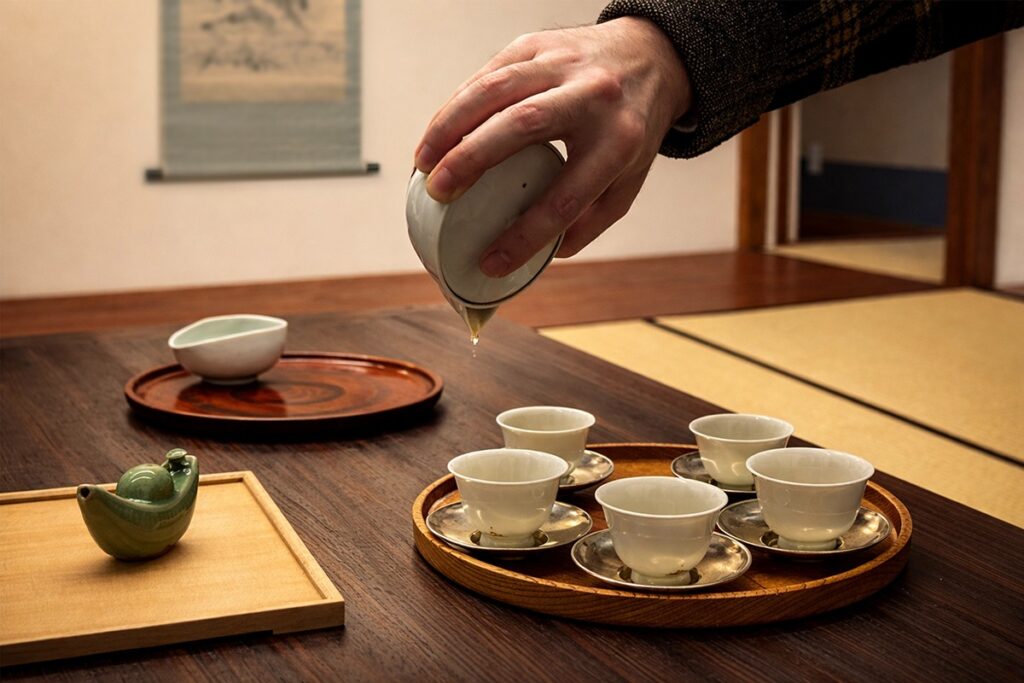
How to create the perfect sencha experience
Though only a sip of tea, the immediate sensation is lightness — the tea is crisp and fresh. Following on its heels is a viscosity, with the liquid feeling closer to a broth than pure water, and with a rich umami note to match. As his guests savor the experience and quality of the tea, Tsukuda prepares the next cup, adding only a little water as he explains more about sencha and the steeping process that creates these unique flavors.
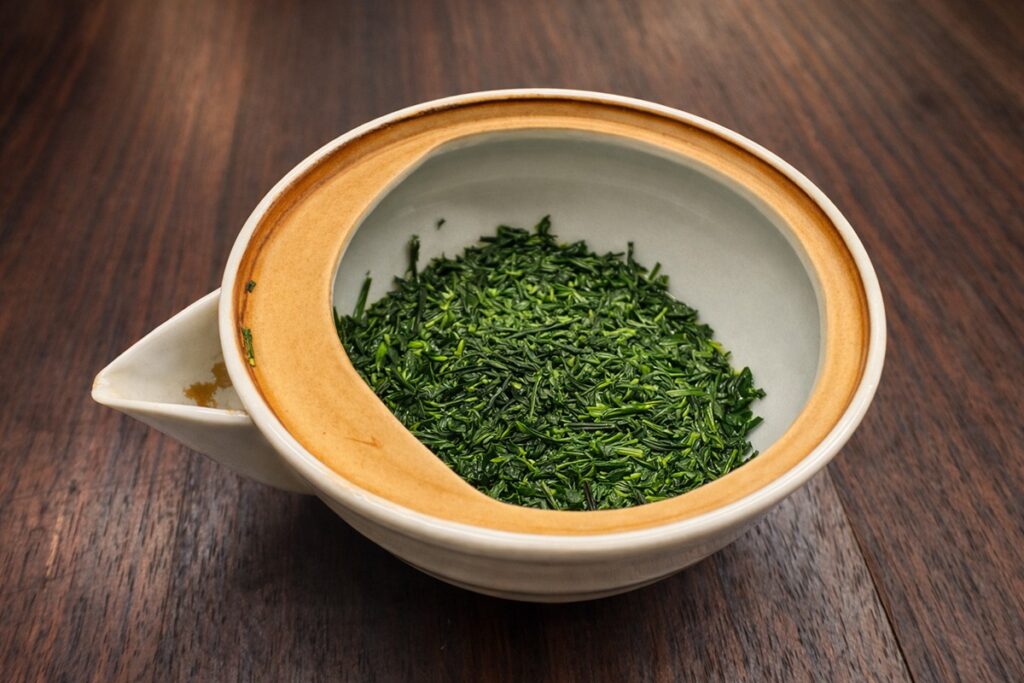
Issa-an uses only the highest grade of sencha, called gyokuro (jade dew). To preserve its flavor, the tea leaves are carefully handpicked, with only the softest ones being harvested. They are then lightly steamed for a second or two, before being hand flattened and pressed on a heated plate for six hours before being allowed to dry in sunlight. The end result is an artisanal, flavor-rich tea that overshadows any commercially produced option, particularly when combined with Tsukuda’s meticulous technique.
As the second teapot of tea completes its steep, he pours again. Once done, he removes the lid from it, revealing the uniform forest of tea leaves. “The best technique is to make a ‘mountain’ of tea leaves, and then pour slightly warm water onto the peak,” Tsukuda says. “The sencha will wilt and steep at the bottom of the teapot, concentrating the flavor. I’ve practiced making sencha for 20 years now, and this is by far the best technique I’ve learned.”
Fine dining complements the perfect cup
After the second cup, Tsukuda responds to a question about food pairings, a luxury option Issa-an offers as part of longer tea ceremonies, or as they are known with sencha, tea gatherings. “While this sencha is best drunk by itself, tea is also deeply linked to food,” he says. “Issa-an collaborates with a local ryotei, a high-end Japanese cuisine restaurant, to create meals for our visitors.” He gestures to the wall scroll. “Since the experience is all about the theme, the chef and I collaborate to create menus that connect to that theme. For our river setting, we would serve wild goose, river fish or a similar set of dishes. If someone has dietary requirements or allergies, we can always adapt our menus, but we will find a way to keep to the theme.”
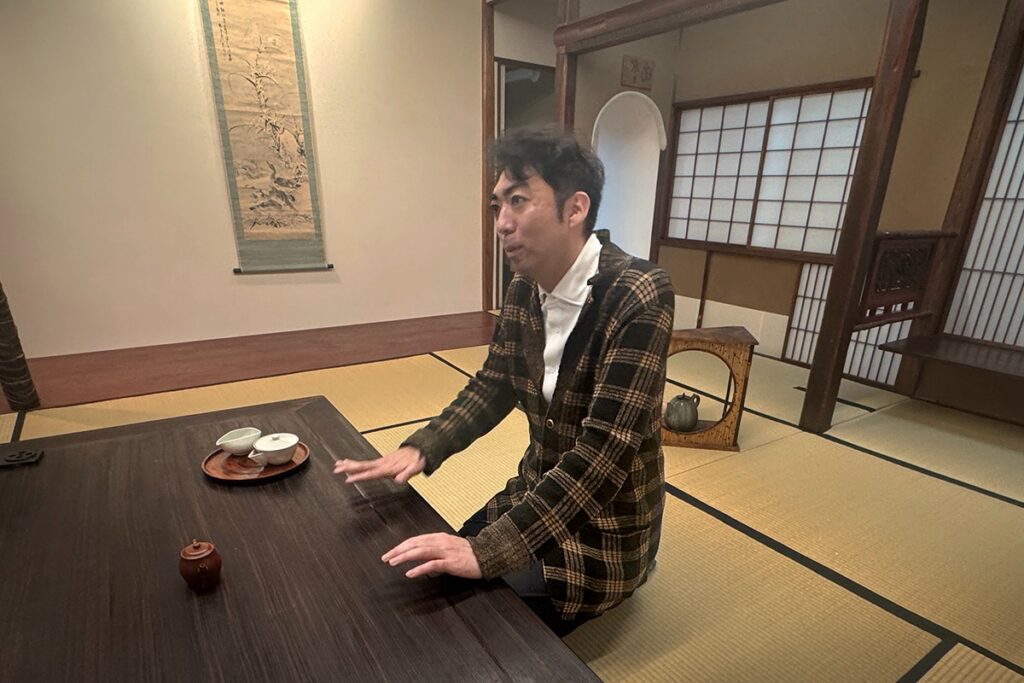
After one final cup of sencha, Tsukuda and his guests rises from the formal kneeing position, called seiza. Returning through the hallway to the entrance, he concludes the tea salon experience with a tour of his courtyard, where a stone lantern from Korea stands out among the Japanese decor. As they leave, Tsukuda offers each visitor a warm, final farewell, seeing them off down the stone path leading away from his doors. And as they leave, each returns from the world of Edo period Osaka and sencha back to the Osaka of the modern day.
For similar exclusive experiences, book your next trip with Gold-Guide’s team of expert tour guides: Find out more