Why AI Education for Students Needs More Than Technical Skills
There’s a version of the AI conversation that keeps repeating itself. It usually starts with a statement about how “the jobs of the future don’t exist yet” and ends with a vague suggestion that children should learn to code. It’s not entirely incorrect, but for parents trying to navigate future-ready skills for children, it doesn’t actually help them figure out what to do next.

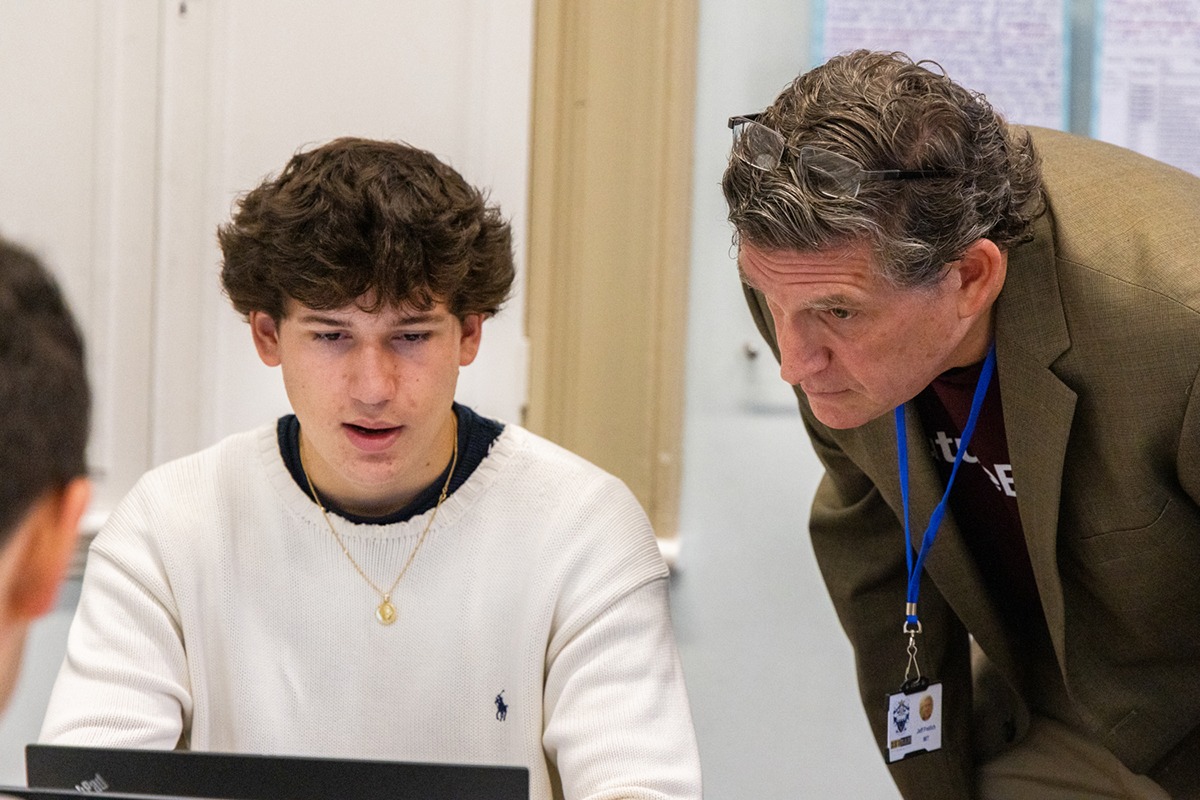
Felipe Arango Pineros (above) has spent a lot of time thinking about this exact question. As Co-founder and CEO of Pharos Education, a former Harvard teaching fellow and McKinsey analyst, he connects students with the Massachusetts Institute of Technology, the University of Pennsylvania and beyond. When asked about the role of AI in the future, his answer is direct: “The biggest mistake people make is still talking about AI like it’s coming. It’s already here.”
This is completely true. ChatGPT was released in 2022 and four years later AI is embedded in dozens of the systems we use in our lives. This isn’t a conversation about preparing for something. AI is already present.
Table of Contents:
- How AI is Changing Future Careers and Entry-Level Jobs
- Why AI Technical Skills Are Only Part of the Solution
- The Dangers of Passive AI Use in Student Education
- Preparing Students for the Future: The Rugby School Japan Approach
- How to stand out in the AI world
- How can I best prepare my child for the role AI will have in their lives?
How AI is changing future careers and entry-level jobs
There’s a slightly uncomfortable truth about how careers have traditionally worked. You started at the bottom. Your work might have been repetitive: data entry, first drafts, legwork, but through those routine tasks you slowly built up professional judgment. You made low-impact mistakes. It let you grow naturally.
That layer of work is disappearing. AI is replacing it.
“Young people aren’t going to have the luxury of easing in,” Felipe notes. “They’ll need to step into judgment, decision-making and creativity much earlier than we did.”
The structure that used to support the early stages of a career is being removed. Which doesn’t make things impossible, but it does mean that students who arrive without strong thinking foundations are going to struggle in ways that previous generations didn’t. There won’t be a couple of years of routine tasks to warm up with.
Why AI technical skills are only part of the solution
There’s a conclusion that often follows from all of this, especially in technical fields: if AI is transforming work, then the answer is to focus on technical skills. Learn Python. Learn to write a decent prompt. Stay ahead of the tools.
Felipe pushes back on this narrative. “Technical skills still matter,” he says, “but on their own, they’re not enough anymore.”
The thing AI is genuinely bad at is mess. It handles well-defined problems beautifully. Give it clear parameters and clean data, and it’ll outperform humans almost every time. But real-world decisions rarely happen that way. Leadership, creativity, navigating ambiguity — these are things that are needed in the moments when the situation isn’t clear. And that’s where humans still have to do the heavy lifting.
This aligns perfectly with the foundational ethos of Rugby School Japan (RSJ): The Whole Person, The Whole Point. When AI can automate standard tasks, the most valuable skills are the things we consider soft skills: communication, adaptability and resilience. Being able to frame a problem properly, communicate a complex idea or pivot when things shift unexpectedly are now essential survival skills.
Dangers of passive AI use in student education
Which leads to the conversation that parents really should be having instead.
AI makes it easy to feel productive without actually thinking. You can generate a beautiful, presentable essay in 45 seconds. You can get a coherent answer to almost any question without having to work it out yourself. And if you’re a student under time pressure, the temptation to just let AI do the work and move on is almost understandable.
The problem is what’s lost in the process. Felipe draws a comparison to social media — the same dynamic of consuming without engaging, just operating at a higher level of sophistication. “If a student is copying answers, relying on it to make decisions or using it without understanding what’s going on underneath,” he says, “you’re not building any thinking muscle at all.”
Over time, that matters. It becomes a habit.
The students who get the most out of AI, in his experience, are the ones who treat it as a collaborator rather than a shortcut. They push back on the output. They ask better questions. They use it to go further with their thinking, not to avoid doing the thinking in the first place. It’s an active relationship, not a passive one.
Preparing students for the future: The Rugby School Japan approach
Felipe’s advice to parents is refreshing and unalarming. You don’t need to become an AI expert. But you do need to shift how you think about what your child’s education is actually for.
Less emphasis on performance and scores just to have them. More emphasis on how your child thinks, engages and handles genuine difficulty. Are they curious? Can they handle not knowing an answer immediately? When they use AI tools, can they actually explain what they produced together — or are they just submitting it?
“Encourage curiosity. Let them try things,” Felipe says. “Expose them to different experiences — not just academic ones.” And, perhaps most importantly: live that lifestyle yourself. Children pick up far more from what they observe than what they’re told.
How to stand out in the AI world
Here’s what universities are increasingly looking at, according to Felipe: not grades in isolation, but evidence that a student has actually done something with what they’ve learned. Built something. Explored an idea in depth. Developed an idea further than they were told to, because it interested them.
“When everyone has access to the same tools, the differentiator becomes what you do with them,” he says. “Students who have done that stand out immediately. Because it shows ownership.”
That’s the shift. In a world where the tools are democratized, the signal is initiative.
How can I best prepare my child for the role AI will have in their lives?
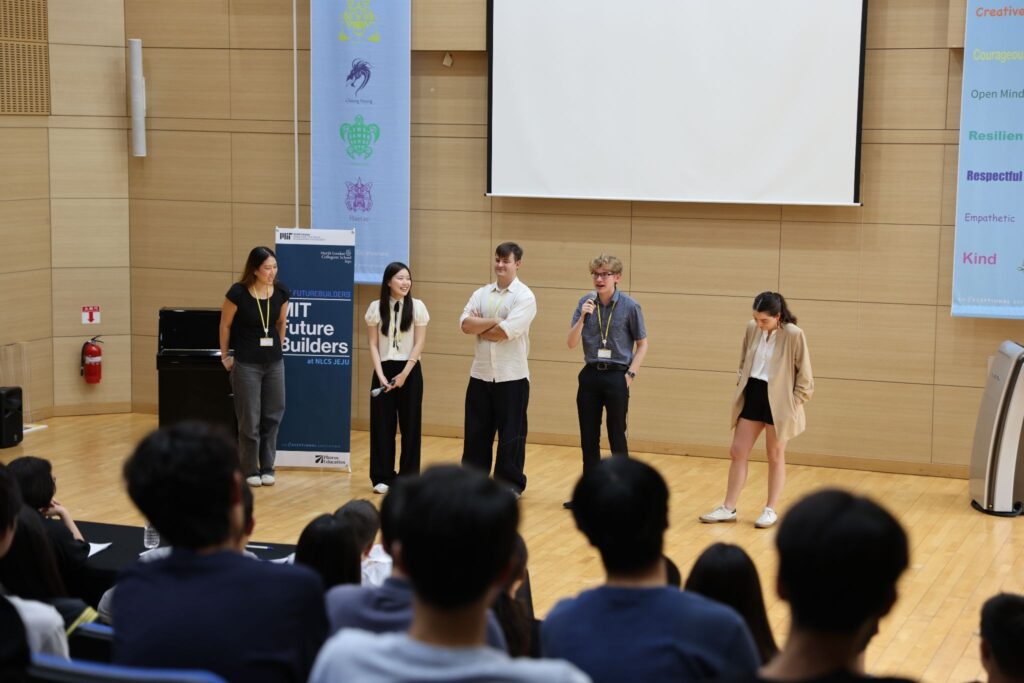
As a leading international school in Japan, Rugby School Japan recognized this shift early. This is the driving force behind RSJ’s MIT RAISE FutureBuilders Programme.
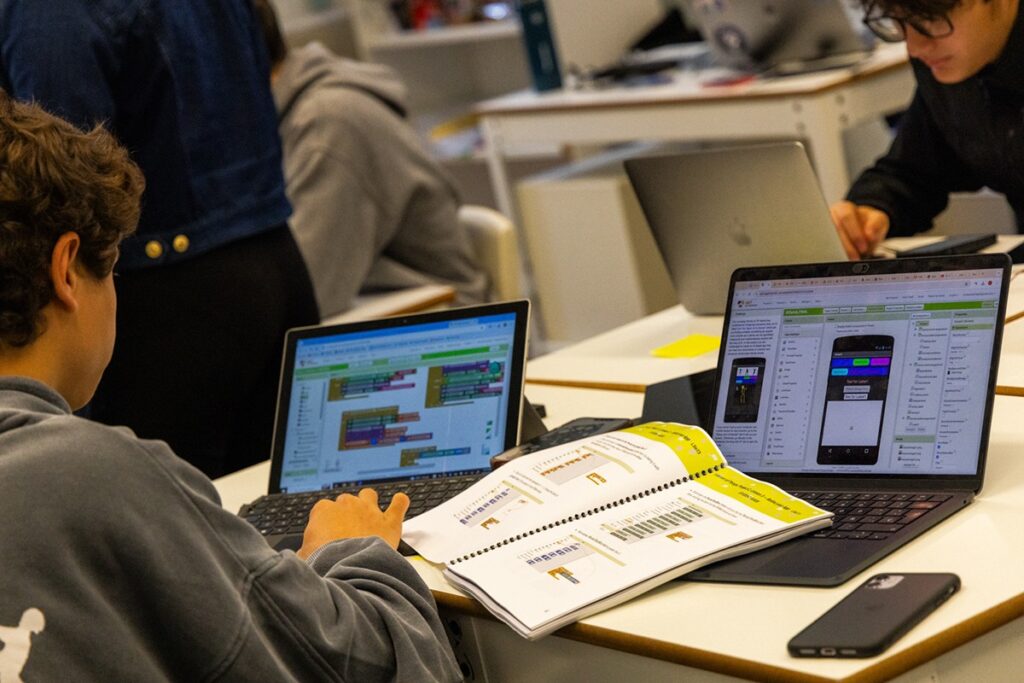
Designed for students who want to move from passive consumers of technology to active builders, thinkers and problem-solvers, the FutureBuilders programme provides hands-on, practical experience. Rather than waiting to be told how to use emerging technologies, RSJ students are challenged to figure things out, build actual solutions and apply “Whole Person” thinking to complex, real-world problems.
When everyone has access to the exact same AI tools, the ultimate differentiator is what a student chooses to do with them. If you want your child to step into university and the modern workplace already equipped to lead, it requires an education that has pushed them towards seeing AI as a collaborator, not an easy solution.