

Why Japan Must Reindustrialize: The Return of Monozukuri
When looking at Japan’s economy, you might think of their multibillion-dollar tech services, an enormous tourism sector or the lingering headaches of a weak yen. But for a long time, Japan was the world’s undisputed factory floor. Today, as global supply chains crack under geopolitical pressure, a consensus is building in Tokyo: Japan needs to get back to the factory floor.
Julius Lilly, general manager and country manager in multiple high-profile business management roles in Japan and APAC over 20 years, sees this problem nearly every day. With over two decades deeply embedded in Japan’s production and R&D sectors, Lilly doesn’t view the economy through abstract models. He looks at it through the lens of manufacturing and from practical experience. His conclusion is blunt and unforgiving: Japan’s future prosperity relies entirely on reclaiming its industrial independence.
Table of contents:
- How Japan dominated global manufacturing in the 20th century
- Why did Japan’s manufacturing economy decline?
- The economic risks of offshoring and a service-based economy
- Japan’s unique advantage: The resilient monozukuri supply chain
- Japan’s reindustrialization strategy: Four key policies for recovery

How Japan dominated global manufacturing in the 20th century
Japan’s post-war industrial dominance was stunning. The West got its first wake-up call in 1964 with the unveiling of the Shinkansen (bullet train), followed by the dizzying tech showcase of the 1970 Osaka World Expo.
Then came the waves of exports. Japanese cars, hi-fi audio gear and personal computers flooded Western markets. They were cheaper, and they were significantly better than their Western counterparts. To curb this overwhelming competitiveness, Western powers orchestrated the 1985 Plaza Accord. The yen rapidly revalued, plunging from around 230 to 80 against the dollar over the next decade.
It was supposed to slow Japan down. Instead, it made Japanese corporations incredibly rich, triggering a wave of global investment. Firms like Dunlop capitalized on this brilliantly. They expanded their global footprint but kept their secrets — core knowledge and R&D — locked down in Japan. By the late 1980s, Japan commanded a roughly 50–70% share in consumer electronics, over 50% in semiconductors and 40–60% in precision manufacturing segments,
while automotive exports captured around 25–30% of global markets, effectively pushing Western competitors out of the financial picture.
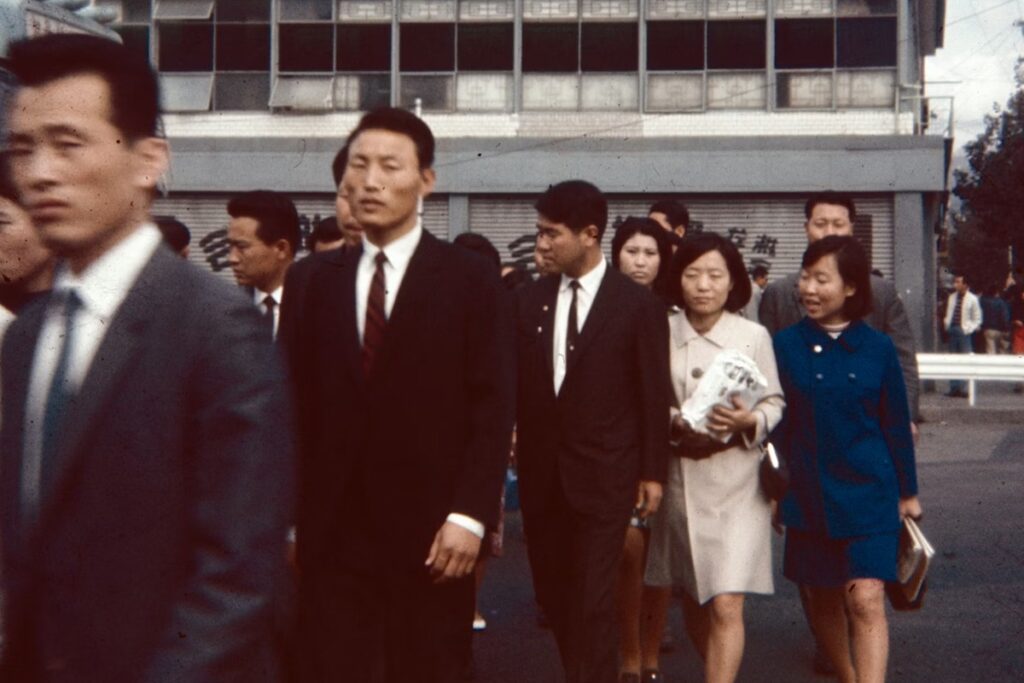
Japan’s manufacturing dominance in the 1980s and early 1990s — at the height of the Japanese asset price bubble — rested on a broad, export- driven industrial base that combined scale, quality and relentless process improvement.
Why did Japan’s manufacturing economy decline?
But eventually Japan changed, heading towards the service economy it is today. For reasons why, Lilly points to the mid-1990s as the tipping point, a decline accelerated by the 1997 Yamaichi Shoken financial shock. Banks panicked, froze lending options and the paralysis quietly crept into the early 2000s.
During its boom years, Japan ran a massive trade surplus, which kept the yen overvalued. But instead of plowing that cash back into industrial innovation, capital chased vanity assets like real estate and fine art. R&D took a back seat.
The fallout of both of these issues became obvious by 2005. Japan lost its crown as the world’s top patent-registering nation. R&D budgets dropped sharply right as regional competitors — China, South Korea and Taiwan — began to innovate. Consequently, Japan completely missed the boat on sectors it was perfectly positioned to dominate, such as the early mobile phone boom. The symbolic finishing blow came in 2010 when China officially bumped Japan out of its long-held spot as the world’s second-largest economy.
Japan’s domestic manufacturing base has since structurally contracted. Manufacturing’s share of GDP declined from roughly 30–35% in the early 1990s to about 20% today, while employment in manufacturing fell from around 25% of the workforce to below 16%. At the same time, the overseas production ratio of Japanese manufacturers increased from around 10% in 1990 to over 25–30% today, reflecting deep offshoring trends. Entire sectors such as consumer electronics saw Japan’s global share collapse from over 50% to below 15%, while semiconductors dropped from global leadership to single-digit share levels.
Economic risks of offshoring and a service-based economy
To survive, Japan’s most well-known conglomerates like Fujitsu and Toshiba pivoted hard to service-based models. Lilly, however, sees this as a dangerous illusion.
A stable democracy requires a strong middle class, and history shows that a robust middle class is built in factories, not just office cubicles. Moving a nation from poverty to high living standards requires the kind of mass, upwardly mobile employment that physical engineering and production lines create. When your industrial base shrinks to around 20% of the economy, you simply cannot sustain broad national wealth.
Sacrifice manufacturing, and your middle class hollows out. Living standards drop — a harsh reality everyday citizens in Japan are facing right now. Worse, moving an industrial base abroad strips away a nation’s sovereignty and ability to be self-reliant. As the pandemic brutally demonstrated, a country dependent on foreign factories is left totally rudderless when global supply chains break.

Japan’s unique advantage: The resilient monozukuri supply chain
Rebuilding an industrial base from scratch takes 20 to 30 years. You have to reconstruct the whole ecosystem: scientists, localized supply chains and specialized labor. The West is currently scrambling to do exactly this, and they are finding out just how difficult it is.
Japan, however, never fully dismantled its industrial clusters. Japanese culture still prizes the idea of monozukuri.
Often translated simply as ‘manufacturing,’ the true spirit of monozukuri focuses on a dedication to craftsmanship, continuous improvement and production excellence. Lilly compares this element of Japan’s potential to Northern Italy, which remains a massive global exporter thanks to dense, family-run manufacturing hubs.
For example, he mentions the modern watch industry. A “Swiss-made” watch often relies on components created in China, with only final assembly occurring in Switzerland. Meanwhile, Japanese brands such as Seiko manufacture practically every single component for their flagship ‘Grand Seiko’ line domestically. The result is unbeatable quality control and affordability. That is the blueprint for Japan’s broader industrial revival.
Vitally, however: automotives remain a relative stronghold, with Japanese manufacturers still accounting for roughly 25–30% of global vehicle production and Toyota Motor Corporation consistently ranking among the world’s top producers, although competition in EVs and from leading Chinese manufacturers becomes more intense by the day.
Where Japan has truly retained or even strengthened leadership is in high-value upstream segments: it still controls over 70–90% of the global share in key semiconductor materials such as photoresists and fluorinated polyimides and 30–40% in semiconductor manufacturing equipment through companies like Tokyo Electron.
In industrial robotics, firms such as FANUC, YASKAWA and others collectively represent 45–50% of global robot production. High-margin automation and sensor companies like Keyence Corporation further illustrate Japan’s dominance in niche, technology-intensive segments.
In essence, Japan’s trajectory is not a simple story of decline but of transformation — from a dominant producer of finished consumer goods with over 50% of global shares in multiple industries to a critical supplier of enabling technologies where it often holds majority or near-monopoly positions in specific high-value niches. The strategic challenge today is that this leadership, while economically powerful, is less visible and more exposed to supply-chain and geopolitical shifts, raising the question of whether Japan should complement its niche dominance with a broader re-expansion of domestic manufacturing capacity.

Japan’s reindustrialization strategy: Four key policies for recovery
Japan can realistically regain its technological edge, but it won’t come from trying to recreate the late-1980s mass-manufacturing model. Redevelopment requires a deliberate pivot up the value chain: doubling down on advanced robotics, next-generation semiconductors, high-value
components and uniquely Japanese precision techniques where quality and reliability, not price, define competitiveness.
This must occur alongside a return to tighter in-house vertical integration to safeguard know-how and resilience. At the same time, Japan should maintain overseas plants for geographic diversification, localization to regional market needs and sustained political alignment with host countries, while drastically reinforcing its domestic industrial base around core technologies that are difficult to replicate or strategically painful to lose or outsource.
Recent policy shifts, such as the 2026 Japan defense export policy shift, illustrate a broader recognition that industrial sovereignty and national security are increasingly intertwined.
The shock of COVID-19’s effects on the Japanese economy finally pushed the reindustrialization conversation into the mainstream. Now, driven by geopolitical reality and a renewed sense of national pride, recovery begins. The Keidanren (Japan Business Federation) and the government are actively drafting aggressive policies to lure manufacturing back home, but there are still improvements to be made.
To Lilly, Tokyo’s reindustrialization strategy needs to prioritize four key elements:
- Massive semiconductor subsidies: Tokyo is throwing its weight behind the chip industry. This will require heavy government support for domestic companies like Rapidus, while successfully courting foreign giants. TSMC’s newly opened plant in Kumamoto is a direct result of this financial push.
- Aggressive tax incentives: To attract global capital, Japan needs to mimic the early success of Shenzhen’s tax-free zones, offering five- to 10-year tax holidays for new industrial investments.
- Revitalizing rural towns via senior talent: Factories don’t need to be in Tokyo. Lilly notes a smart water plant in Kofu run largely by highly skilled workers in their 60s and 70s. It’s a brilliant way to fight ageism, utilize Japan’s massive senior talent pool and breathe life back into dying regional economies.
- A new approach to labor: Retooling takes time. Japan has to streamline entry for highly skilled foreign workers to bridge the gap. Japanese firms must also be willing to pay globally competitive salaries. If they don’t, the brain drain will continue as young talent heads abroad for better wages.
Japan cannot code its way out of its current economic slump; it has to build its way out.
The depreciated yen is currently punishing Japanese consumers, but it offers a massive strategic advantage for domestic manufacturing. By placing emphasis on monozukuri, incentivizing R&D and tapping into both regional landscapes and older talent, Japan has a unique chance to reclaim its industrial independence. It will take significant effort, but for the first time after a long period of economic doomsaying, the government and corporate Japan have goals that are actionable, practical and aim to push Japan back to its economic heights.
To stay updated on more insights about life in Japan, subscribe to the GoConnect newsletter.
If you enjoyed this article, please let us know and share your thoughts at hello@goconnect.jp.