
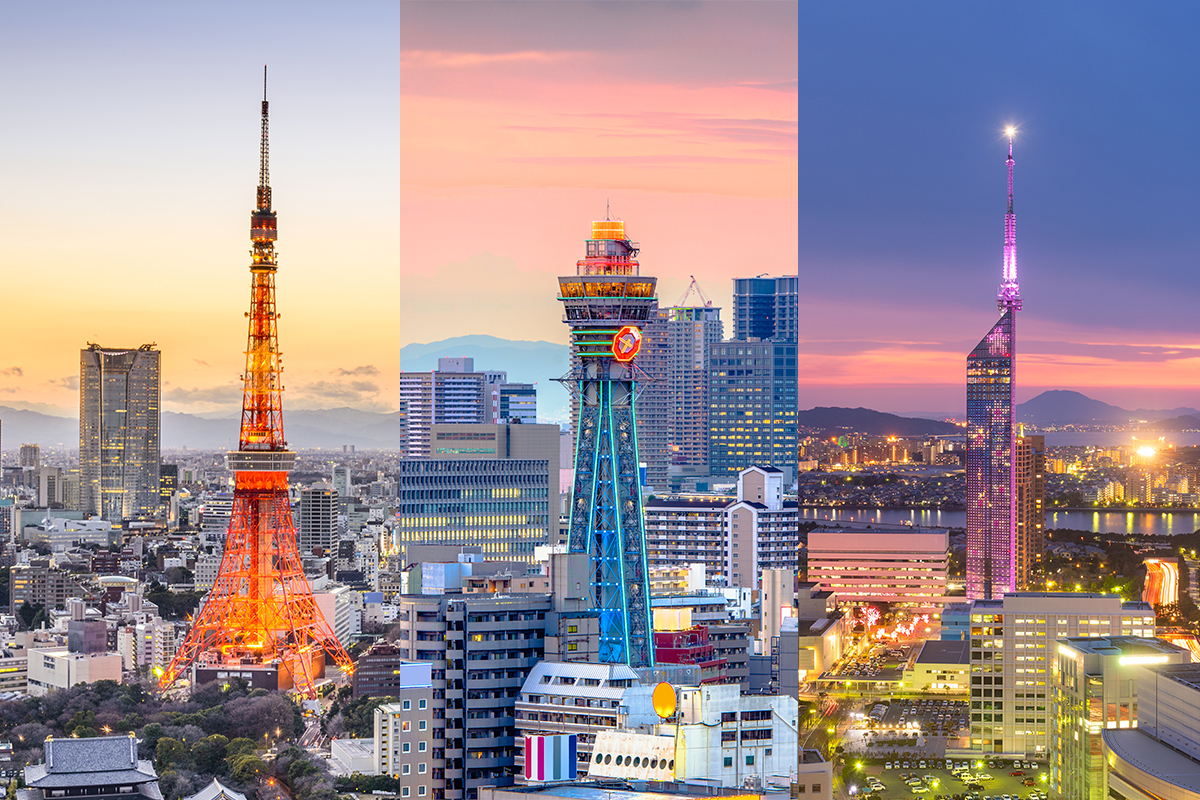
Breaking Down Japan’s Top 3 Cities for Setting Up a Business
Setting up a business in Japan is an exciting move, but picking the wrong city can burn through your budget fast. You need to consider where your target customers live and how much you can afford to pay in monthly overhead.
Fortunately, Japan’s top three startup hubs offer vastly different strengths, costs and lifestyle benefits. Tokyo, Fukuoka and Osaka each appeal to completely different types of founders and commercial goals. This simple breakdown will help you compare these cities so you can choose the right launching pad for your enterprise.
Tokyo: Big player capital
If your business model relies on pitching big venture capital funds or selling software directly to giant corporations, Tokyo is where you need to be. The massive capital region holds roughly 70% of all tech startups across Japan alongside major international banks. It is undeniably the most expensive city in the country, but having a Tokyo address gives your brand instant trust and authority. You will find an overwhelming density of bilingual professionals, networking events and global corporate headquarters here. Working out of Tokyo allows you to build high-level partnerships that are simply impossible to secure anywhere else in East Asia.
Navigating the real estate landscape in Tokyo requires a substantial financial commitment from early-stage founding teams.
- Average office rents hover around ¥35,000 per tsubo (3.3 square meters) per month, which represents the highest real estate costs in the country.
- Upfront security deposits typically demand anywhere from six to 12 months of rent paid entirely in advance.
Different districts cater to specialized industries, making location selection a crucial strategic step. For instance, Shibuya serves as the main hub for tech founders and app developers, while Toranomon hosts major commercial banks and global firms.

Fukuoka: Budget-friendly Startup City
Fukuoka is officially designated by the national government as Japan’s premier “Startup City.” If you are an early-stage founder looking to stretch your budget while building your core product, this coastal city is your best option. The local government makes it amazingly easy for foreign entrepreneurs to launch a company by offering reduced corporate tax rates and simplified startup visa support. Office space and housing costs are remarkably low, meaning your seed money will last twice as long compared to Tokyo. Additionally, Fukuoka sits right next to mainland Asia, making international travel and cross-border trade convenient for growing teams.
The financial barrier to entry in Fukuoka is significantly lower than in traditional economic powerhouses.
- Average office rents range from ¥18,000 to ¥22,000 per tsubo per month, offering dramatic operational savings.
- Dedicated coworking desks are widely available for approximately ¥15,000 to ¥30,000 per month for solo founders.
- Upfront rental deposits are much more accessible, generally requiring only three to six months of rent.
Founders can choose between the energetic Tenjin district for tech incubators or the transit-focused Hakata area for trade and logistics operations.
Osaka: Commercial and retail hub
Osaka serves as the economic heart of Western Japan, built on a rich history of trade, manufacturing and consumer commerce. People in Osaka are famous for being friendly, direct and deeply pragmatic when doing business. If you are launching a consumer brand, opening a retail store, or building a healthcare app, Osaka offers a massive consumer market with manageable overhead costs. The city provides easy international travel options through Kansai International Airport and fast bullet train connections to Tokyo. Founders in Osaka can build a profitable business quickly without taking on the extreme cash burn of the eastern capital.
Operating a business in Osaka strikes a balanced middle ground regarding commercial real estate expenditure.
- Average monthly office rents stand at approximately ¥22,000 per tsubo, sitting right between Fukuoka and Tokyo rates.
- Property owners usually request upfront rental deposits ranging between three to 12 months depending on the building.
The city features distinct commercial zones tailored to specific business operations. Umeda serves as the main corporate district, Shinsaibashi and Namba lead in retail and hospitality, while Nakanoshima accommodates dedicated biotech research firms.
Japan startup hubs at a glance
| Strategic Metric | Tokyo | Fukuoka | Osaka |
|---|---|---|---|
| Primary Industry Focus | Venture Capital, Enterprise B2B, Finance | Early-Stage Tech, Software, Cross-Border Trade | Consumer Brands, Retail, Biotech, Hospitality |
| Average Monthly Office Rent per tsubo (3.3m2) | ¥34,316 | ¥19,382 | ¥21,095 |
| Upfront Rent Deposit | 6–12 Months | 3–6 Months | 3–12 Months |
| Local Support and Incentives | Corporate networking, high VC concentration | Dedicated Startup Visa, local tax incentives | Regional commercial network, biotech hubs |
| Strategic Metric | Tokyo |
|---|---|
| Primary Industry Focus | Venture Capital, Enterprise B2B, Finance |
| Average Monthly Office Rent per tsubo (3.3m2) | ¥34,316 |
| Upfront Rent Deposit | 6–12 Months |
| Local Support and Incentives | Corporate networking, high VC concentration |
| Strategic Metric | Fukuoka |
|---|---|
| Primary Industry Focus | Early-Stage Tech, Software, Cross-Border Trade |
| Average Monthly Office Rent per tsubo (3.3m2) | ¥19,382 |
| Upfront Rent Deposit | 3–6 Months |
| Local Support and Incentives | Dedicated Startup Visa, local tax incentives |
| Strategic Metric | Osaka |
|---|---|
| Primary Industry Focus | Consumer Brands, Retail, Biotech, Hospitality |
| Average Monthly Office Rent per tsubo (3.3m2) | ¥21,095 |
| Upfront Rent Deposit | 3–12 Months |
| Local Support and Incentives | Regional commercial network, biotech hubs |
Selecting the appropriate market requires evaluating operational costs, target audiences and initial capital requirements across each region. Tokyo stands out as the premium location for venture capital backing and corporate B2B contracts, but it carries the highest overall cost and requires 6 to 12 months in rent deposits. Fukuoka delivers the most affordable environment for early-stage teams, offering the lowest monthly office rates alongside 3 to 6 months in deposits. Osaka caters directly to retail, consumer brands and medical technologies while maintaining moderate real estate expenses.
Regardless of which city you choose, launching a business on a formal Business Manager Visa anywhere in Japan typically requires a minimum of ¥30,000,000 (~$200,000) in capital and at least one local full-time employee.
Free government help for foreign founders
You do not have to handle your Japanese market entry entirely on your own. Government agencies and municipal departments offer extensive free assistance designed specifically for international founders. Groups like the Japan External Trade Organization (JETRO) provide free business consultation, setup paperwork help and temporary office spaces. Local city desks in Tokyo and Fukuoka also provide specialized translators and visa advisors to guide you through registration. Taking advantage of these free government resources will save you millions of yen in legal and consulting fees during your launch.
Foreign entrepreneurs can leverage three major public organizations to streamline their corporate setup process. The Japan External Trade Organization (JETRO) offers free market intelligence, incorporation assistance and temporary workspace. For those setting up in the capital, the Business Development Center Tokyo assists foreign business owners with local registration and real estate acquisition. Meanwhile, the Startup City Fukuoka Desk guides international teams through startup visa applications and municipal tax incentives. Engaging with these tailored services ensures a smoother transition into the Japanese market.
Which city should you choose?
Choosing the ideal city ultimately comes down to your funding stage, industry focus and financial runway.
- Pick Tokyo if you need to raise series funding or sell software to Fortune 500 corporate clients immediately.
- Pick Fukuoka if you are an early-stage team that needs to keep monthly burn low while building your product.
- Pick Osaka if you are launching a physical consumer brand, a retail concept, or a healthcare startup.
Aligning your business goals with the right local ecosystem will give your company the best chance of long-term success in Japan.
When expanding your business beyond Tokyo, impress your most valued regional partners by hosting them for an unforgettable night of private geisha entertainment and rare sake in Kyoto