

B2B Content ROI: How Marketers and CEOs Judge Content Differently
Business leaders across Japan and Asia-Pacific say influence is essential to business success. New AIM B2B research shows what builds it: trust, credibility, demonstrated value and relationships. Yet many companies still leave it to chance.
Only three of the 152 business leaders we surveyed across Japan and Asia-Pacific said influence does not matter to their organization’s success.
Some 83% called influencing business partners essential or very important. 43% went further, describing it as essential.
That is a striking level of agreement. Influence is clearly not a soft concept or a nice-to-have for the communications team. It is central to how businesses build reputation, earn trust, create preference and secure the support of the people who matter to their success.
Yet many companies still treat influence as something that happens naturally when the right people meet, when a campaign gets attention or when a sales opportunity reaches the pipeline.
Our research, “From Content to Influence,” suggests it deserves much more attention than that. Influence is built through a combination of relationships, credibility, demonstrated value and consistent engagement. It takes time, and it requires more than one department or channel to deliver.
The question for B2B companies operating across Asia-Pacific is not whether influence matters. It is whether they are actively building it.
Influence built between people
When we asked how influence contributes to business success, 78% of respondents identified building trust and reputation. Creating preference (49%) and encouraging advocacy (37%) also featured, but trust and reputation stood out.
That makes sense. In B2B, influence is rarely about persuading someone in a single interaction. It is about becoming a credible voice, a trusted partner or a company that others are willing to recommend when a decision needs to be made.
The research points to the importance of relationships in that process. Eighty percent said business relationships carry more influence than business connections, with 55% saying they carry significantly more.
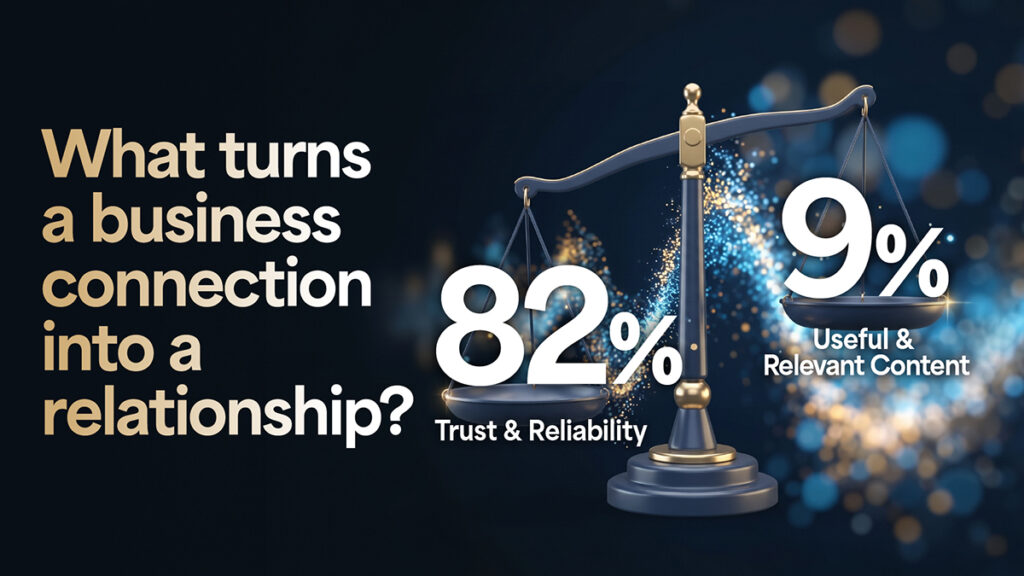
And what turns a connection into a relationship? 82% selected trust and reliability. Understanding the other party’s needs came next at 47%, followed by repeated interaction over time at 42%. Useful and relevant content was selected by just 9%.
These findings tell us something important about the nature of influence. It is not simply about being known. It is about being known, understood and trusted by the right people.
Leonardo Brems, managing director of Admark Asia Group, captured the human element when he told us: “Humans still make the decisions, and despite AI, we are still influenced the most by our emotions.”
That does not mean B2B decisions are irrational. It means that expertise, evidence and commercial value are assessed by people, and people bring their experience, confidence and judgment to the process.
Why this matters in Asia-Pacific
Building influence is important in any market. But it becomes particularly significant when a business operates across multiple countries, cultures and business environments.
A company may have a strong reputation in its home market, established customer relationships and a recognized position in its industry. That reputation does not automatically travel with it to Japan, South Korea, Singapore or elsewhere in Asia-Pacific.
In a new market, a prospective customer may know the category but not the company. They may recognize the problem a solution addresses but have little reason to trust the organization offering it. The business has to earn that confidence, often while competing against providers with longer-standing local relationships.
This is where influence becomes a strategic consideration rather than simply a communications objective.
A regional leadership team needs to think beyond awareness and lead generation. Who knows the business? Who understands what it brings to the market? Which customers, partners and industry voices are prepared to vouch for it? Is the company part of the conversations in which business preferences are formed?
These are not questions that can be answered by looking at campaign performance alone.
The research found that 83% of business leaders consider influencing external partners essential or very important to organizational success. That is a reminder that influence extends well beyond prospective customers. It includes partners, industry bodies, advisers, suppliers and the wider business community.
For companies operating across APAC, these relationships can help establish credibility in a market, create access to new opportunities and strengthen a reputation that would otherwise take years to build.
From Content to Influence
Content, storytelling and other factors compound on the way to influence
Schematic. Bar length shows each ingredient’s relative weight at each stage, not survey values.
Source: AIM B2B, From Content to Influence (2026). Survey of 152 business leaders in Japan and across Asia-Pacific, July 18 to September 10, 2026. aim-b2b.com
From connections to influence
Content still has an important role. Seventy-one percent of respondents said they had contacted or connected with someone because of content, while 63% had seen content influence a business preference or decision.
But content is one part of a much wider process. It can introduce an idea, demonstrate expertise and give people a reason to start a conversation. What happens next depends on the people behind the brand and whether they deliver on what the content promises.
Brian Ashenfelder, country manager for Japan at Hunter Amenities, expressed this particularly well: “Storytelling opens the door, but your actions keep it open.”
For B2B companies, that means connecting marketing, communications, sales and leadership around a shared understanding of what they want to influence and whose confidence they need to earn.
Marketing can create visibility and communicate expertise. PR can build credibility through third-party voices and relationships with industry stakeholders. Sales teams develop direct relationships and understand the commercial concerns of buyers. Senior leaders bring experience, authority and the ability to build confidence at the highest levels.
None of these activities work in isolation — Influence grows when the experience a company creates is consistent with the story it tells.
Influence needs to be managed, not assumed
One of the most interesting findings in our research is that business leaders recognize the importance of influence, but it is not always clear how organizations translate that recognition into action.
The 82% who identified trust and reliability as the things that turn connections into relationships offer a useful starting point. So do the 62% who said demonstrated business value matters at least as much as content, and the 58% who said the same of personal trust.
These are not outcomes that can be delivered by a single campaign. They require consistency across the business, from the first interaction to the customer experience and the relationships that continue long after a sale.
They also require leadership attention. If influence is important to business success, responsibility for building it cannot sit solely with marketing or sales. Leaders need to consider which relationships matter, what the organization is known for, where its credibility comes from and how it can contribute value to the people and organizations around it.
This is especially important in APAC, where regional strategies need to be supported by local understanding and meaningful engagement in individual markets. A global reputation can open a door, but local credibility helps keep it open.
The decision before the meeting
In Japan, the idea of nemawashi offers a useful illustration of how influence can work. Important decisions are often shaped through conversations and consensus-building before a formal meeting takes place. By the time everyone sits around the table, people may already have formed views about the options, the risks and the organizations involved.
The same principle applies more broadly across B2B markets. Influence is often established before a company knows it is being considered. It develops through previous interactions, recommendations, reputation and the confidence people have in the organization.
That is why companies cannot afford to leave it to chance.
Every B2B business operating in Asia-Pacific is influencing, or being influenced by, the people around it. The question is whether it understands where that influence comes from and is investing in the relationships, credibility and value that sustain it.
If 83% of business leaders say influence is essential or very important to success, perhaps it is time to give it the same strategic attention as market share, revenue and growth. The ultimate lesson?
Influence is too important to leave to chance.
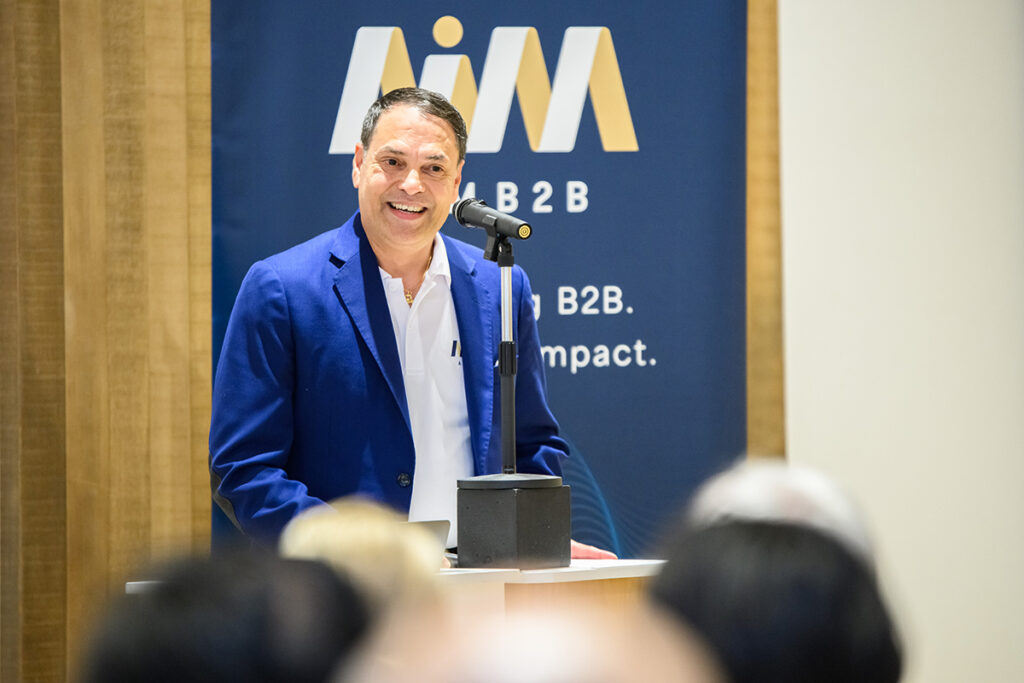
Robert Heldt is CEO and co-founder of AIM B2B, an integrated B2B marketing and strategic communications agency headquartered in Tokyo, with offices in Seoul and Singapore. AIM B2B helps B2B brands tell their stories, build trust and earn influence across Asia. Robert is also APAC President of AMIN Worldwide.
Download the full report, From Content to Influence. If you have a story of how influence shaped a real business decision, our research team would like to hear it: always.forward@aim-b2b.com.