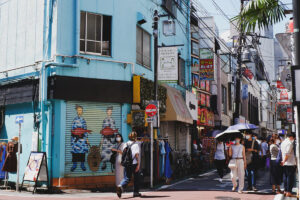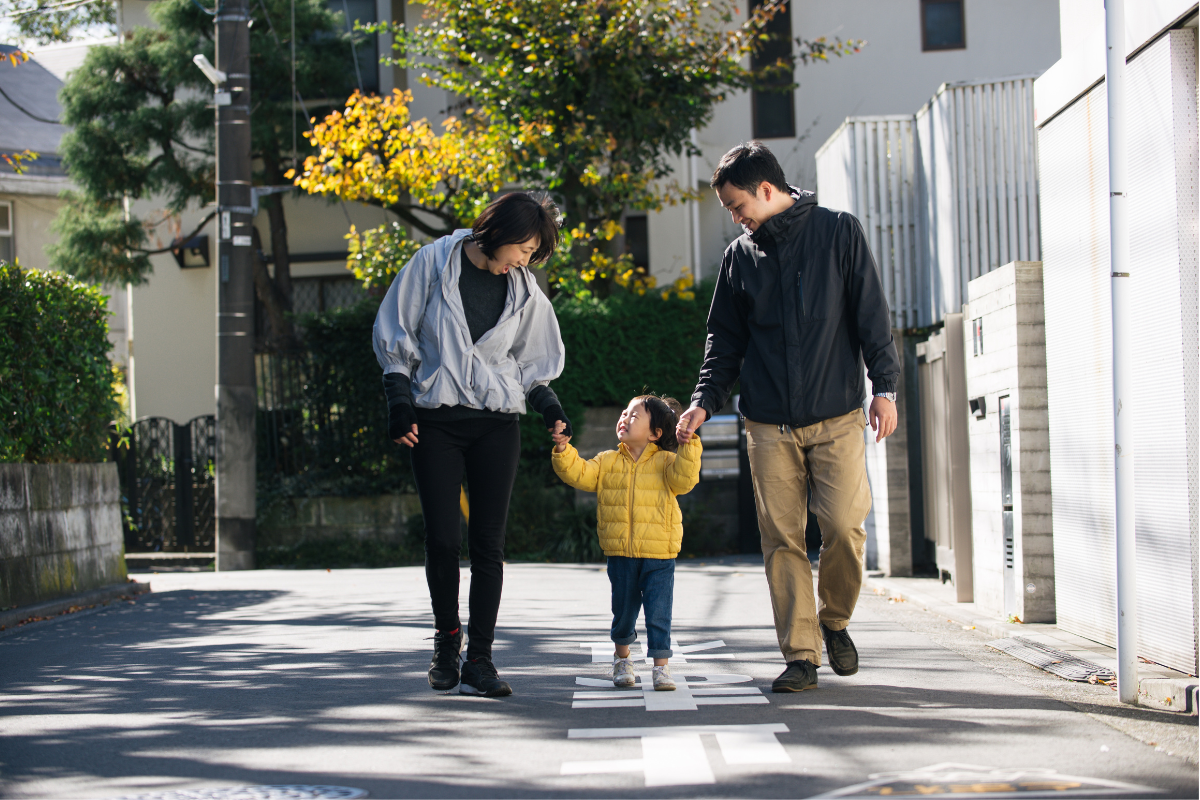
Best Neighborhoods for Expat Families in Tokyo and Yokohama
Tokyo is a city of infinite choice, but when it comes to raising children Japanese and international families tend to converge on a small number of neighborhoods in the capital and Yokohama. These are places where safety feels intuitive, schools are part of daily conversation, parks shape weekends and community forms naturally around shared routines.
Increasingly, that search extends beyond Tokyo’s wards to nearby Yokohama, where space, international infrastructure and a calmer pace of life offer an equally compelling family environment. Rather than chasing prestige addresses or short commutes alone, families choose districts that support everyday life with children. Here are our reviews of Setagaya, Koto, Meguro, Bunkyo, Kichijoji, Minato and Yokohama, which have emerged as residential centers for young families and expat households.
Setagaya: Greenest Family Ecosystem in Tokyo
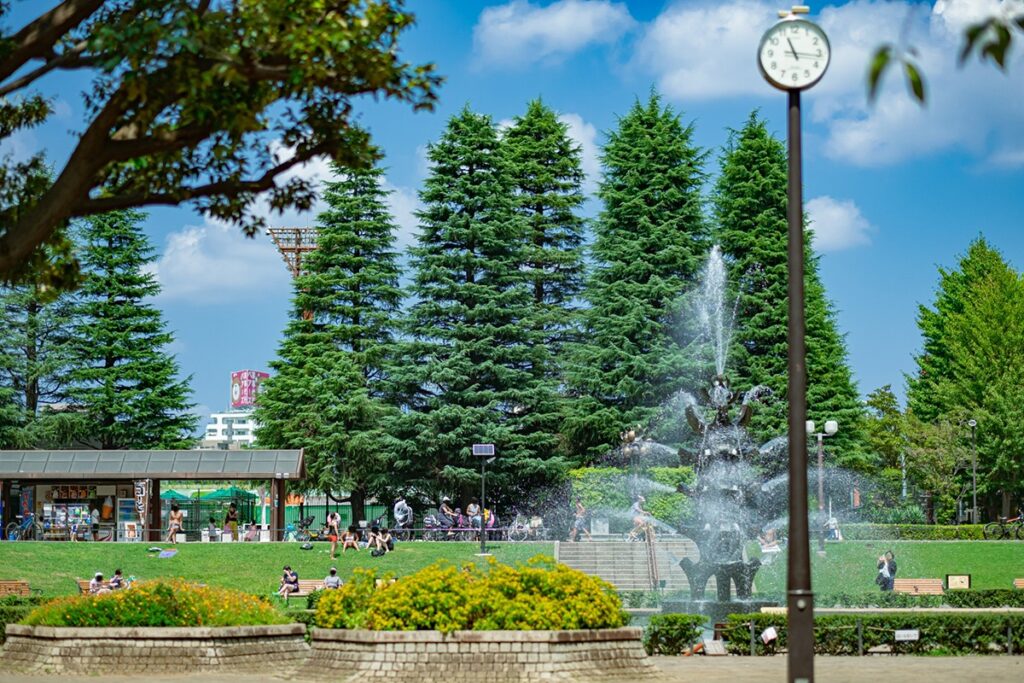
With about one million residents, Setagaya is widely considered one of the premier family-friendly neighborhoods in Tokyo because it balances genuine livability with city access. More children live here than anywhere else in Tokyo, and it shows in the relaxed rhythm of daily life.
What makes Setagaya work is its abundance of green space, a rarity in the metropolis. Families here enjoy Kinuta Park’s (above) wide lawns, Todoroki Valley’s shaded stream paths and the long stretches of the Tamagawa River. Housing tends to be larger and lower-rise than in inner wards, making it one of the few places where families realistically consider gardens, storage space and quieter streets.
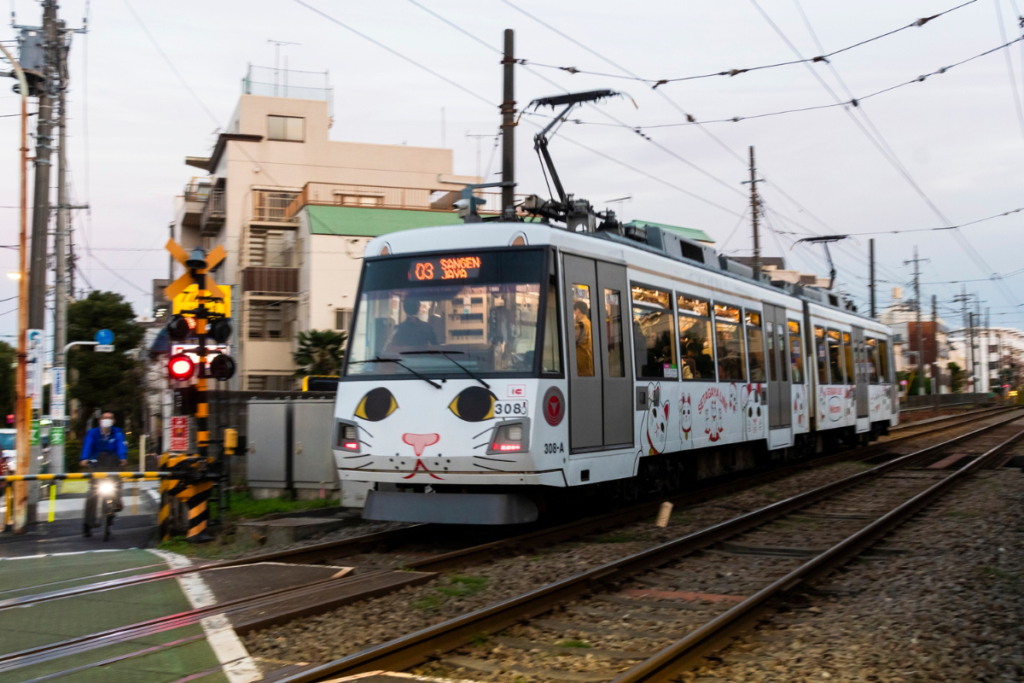
Mornings are defined by parents commuting toward Shibuya and Shinjuku, while afternoons belong to bicycles, after-school clubs and grandparents doing pickups. Neighborhoods such as Futakotamagawa, Sangenjaya, Shimokitazawa and Chitose-Karasuyama each offer slightly different lifestyles, but all share the same underlying appeal: this is Tokyo built around family life rather than retrofitted for it.
Local Insight: For parents, Setagaya also offers moments of quiet culture. Gotokuji Temple, famous as the birthplace of the maneki-neko, is a surprisingly serene escape tucked into a residential pocket of the ward. It’s the kind of place parents visit alone on a weekday morning or together after a school drop-off, reinforcing Setagaya’s reputation as a district where everyday life and personal space coexist.
Map:
Koto: Modern Waterfront Living and Stroller-Friendly Streets
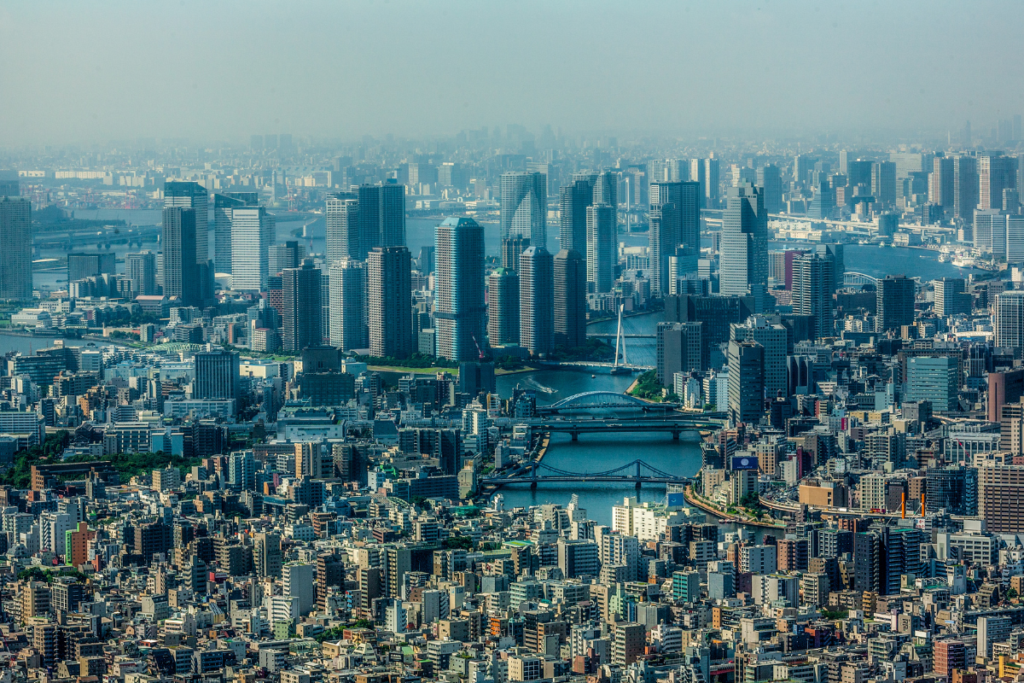
If Setagaya represents traditional family Tokyo, Koto Ward is its modern counterpart, ideal for parents who value efficiency, cleanliness and predictability. Over the past decade, areas such as Toyosu, Ariake and Harumi have transformed from industrial waterfronts into some of the city’s most deliberately planned residential zones.
The appeal here is immediate: streets are wide and flat, sidewalks are stroller-friendly and there are no hills or narrow alleys to navigate. Buildings are new, clean and designed with families in mind. Many condominiums function such as vertical villages, including daycare centers, indoor playrooms, study spaces, rooftop gardens and shared lounges.
Green space in Koto feels different from Setagaya’s organic parks; here, waterfront promenades, cycling paths and large modern parks create a calm, resort-like atmosphere. Weekend life revolves around Toyosu Gururi Park, canalside walks and easy access to Odaiba’s entertainment facilities.
Local Insight: Beyond parks and promenades, parents often gravitate toward teamLab Planets, which sits at the intersection of art, technology and quiet spectacle. It is a popular choice for date afternoons or solo cultural resets—one of the few attractions in Tokyo that feels immersive without being overwhelming.
Map:
Meguro: Boutique Urban Living with Community Warmth
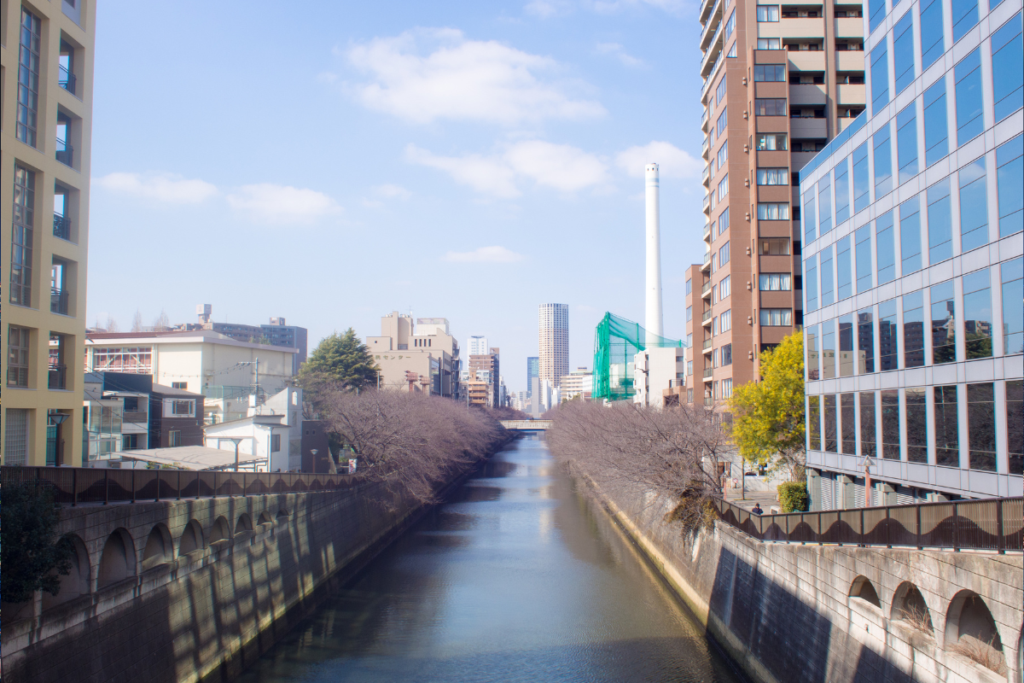
Meguro offers a smaller, more refined alternative to the scale of other wards, suiting parents who want convenience and aesthetics without fully committing to high-rise or large-scale suburban living. It combines safety, culture and walkability in a way that appeals to families who want central access without the intensity of larger districts.
Neighborhoods such as Nakameguro, Yutenji, Himonya and Meguro itself balance stylish cafés and boutiques with quiet residential streets and well-regarded public schools. The local community feels tight-knit, and daily life is highly walkable, an underrated advantage for families with young children.
Local Insight: For parents, Meguro’s understated cultural depth shines along the Meguro River, particularly around the Meguro Parasitological Museum. It is quirky, intellectual and distinctly local—exactly the kind of place that reflects Meguro’s appeal to parents who value curiosity, education and slightly off-center experiences over mass attractions.
Map:
Bunkyo: The Educational Hub Prioritizing Safety and Calm
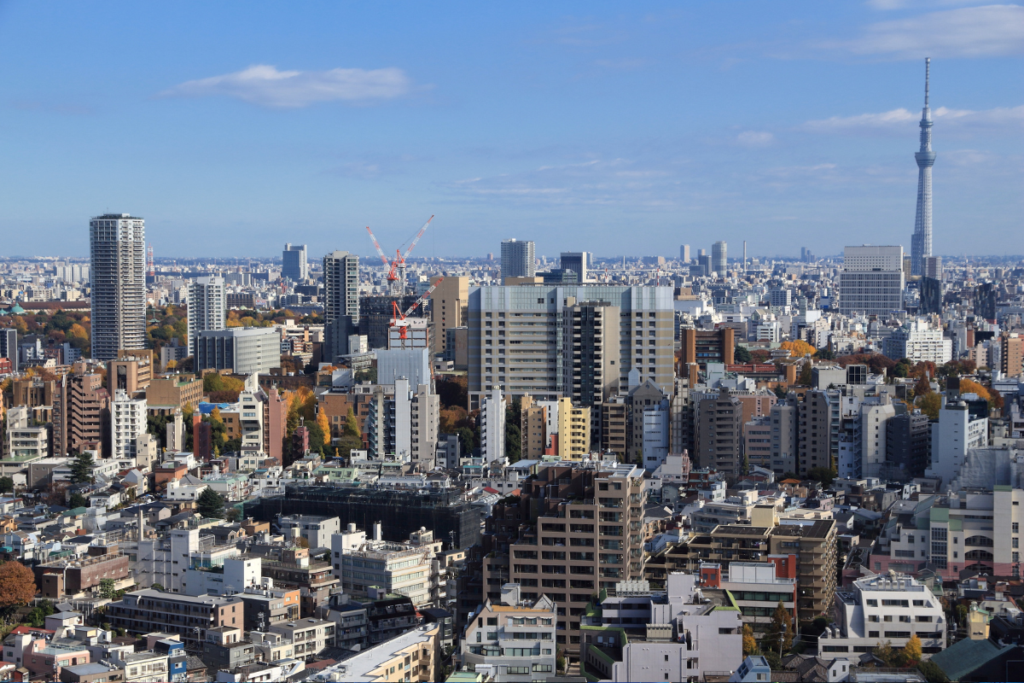
For parents who value safety and schooling above all else, Bunkyo (pop. 240,000) remains one of the most dependable family-friendly neighborhoods in Tokyo. Home to the University of Tokyo and many high-performing public schools, the ward consistently ranks among Tokyo’s safest and has long been associated with academic excellence.
The atmosphere here is quieter and more restrained than in trend-driven neighborhoods. Streets are orderly, parks are refined and the population skews toward families who prioritize academics, stability and long-term residence.
Local Insight: Bunkyo’s adult appeal is anchored by places such as Koishikawa Korakuen, one of Tokyo’s most refined traditional gardens. Parents often use it as a mental counterweight to busy work weeks—a space for reflection, reading or quiet walks that mirrors the ward’s emphasis on discipline, order and long-term thinking.
Map:
Kichijoji: Suburban Space with Creative Lifestyle Appeal
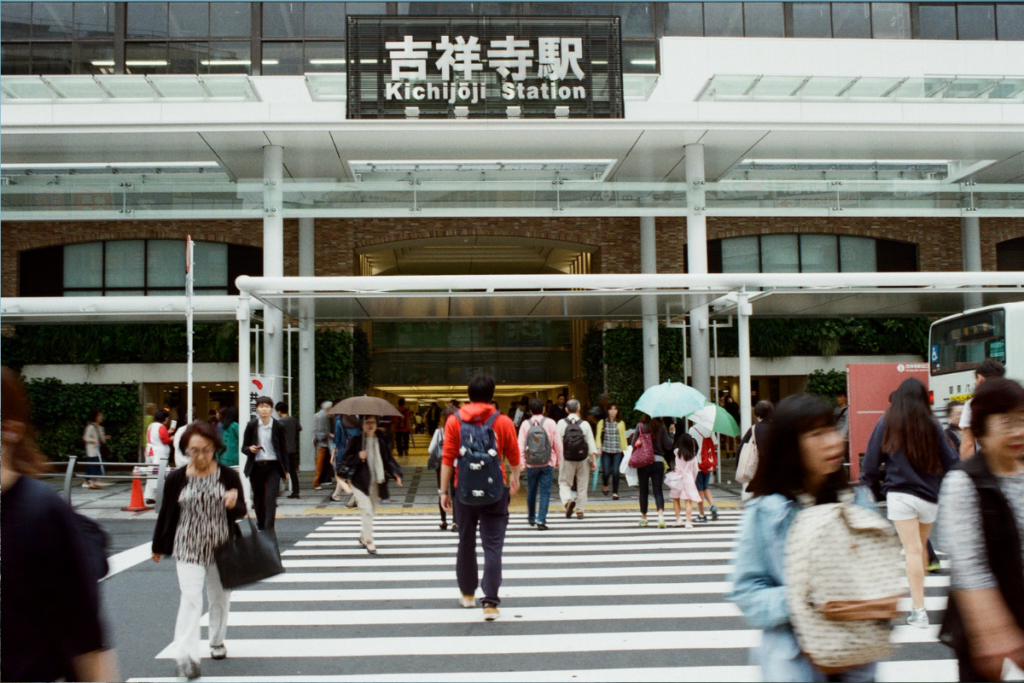
Although technically outside central Tokyo, Kichijoji (pop. 150,000) continues to rank among Japan’s most desirable places to live because it offers space without isolating families from the metropolitan rhythm. Its appeal lies in balance: larger homes, a strong local identity and Inokashira Park—one of the city’s most beloved green spaces—at its center.
Families are drawn to the relaxed, creative atmosphere and the sense that life moves at a slightly more human pace. Despite the suburban feel, direct train lines keep Shinjuku and Shibuya within easy reach.
Local Insight: For parents, Kichijoji’s charm extends beyond Inokashira Park into the cultural life of Kichijoji Harmonica Yokocho. In the evenings, this narrow alley of intimate bars and eateries becomes a favorite for parents reclaiming a sense of adult city life—casual, social and refreshingly unpretentious.
Map:
Minato: Center for International Families and Diplomats

With some 270,000 residents, including about 10% foreigners, Minato serves as the primary hub for international households, offering unmatched proximity to international schools, embassies and English-speaking medical services. While not uniformly family-friendly, areas such as Hiroo, Azabujuban, Shirokane and the newer Azabudai Hills are designed to support global living.
Life here is highly convenient and globally oriented, with short commutes and strong security. The trade-off is cost and density, but for families prioritizing international education and support infrastructure, Minato remains the top choice.
Local Insight: Minato offers parents polished cultural anchors such as the Mori Art Museum. Its late hours, rotating global exhibitions and skyline views make it especially appealing for parents balancing demanding careers with limited free time.
Map:
Yokohama: Coastal Living with International Heritage
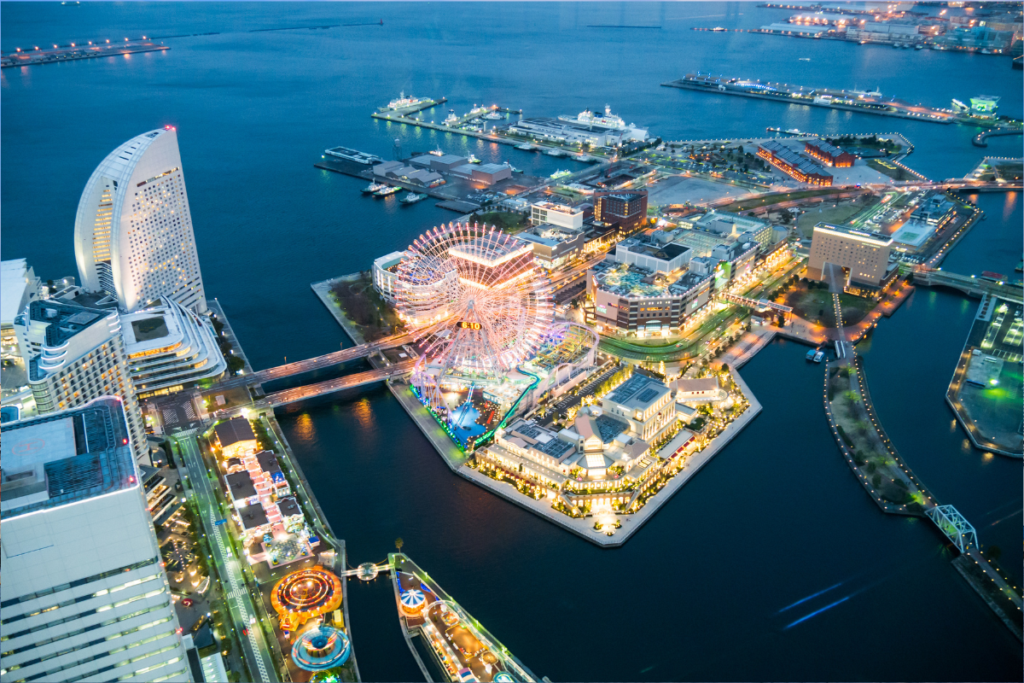
For many international households, Yokohama represents a compelling alternative to Tokyo, offering significantly more space, a calmer pace and a strong international legacy. Neighborhoods such as Yamate, Motomachi and Minato Mirai have long histories as expat enclaves, featuring larger housing stock and a walkable, European-style layout.
Direct train access keeps central Tokyo within reach, but daily life in Yokohama feels distinctly more open and relaxed—particularly appealing for families planning longer-term stays.
Local Insight: For parents, Yokohama’s defining adult escape is Sankeien Garden, a spacious traditional garden that feels worlds away from central Tokyo. It reflects why many families choose Yokohama long-term: more room not just for children to grow, but for adults to breathe, slow down and reconnect with a broader sense of place.
Map:
FAQ
Which Tokyo neighborhood is best for international schools? Minato Ward and Yokohama are the primary hubs for international education. Minato offers the highest concentration of international schools and preschools within central Tokyo, while Yokohama (particularly Yamate and Naka Ward) hosts several historic international institutions with larger campuses.
Where can families find the most green space in Tokyo? Setagaya Ward and Kichijoji (Musashino City) are renowned for their greenery. Setagaya is home to the expansive Kinuta Park and Todoroki Valley, while Kichijoji is centered around the beloved Inokashira Park. For a coastal, resort-like open feel, Koto Ward’s waterfront areas are also excellent choices.
Is it difficult to navigate Tokyo with a stroller? It depends on the neighborhood. Koto Ward is arguably the most stroller-friendly area, featuring wide, flat sidewalks and modern infrastructure with no hills. In contrast, older or hillier districts can present challenges with narrow alleys, though they often offer more traditional charm.
Which area is best for a quiet, academic environment? Bunkyo Ward is the ideal choice for families prioritizing a calm, educational atmosphere. Known for its safety and proximity to top-tier universities and schools, it offers a restrained, orderly environment perfect for focused study and long-term residence.
Finding Your Rhythm
Data from recent demographic reports consistently shows that Setagaya, Koto, Meguro, Bunkyo, Kichijoji, Minato and Yokohama remain the true residential centers for families with children. Each district reflects a different philosophy of family life: tradition versus modernity, density versus space and central access versus lifestyle breathing room.
The best choice is rarely about prestige alone, but about which rhythm of daily life fits your family best. To ensure you never miss an update on life in Japan—from the latest neighborhood guides to weekend event recommendations—subscribe to the GoConnect newsletter today. Join our community and let us help you find your perfect fit in Tokyo or Yokohama.
If you enjoyed this article, please let us know and share your thoughts at hello@goconnect.jp.