Finding Your Voice: The Malvern College Tokyo Expressive Arts Program
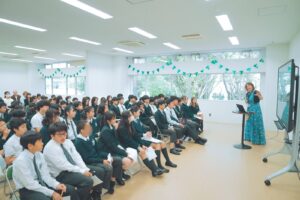
At Malvern College Tokyo, the Expressive Arts Program is far more than an extracurricular club—it is a central theater for developing the human skills essential for a changing world. Walk past the music rooms during break time, and you likely won’t find silence. Instead, you’ll hear the gentle hum of cellos and violins as students—some of whom had never touched an instrument before joining—practice with enthusiasm.
For Headmaster Ewan McCallum and Head of Expressive Arts Dr Ken Hakoda, this is the sound of a thriving, inclusive culture where students find their home at school.
“We want students that can engage with adults really well,” says Mr McCallum. “The arts program aims to help students articulate, speak in public and present themselves well.”
Stage for Every Student
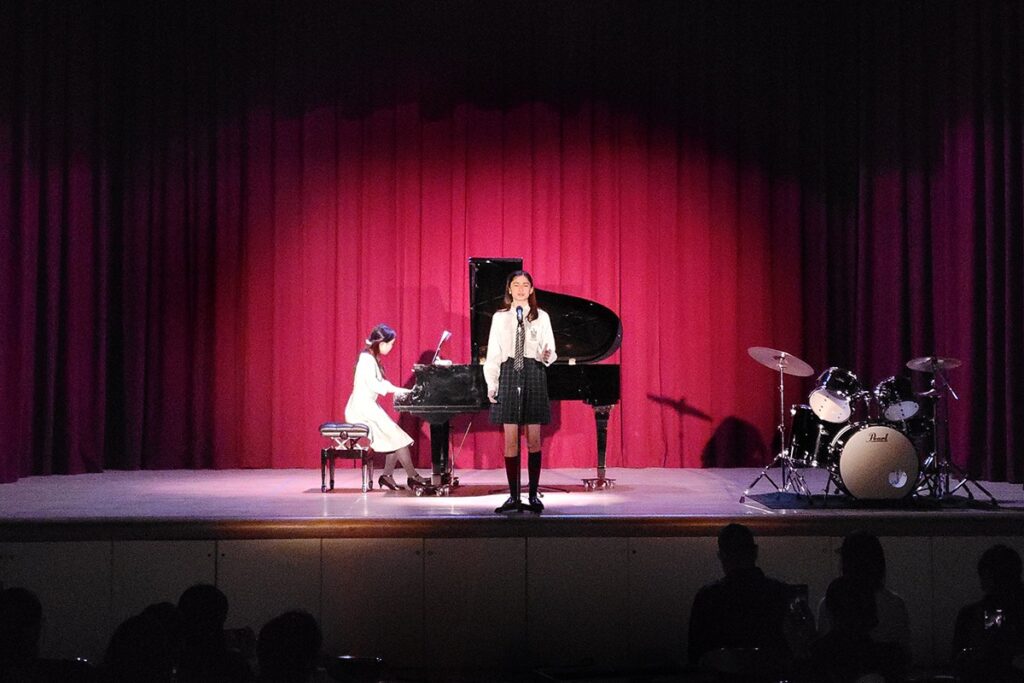
The Malvern College Tokyo Expressive Arts Program is defined by its inclusivity, ensuring that public performance is a norm for every child rather than a privilege for a select few. Unlike traditional schools where the arts might be reserved for theater kids, MCT provides specialist teaching for students aged four to 18.
Dr Hakoda, who brings more than 30 years of teaching experience from the United States, emphasizes that confidence comes from preparation. He notes that while children in Japan can sometimes be shy about public speaking, the school’s approach transforms them. He recalls one student who began as timid but, after finding success in music, started “singing like a diva,” gaining a newfound confidence that permeated her entire school life.
To further support this development, the school utilizes its accreditation with the London Academy of Music and Dramatic Art (LAMDA). Mr McCallum notes that this partnership was a clear choice, as it provides a structured framework for every student to master public speaking, while allowing those with professional aspirations to “laser in” on specific performance skills.
Orchestrating Minds and Academic Benefits
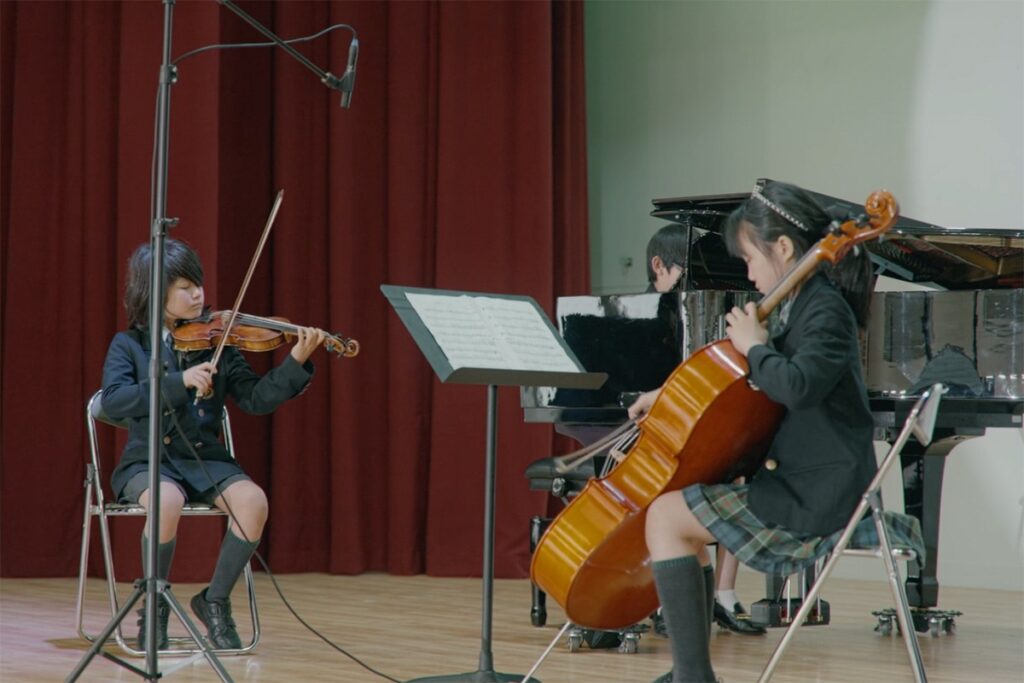
The philosophy of inclusivity is most visible in the String Orchestra Program, a mandatory curriculum for Prep 5 and 6 pupils where everyone learns an instrument such as the cello, violin or bass.
Beyond the music, Dr Hakoda points out the hidden academic benefits, noting that music requires something beyond just music. Reading notation demands that students constantly count rhythms, while understanding harmony itself becomes an exercise in mathematics. This rigorous mental processing connects artistic expression directly to cognitive thinking. It creates a unique culture where students voluntarily spend their breaks practicing in the music room rather than just running outside, reinforcing the Malvern College Tokyo arts program’s role in daily student life.
The Ensemble Effect: Collaboration and Human Skills
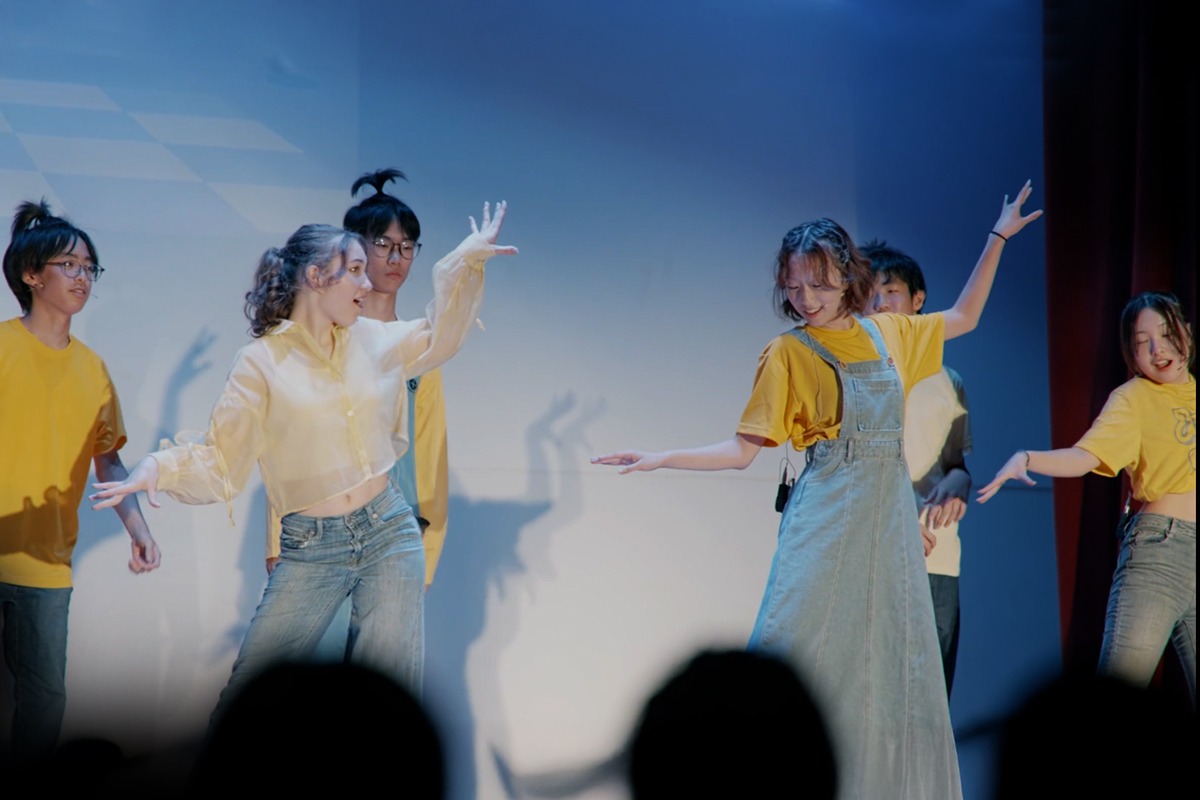
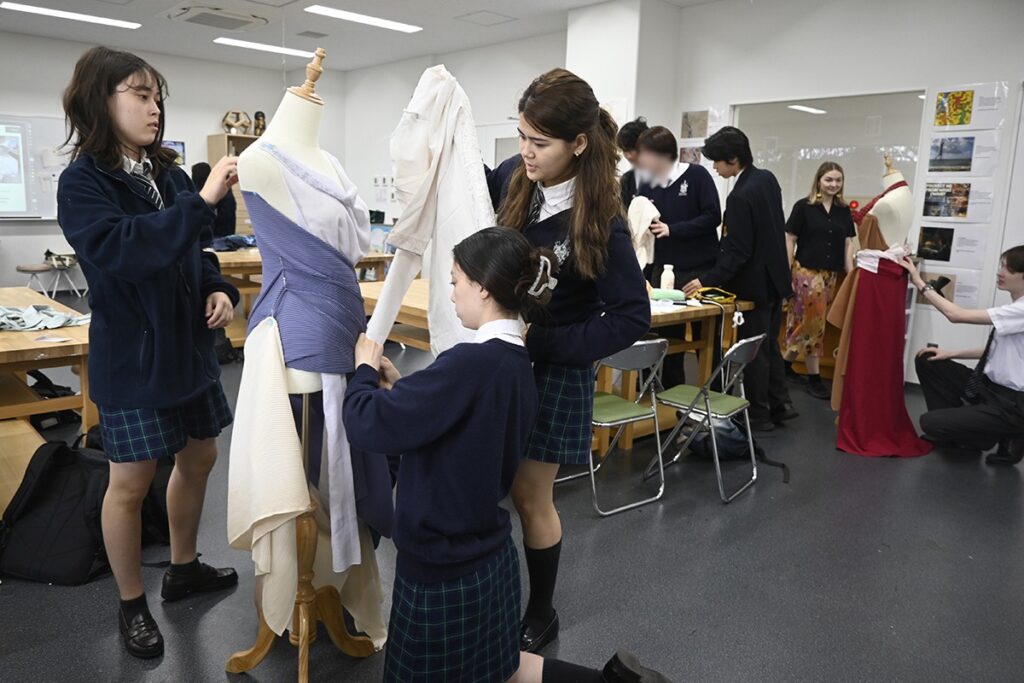
In a world increasingly shaped by Artificial Intelligence (AI), Mr McCallum argues that the human struggle and coordination required to bring a performance together matter more than ever. It’s in the rehearsals, the missed cues, the problem-solving and the shared effort that students build grit and learn to work as one. This kind of teamwork, he notes, is precisely what AI cannot replicate, making the arts a powerful training ground for collaboration and real-world human connection.
Dr Hakoda illustrates this with a recent project where students produced their own music video. The project required students to define roles based on their individual strengths:
- Some students focused on singing and performance.
- Others took charge of writing lyrics or editing the video.
- The group had to trust one another in order to create a single, unified product.
“The success of the performance is not for the one individual but for everybody,” Dr Hakoda explains. This teaches collective responsibility in a way that individual assignments cannot. He emphasizes that the triumph of a show belongs to the entire team—including the writers, editors, and technical crew—not just the person on center stage. For the production to succeed, everyone must execute their specific role.
Opening Doors: Nurturing Talent Through Opportunity
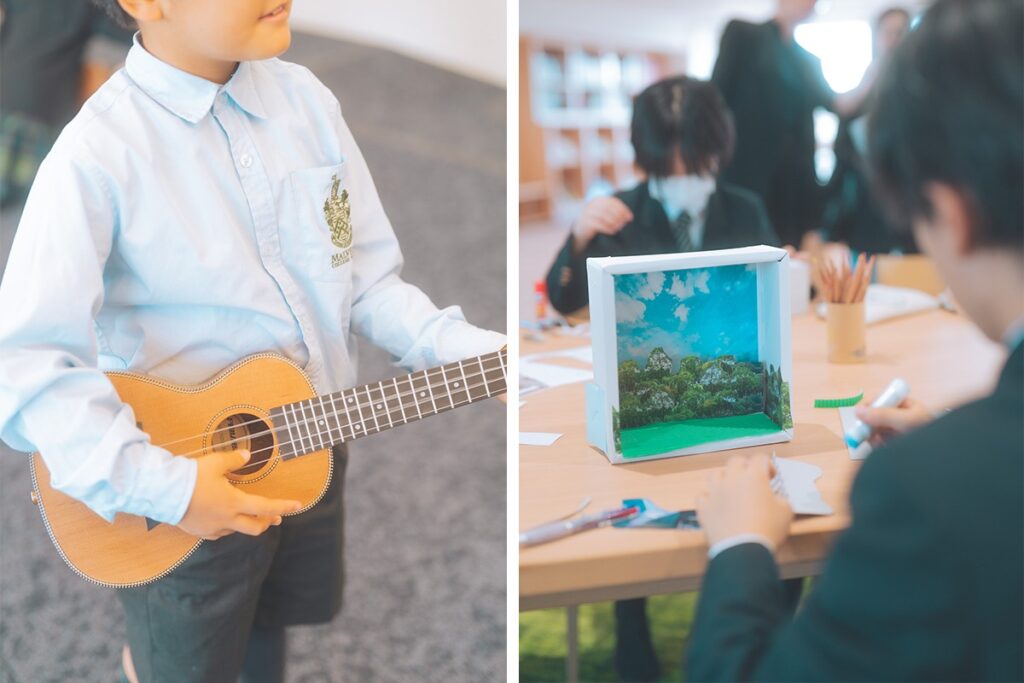
Malvern College Tokyo offers a financial pathway through its Scholarship Program for pupils with exceptional talent and strong potential. Scholars receive partial fee remission, tailored enrichment and the distinction of being named a Malvern Scholar. Mr McCallum emphasizes that a scholarship represents both recognition and responsibility. Scholars receive mentorship and opportunities to develop their strengths. They are also expected to contribute actively to school life as role models and ambassadors in their field, engaging fully in performances, exhibitions, concerts or creative projects, while helping foster a vibrant arts culture across campus.
Mr McCallum notes that the program is about putting education first, ensuring the school welcomes students who are a great fit regardless of their financial background.
Professional Readiness and Real-World Preparation
For students who wish to pursue the arts professionally, Dr Hakoda ensures they are college-ready by leveraging his background as a college professor in the US.
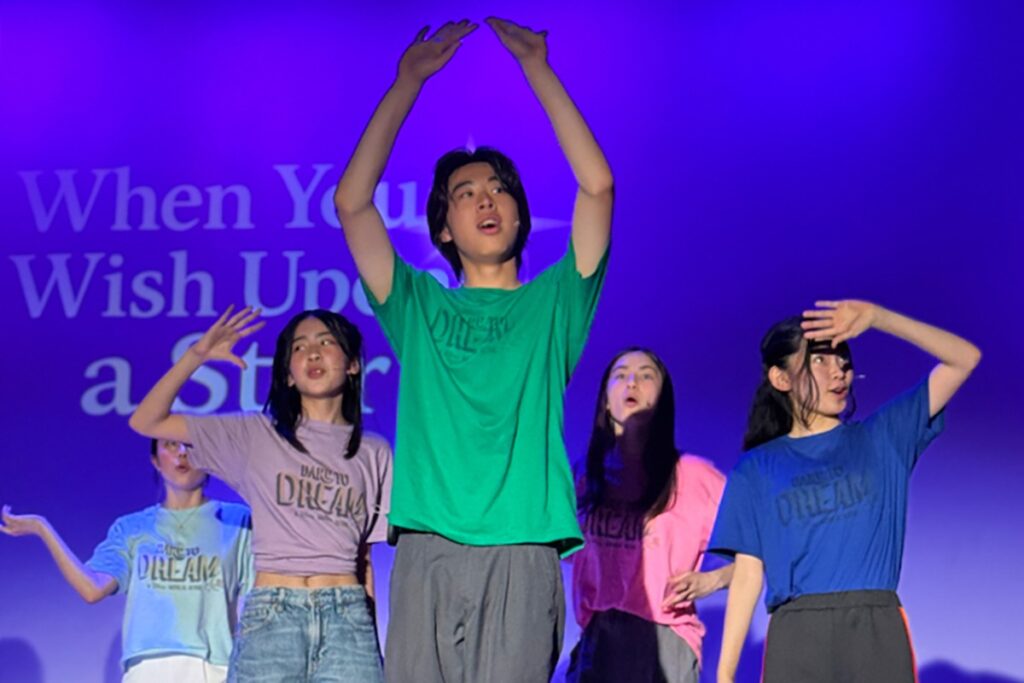
To emulate the professional world, the school offers a popular summer program where students rehearse intensively for two weeks to put on a full show. “That’s how the professionals do, that’s their day job,” Dr Hakoda explains, noting that this real world pace prepares them for the rigors of the industry. Whether a student aims for a career on Broadway or simply needs the confidence to present in a boardroom, the program is driven by a simple philosophy.
“The most important element in teaching is love,” Dr Hakoda says. “You have to love your subject, love your students and love what you do.”

FAQ
Do students need prior experience to succeed in the arts?
No, prior experience is not required. Many students at Malvern College Tokyo have never played an instrument before joining. The program is designed to be inclusive, helping beginners practice with enthusiasm and find their voice.
What instruments do students learn in the orchestra program?
In the String Orchestra Program for Prep 5 and 6, every student learns either cello, violin or bass as a part of the curriculum.
Does the arts program prepare students for professional careers?
Yes. While the program builds confidence for all students, it also offers professional-level training for those pursuing a career. This includes specialist teaching, LAMDA accreditation options and intensive summer programs that emulate professional production schedules.
Want to learn more? For details on the arts curriculum, scholarships, and upcoming performances, visit the Malvern College Tokyo website.
If you enjoyed this article, please let us know and share your thoughts at hello@goconnect.jp.