The Executive Coach in Tokyo: Challenging the Myths About Japanese Leadership
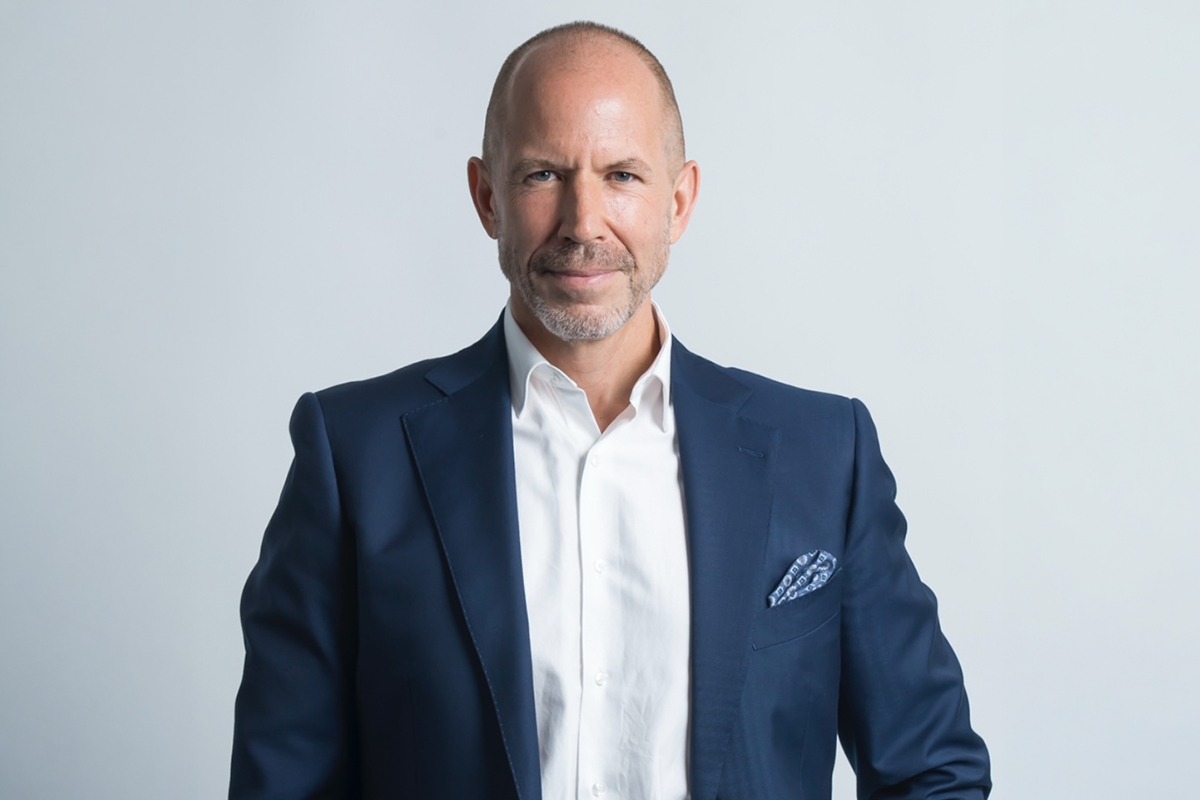
Paul Dupuis has led businesses across Tokyo, Mumbai and Singapore. Along the way, he’s encountered what he calls the “cultural myths” that hold leaders back. Today, he’s on a mission to challenge those myths and help leaders create meaningful, lasting impact.
From backpacker to global leader
In 1990, a 22-year-old Canadian arrived in Osaka with a backpack, a working holiday visa and a six-month plan. As he puts it, “I came for six months and forgot to go home.” More than three decades later, after four separate chapters of living in Japan, a graduate degree earned in Canada and leadership roles spanning Singapore and India, that six-month adventure has evolved into a lifelong mission.
His first major international leadership role took him to Singapore, where he led the Asia-Pacific expansion of en world, a subsidiary of Tokyo Stock Exchange-listed en Japan. The role exposed him to business cultures across the region. Looking back, he believes that’s where the seed was planted for a conclusion that would shape the rest of his career: countries and cultures may differ, but the fundamentals of great leadership are timeless and borderless.
In 2013, Dupuis joined the Japan arm of Randstad, the world’s largest HR services firm. Here he was responsible for launching and growing several new HR service businesses. The Dutch powerhouse had acquired Fuji Staff, a renowned domestic Japanese staffing firm with a long history. His role was partly focused on building and growing new businesses while also helping to transform the domestic organization into a global company. This was to be done by introducing new ways of working and injecting global best practices, while also respecting the local culture. It was a rare opportunity to be a bridge between Japan and the world, with freedom to be entrepreneurial in the process.
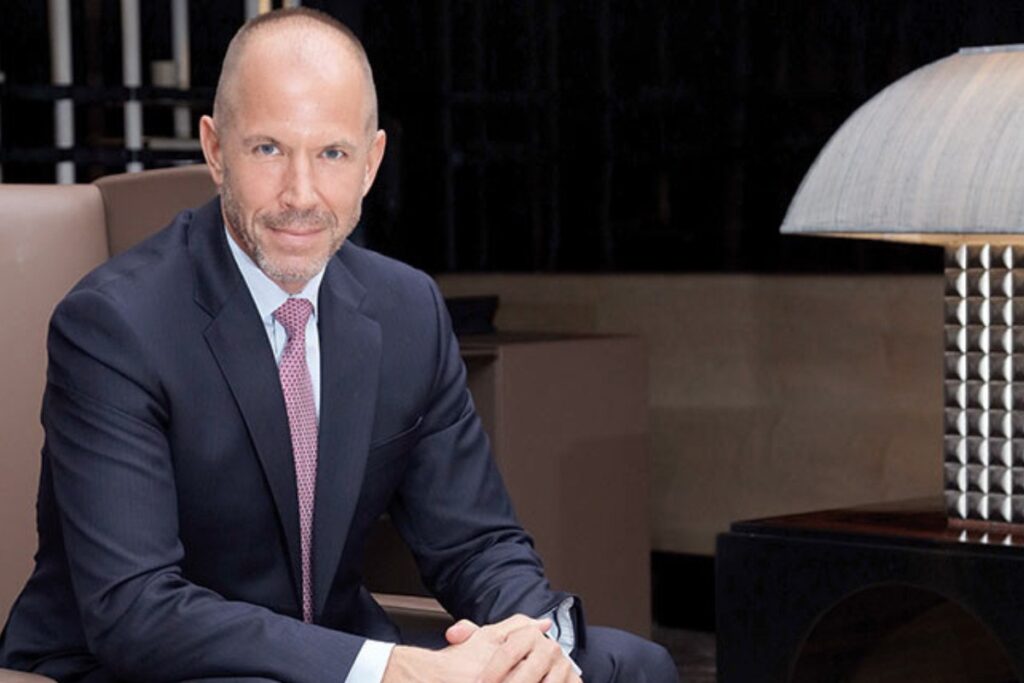
Four years later, he was offered (or, as he jokes, “summoned”) to become CEO of Randstad India. The assignment sounded clear enough on paper: turn around a struggling, loss-making business with 70 offices and more than 60,000 employees. In reality, it was anything but straightforward.
It was his first visit to India and, in his words, a trial by fire. Those four years proved transformational, both personally and professionally. Leading the successful turnaround reinforced his belief that culture should not be viewed as a barrier to change. Managed and leveraged well, the local culture becomes one of an organization’s greatest assets.
During the COVID-19 pandemic, he was recognized by the Great Place to Work Institute™ as India’s “Best Leader in Times of Crisis.” The results validated his approach. Randstad India became the fastest-growing country operation in the global group, reaching profitability in just 14 months and continuing to outperform today.
That success led him back to Japan as CEO and Chairman of Randstad Japan, which was then a US$1 billion business with 95 branches across the country and more than 35,000 employees. His mission this time was a contrast to India: injecting ambition into a mature, conservative organization with weak employee engagement and lackluster growth.
Rather than leading from his corner office in the headquarters in Akasaka, Dupuis traveled extensively across Japan, visiting branches, meeting clients and working alongside employees. He brought his senior leaders with him on these visits, and for many, it was the first time to visit the branches. By bringing his leaders to the ‘genba’ (shop floor), he was sending a clear message to the organization: leaders needed to be engaged, taking the pulse of the teams and committing to taking action to enable the teams to move forward on the shared mission. He made difficult decisions around people and strategy while introducing what he called a “can-do, let’s do” culture of embracing new ideas, guided by three principles: People, Growth and Promise.
Ask Dupuis what he’s proudest of, however, and he doesn’t mention financial performance. He talks about people. Leadership development programs for first time managers to the C-suite were created, company-wide town halls, nationwide roadshows, the CEO Club and the popular CEO for a Day initiative all helped strengthen engagement, trust and belief across the organization. Those cultural shifts ultimately translated into exceptional business results. Randstad Japan delivered the strongest revenue growth and profitability in its history, ranking first among 39 countries globally.
In late 2023, he reached what he describes as another fork in the road.
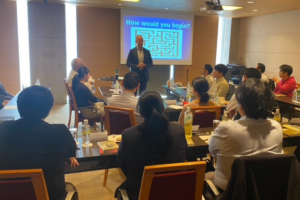
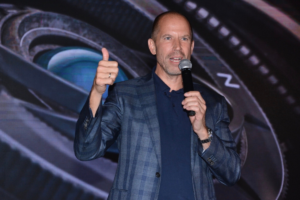
“On the tenth anniversary of joining the company,” he says, “I decided it was time to graduate to the next stage.” Today, he’s building what he calls a portfolio career. Executive coaching sits at the center of that work, alongside board advisory, keynote speaking, leadership workshops and non-executive directorships. His clients include Japanese companies, multinational organizations and leadership teams throughout Asia-Pacific. A good portion of these engagements are conducted entirely in Japanese, as he contends that it helps make a stronger connection and leads to more meaningful conversations.
Dupuis has developed a distinctive perspective on leadership. He doesn’t believe there is such a thing as “Japanese leadership” or “Western leadership.” Having led organizations across multiple countries and served on Randstad’s Global Advisory Board, he believes exceptional leadership is fundamentally human. Culture influences how leadership is applied, but not the principles that underpin it. As he often repeats: “Great leadership is timeless and borderless.”
The Japanese business culture myths
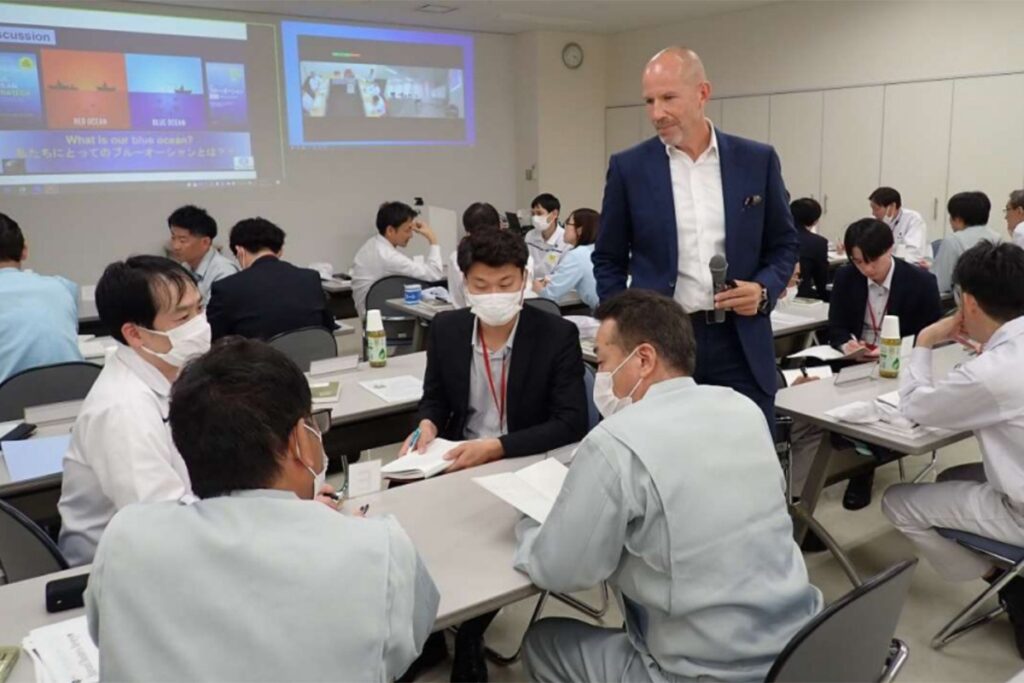
Ask almost anyone about doing business in Japan and you’ll hear familiar observations. “Japanese companies don’t innovate.” “Decision-making takes forever.” “Employees resist change.” “People avoid risk in Japan.”
Dupuis has heard these comments countless times: in boardrooms, around the office and over drinks in neighborhood izakaya. His view isn’t that these are entirely false. It’s that believing them often makes them true. He’s watched leaders lower expectations before taking on a leadership role. They soften their message, anticipate resistance and unconsciously prepare themselves for failure. Unsurprisingly, resistance follows because the leader and the organization had already been conditioned to expect it.
Dupuis sees this as a classic self-fulfilling prophecy. The fundamentals of leadership, he argues, travel well between Tokyo, Mumbai, New York, Sao Paolo and beyond. Local culture influences how change should be introduced, but the principles remain remarkably consistent. One lesson stands above the rest; people don’t commit to change until they understand why the change matters. One of his favorite leadership quotes comes from Jim Rohn: “When the why is clear, the how is easy.”
He believes the Randstad Japan story is a great case study in honoring and leveraging local culture to drive transformation. With deep roots as a traditional Japanese company, it could be hierarchical, consensus-driven and naturally conservative with setting future ambition. Conventional wisdom suggested meaningful transformation would be slow. Instead, Dupuis focused first on people, taking what he calls, “pulse-checks” to understand what motivates them. .
Town halls shifted from reporting numbers to celebrating effort and impact. Senior leaders visited branches together through nationwide roadshows. His recognition programs created visibility, aspiration and connection across the organization. The result wasn’t simply record revenue and profitability. It was a cultural shift that unlocked teamwork and bold ambition. For Dupuis, that’s what busting the myths looks like.
The E5 movement is born
Like many leadership ideas, Dupuis’ views about leadership weren’t created in a boardroom. They evolved over three decades of leading businesses, building teams, making mistakes and learning from others along the way. The turning point came during an executive learning program at London Business School, called ‘Transformational Leadership’. During one coaching session, his executive coach asked a deceptively simple question: “What is great leadership?”
Dupuis, like most leaders, had been a passionate student of leadership, from the ice hockey rink to the boardroom. He reflected on his years of experience across Canada, Japan, Singapore, India and on the global stage summarizing his ‘leadership-ism’ into five pillars, or “muscles” in his words. He shared his belief that great leaders don’t focus their attention solely on transformational initiatives and delivering exceptional results. Instead they create movements.
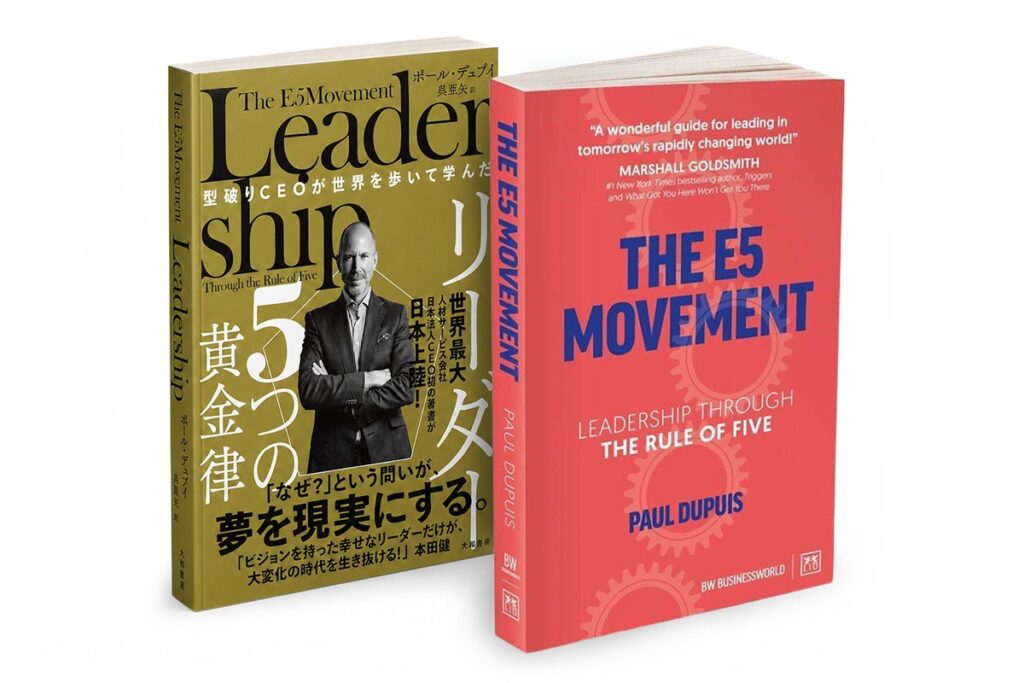
The results and transformation of the organization that follows is simply the result of bringing people together on a shared mission rooted in purpose, and then enabling every single member of the team to shine. His coach smiled. “You need to write this down.” That conversation became the catalyst for his best-selling book, The E5 Movement.
Dupuis is quick to point out that the framework wasn’t created in isolation. Echoing Isaac Newton’s famous observation that “we see further when we stand on the shoulders of giants,” he credits many of the thinkers who influenced him, including Jim Collins (Good to Great), W. Chan Kim and Renée Mauborgne (Blue Ocean Strategy), Howard Schultz (Starbucks), Jack Welch (G.E), Bob McDonald (P&G) and Konosuke Matsushita (Panasonic). Lessons from the ice hockey rink, as both player and coach, also found their way into the framework.
Today, The E5 Movement has been published in English, Japanese and Hindi, with Korean and French editions on the way. He also recorded the audiobook version in his own voice, which, as Dupuis says, “was a fun and humbling experience.” The E5 principles continue to underpin Dupuis’ work with CEOs, boards and leadership teams around the world.
Looking ahead
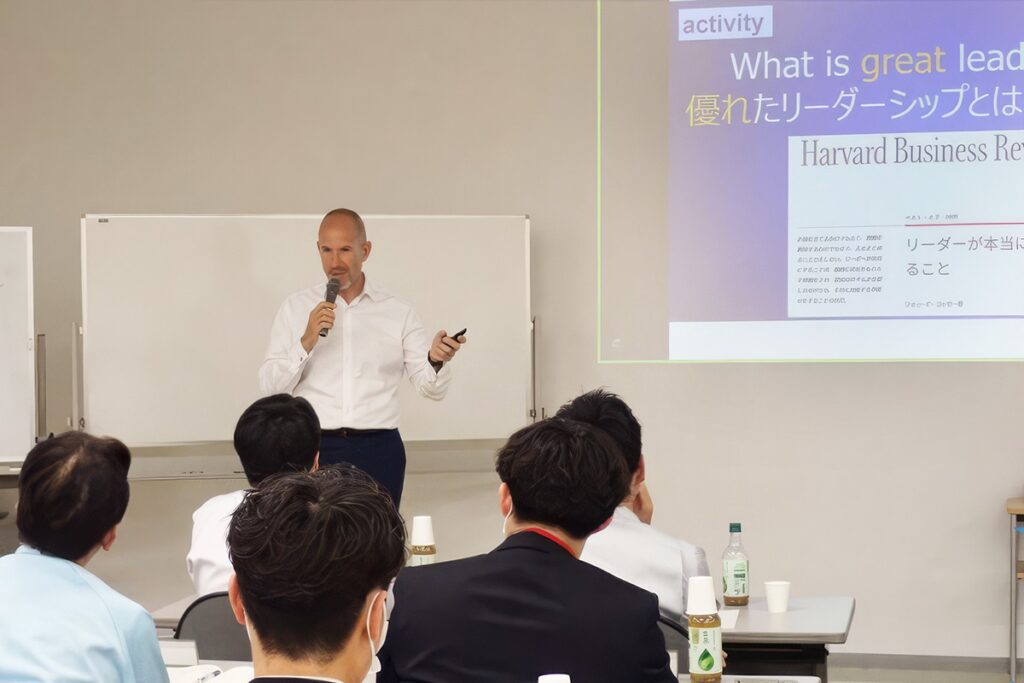
Today, Dupuis is focused on one question: How do leaders build the critical muscles required to lead into the future?
Much of his thinking has been shaped by Marshall Goldsmith, widely regarded as the world’s leading executive coach. Goldsmith became Dupuis’ own coach and mentor during his time in India, and today Dupuis is a member of Goldsmith’s exclusive, global 100 Coaches community. He shares one important learning from his coach; “The role of the leader is not to be the smartest person in the room, it’s to make a positive influence on the world”. That philosophy stretches back another generation. Peter Drucker’s thinking profoundly influenced Goldsmith, whose work has in turn influenced Dupuis.
Today, those lessons continue to evolve through his work with CEOs, boards and leadership teams across Japan and the wider Asia-Pacific region. Ask Dupuis what has changed most over the past few years and his answer is immediate: Information overload, and more recently the rapid emergence of artificial intelligence. He believes AI will transform almost every aspect of business, providing unprecedented access to information. But information alone has never triggered transformation, nor has it taken a company from good to great. “AI can provide much-needed information and valuable insights,” he says. “Leadership is about taking the data, questioning it, giving context, and applying wisdom to make decisions. The effective leader leverages information and turns it into meaningful action.”
For Dupuis, the future belongs to leaders who combine the speed and power of AI with the qualities that remain uniquely human: curiosity, courage, adaptability, compassion and sound judgment. His executive coaching, keynote speaking and very popular Future-Ready Leadership Gym™ workshops are all built around enabling leaders and leadership teams to develop the capabilities and qualities that technology cannot replace. Because in a world where information is becoming increasingly abundant, wisdom becomes the true differentiator. And the leaders who will shape the future won’t be those with the most information. They’ll be the ones with the wisdom to turn information into action with lasting impact.
FAQs
Does he work with foreign executives moving to Tokyo?
Yes, that’s a core part of his coaching practice, alongside Japanese leaders stepping into regional or global roles.
Does he coach Japanese executives moving into global roles?
Yes. He argues Japanese and expat leaders face very similar challenges once you strip away the passport.
Does he work with leadership teams as well as individual executives?
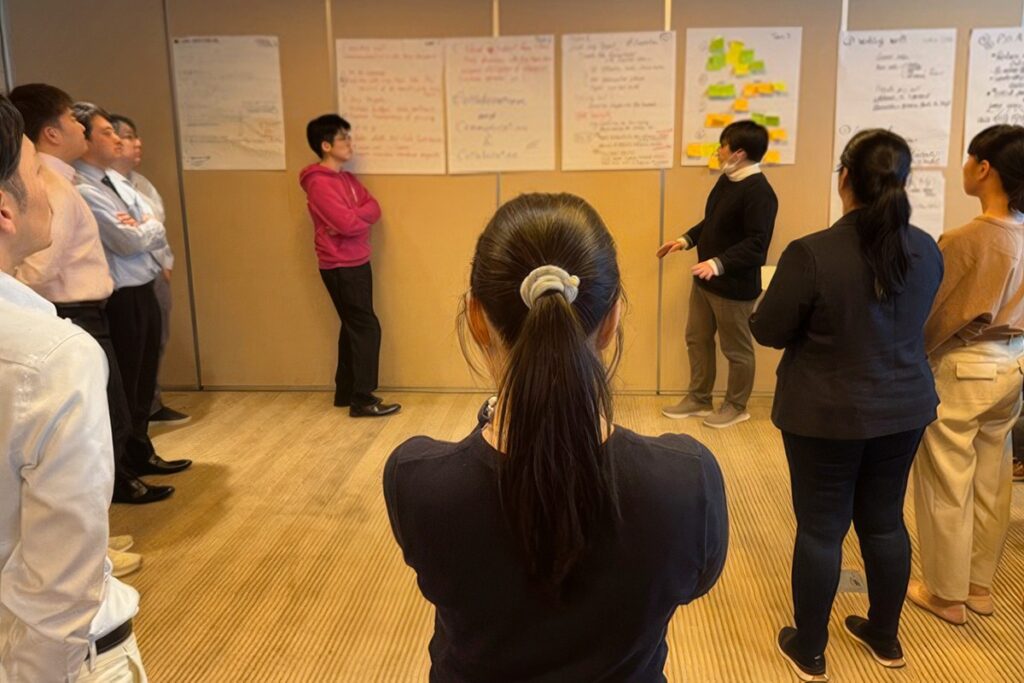
Yes. In addition to one-on-one executive coaching, Dupuis works with organizations through facilitating leadership workshops and leadership and strategy advisory.
What’s the E5 Movement, in short?
A tried and tested leadership framework, from Envisioning through to Execution. Rather than being theoretical, it was built from real-life leadership experience and is the backbone of his coaching and advisory work today.
Who is Paul Dupuis?
Role: Executive Coach, Leadership Advisor, Leadership Workshop Facilitator, Non-Executive Board Member
Based in: Tokyo, Japan
Known for: Leading the turnaround of Randstad India, followed by CEO & Chairman of Randstad Japan, with $1 billion in revenue and 35,000-employees organization, delivering record-breaking revenue growth and profitability
Background: Former CEO & Chairman, Randstad Japan; Former CEO, Randstad India; leadership experience across Japan, Singapore and India
Author of: “The E5 Movement” (English, Japanese, Hindi; Korean and French forthcoming)
Reachable on: His website and LinkedIn