Papua New Guinea: Tribal Pride, War Relics and Swimming with Dolphins
Stepping off the new direct flight between Narita and Port Moresby, the humidity and heat hit me like, well, Tokyo in August. This new seven-hour weekly nonstop route could be a game-changer for the mining and energy sectors, butterfly hunters, adventurers, war historians and relatives of those killed in action.
It cuts out the grueling stopovers in Southeast Asia, albeit with seats that do not recline at all, dropping you straight into a Melanesian island melange of steaming volcanoes, dense rainforests, coastal swamps, rich marine biodiversity and scattered war history.
Papua New Guinea (PNG) is not a destination for the faint-hearted. It’s a proud nation of stark, dizzying contradictions: where high prices and palpable real-world danger collide with the most disarmingly friendly people I have ever met.
For two weeks, my trip spanned the mist-shrouded central highlands of tribal Mount Hagen to the historic battlefields and wild dolphin pods of the Bismarck Archipelago, and remote surfing spots near the Indonesian border — an unforgettable taste of one of the few places left for genuine adventure travel.
Visas and high costs
First, I needed a visa. Although Japanese travelers get one on entry, to help promote the new Air Niugini route, just about everyone else online is subjected to a bureaucratic circus of conflicting information, double payments and radio silence. Visit instead the efficient and friendly Tokyo embassy in Meguro rather than lose time, money, patience and potentially your trip with covid-era government website application and payment that apparently leads nowhere.
The next truth any traveler must confront in PNG is the staggering cost of almost everything. Due to severely limited infrastructure, a reliance on domestic flights and private security due to inhospitable terrain, armed robberies and kidnappings, PNG stands as one of the world’s most expensive destinations.
Basic clean lodging can easily cost triple that in Tokyo. Supermarket wine from Australia — just a 90-minute flight away — costs six times the convenience store price in Tokyo.
Paradox of danger and warmth
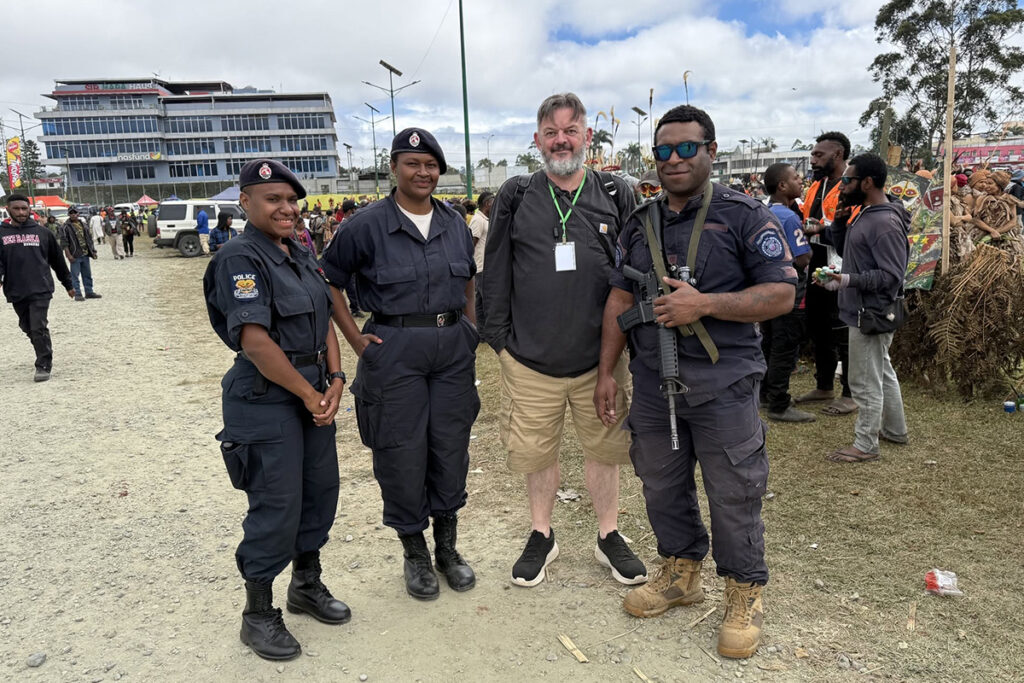
The second truth is the underlying current of danger. Reliable private transport with armed guards can be a lifesaver. Port Moresby, the sprawling, nondescript capital, requires absolute vigilance. More than once, I discretely crossed the street to avoid machete-wielding “Raskols,” even in daylight, as opportunistic crime is a constant reality.
One young mother on the school run laughed at me after I nervously edged away from her as she casually swung beside her a rusty 2-foot-long machete, presumably meant for protection against the dreaded Raskols.
You do not walk alone at night; you do not wander off unguided. The tension is a sharp contrast to the ultra-safe streets of Japan. Yet, the moment you interact with the locals, the paradox of PNG reveals itself. The people possess a fierce, radiant friendliness. Broad, betel nut red-stained drooling grins greet you everywhere. The local guides and guards treat you not as clients, but as treasured guests they are bound by tribal honor to protect. Unlike in every other desperately poor nation I have visited, I was never once asked for money or stalked by strangers.
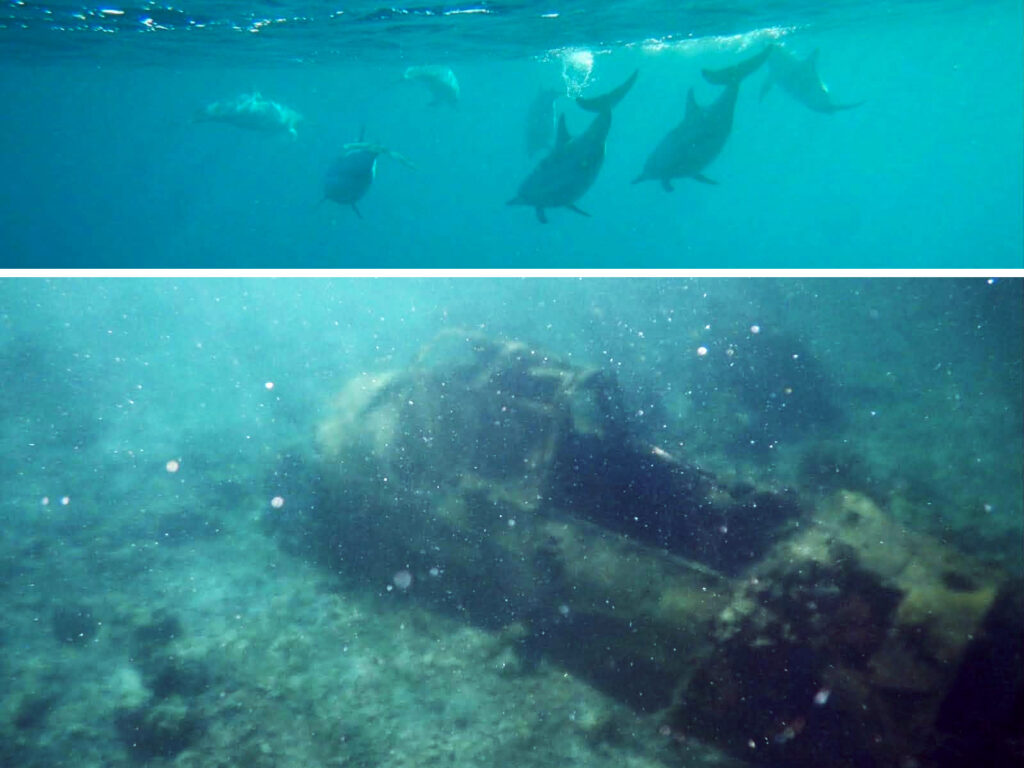
Marine life in the Bismarck Sea
A brief domestic flight brought me to eastern New Britain Island, landing in the shadow of the local capital Rabaul’s active volcano. The mornings here began with strong local organic coffee and a rich breakfast of large eggs laid by megapode (called incubator birds in Australia) cooked in volcanic ashes and steaming seawater. Out on the pristine, deep-blue waters of the Bismarck Sea, pods of spinner dolphins congregate.
Officially, boats have been banned here since 27 locals drowned after they capsized in July 2026. But a local resort that offered to take me out seemed to put safety first.
Plunging overboard, I am instantly surrounded. The dolphins show off effortlessly beneath and beside me, clicking and whistling in an underwater symphony, occasionally leaping into the air in acrobatic displays, just out of reach as they teasingly brush against my legs.
But we switched gears when a downed wingless Zero (picture above) became clearly visible in shallow water.
An Australian pilot who had joined us snorkeling delighted in posing for pictures while he sat in the late aviator’s final seat. The pilot later told me that his nation bans such up-close dolphin viewing by motorized boat because of the deadly trail of fuel, fumes and noise. But these dolphins seemed oblivious to our dawn intrusion.
Shamefully, the quiet beaches fronting many of the luxury resorts nearby were less well-off, littered with broken glass, plastic bags and human excrement, apparently long-ignored by local staff standing around idly for much of the day.
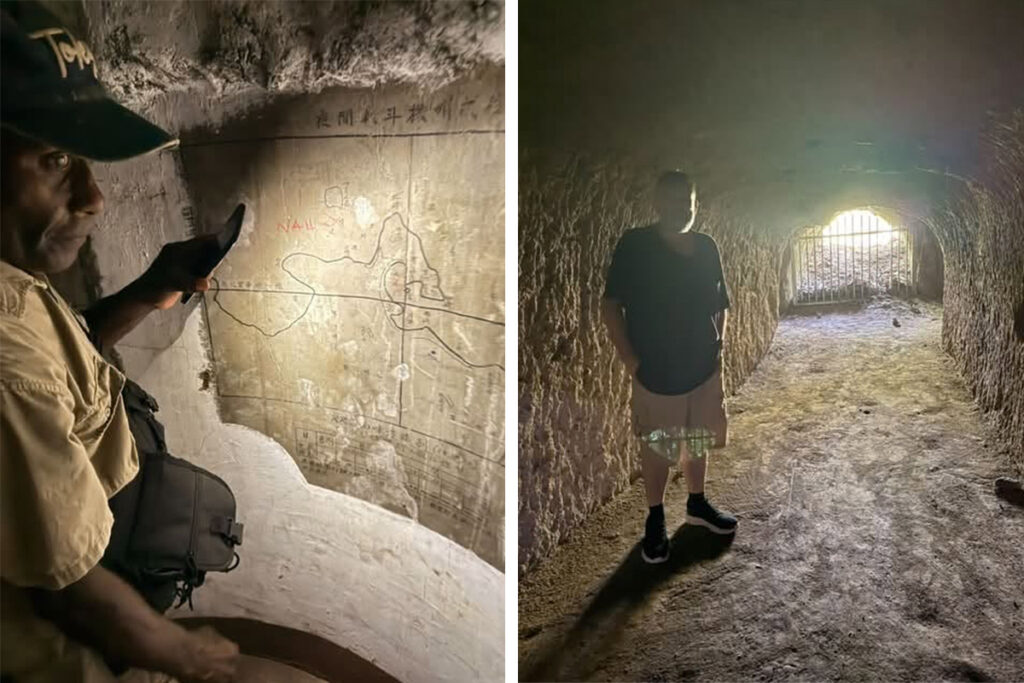
Ghosts of war
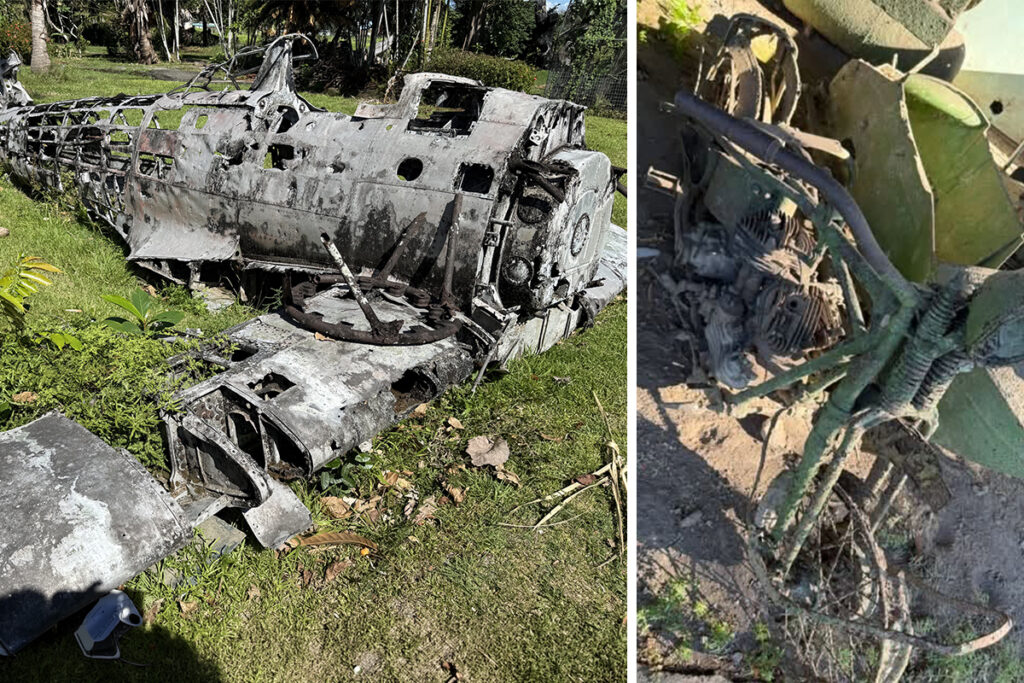
Inland, volcanic black sands and the dark ghosts of World War II beckoned. Rabaul is one of the world’s prime spots for war relics. As well as battle-scarred Zeros, rusted Harley-Davidsons, holed tanks, execution spots and veteran graves are scattered across the dramatic landscape of dense jungle, steep mountains, bleak caves and deserted beaches.
Guided by a local villager whose grandfather had been forced to work during the war, I explored the labyrinthine tunnels carved deep into the volcanic ash cliffs and decorated with spider webs and bird nests. The massive steel hulls of landing craft sit frozen in the damp darkness. The eerie underground concrete bunker of Admiral Isoroku Yamamoto remains intact, its walls still bearing maps and text.
This place is so rich in missing remains that the U.S., U.K., Australia, Japan and others still permanently station experts and volunteers there to locate and identify the bones and possessions of thousands of soldiers, sailors, air crew, indentured slaves and other allies in their final resting place, unaccounted for since the two world wars. Great work Project Recover! (www.projectrecover.org)
Chaotic commute to the Highlands
If New Britain Island is defined by biodiversity, seismic activity and a sad history, the Highlands stands for rival tribes, song and dance. Flying inland from the east coast, my aircraft crested the jagged, emerald spine of the Owen Stanley Range, descending into the cool, misty valleys of the Western Highlands. My destination was the world-famous Mount Hagen Cultural Show (Sing-Sing) held each August on this extinct volcano.
I flagged down a random taxi at dusk and almost instantly regretted it. As I sat behind the driver, I noticed he was blind drunk and under the influence of hypnotic betel nuts that turn chewers’ drooling mouths red. But it was too late to alight. With one hand grasping an open container and breathing happy beer fumes over his shoulder at me, he broke the local land-speed record as he weaved between traffic and pedestrians.
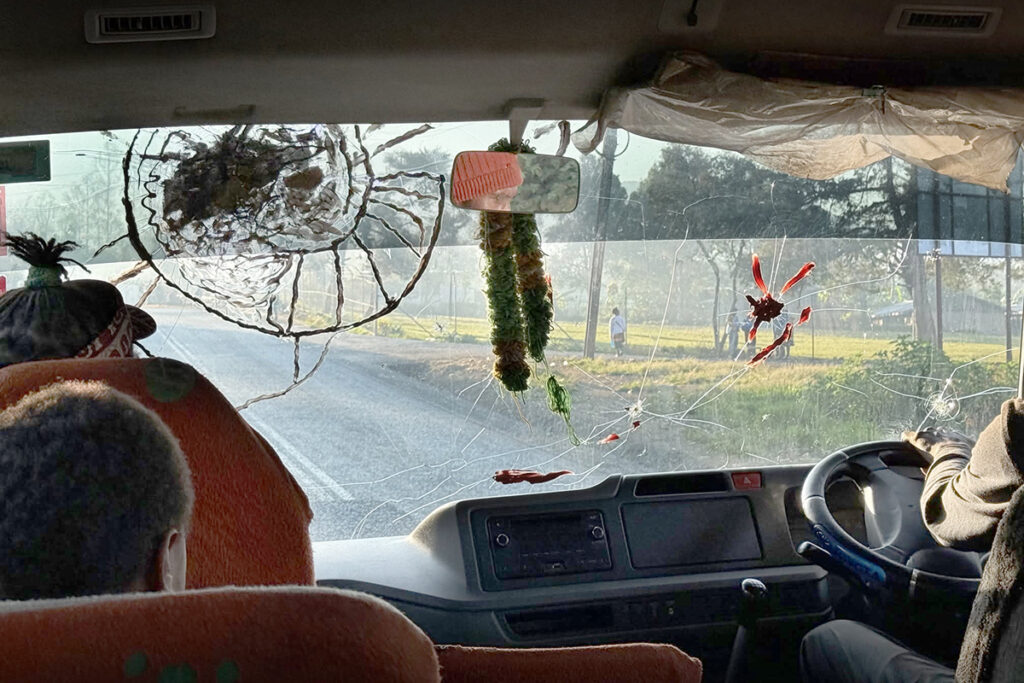
He shouted euphorically in Pidgin English that I was his first foreign passenger, excitedly sharing his life story, family names and sharp criticism of his “corrupt” government for 20 hair-raising minutes. A sun visor boldly stating “In God We Trust” held the badly cracked windscreen together, almost blocking much of his view. We overtook several police vehicles on Sing-Sing duty until he screeched to a halt at my destination.
The hotel security guards surrounded me protectively until he disappeared in a cloud of dust, almost colliding with a speeding truck as he bid me farewell with a wide grin and wave through the rear window.
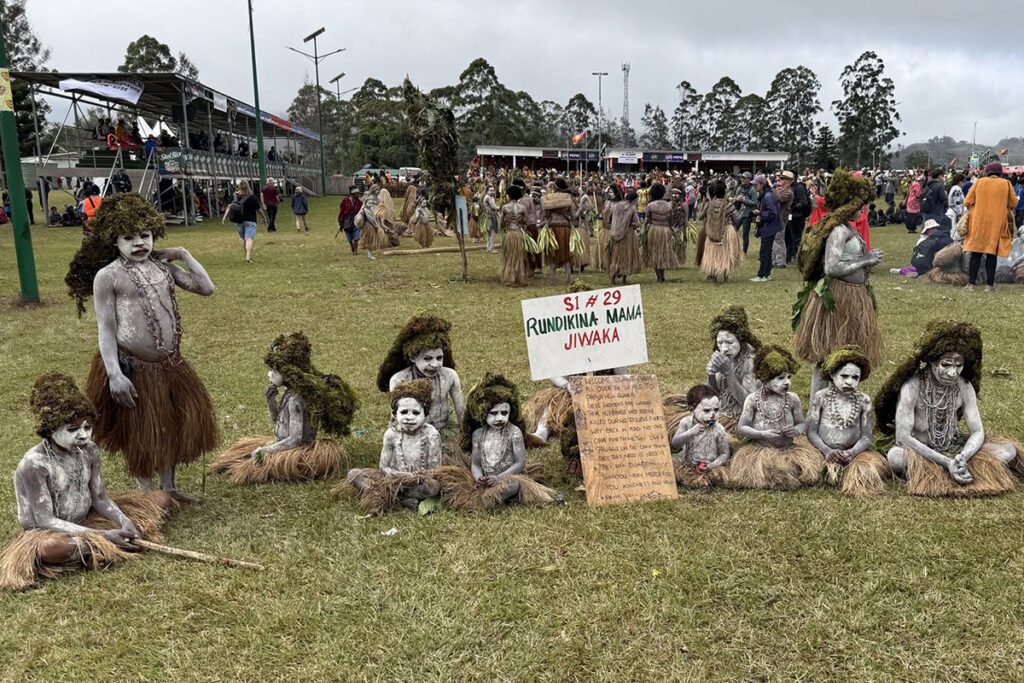
Riot of color and sound
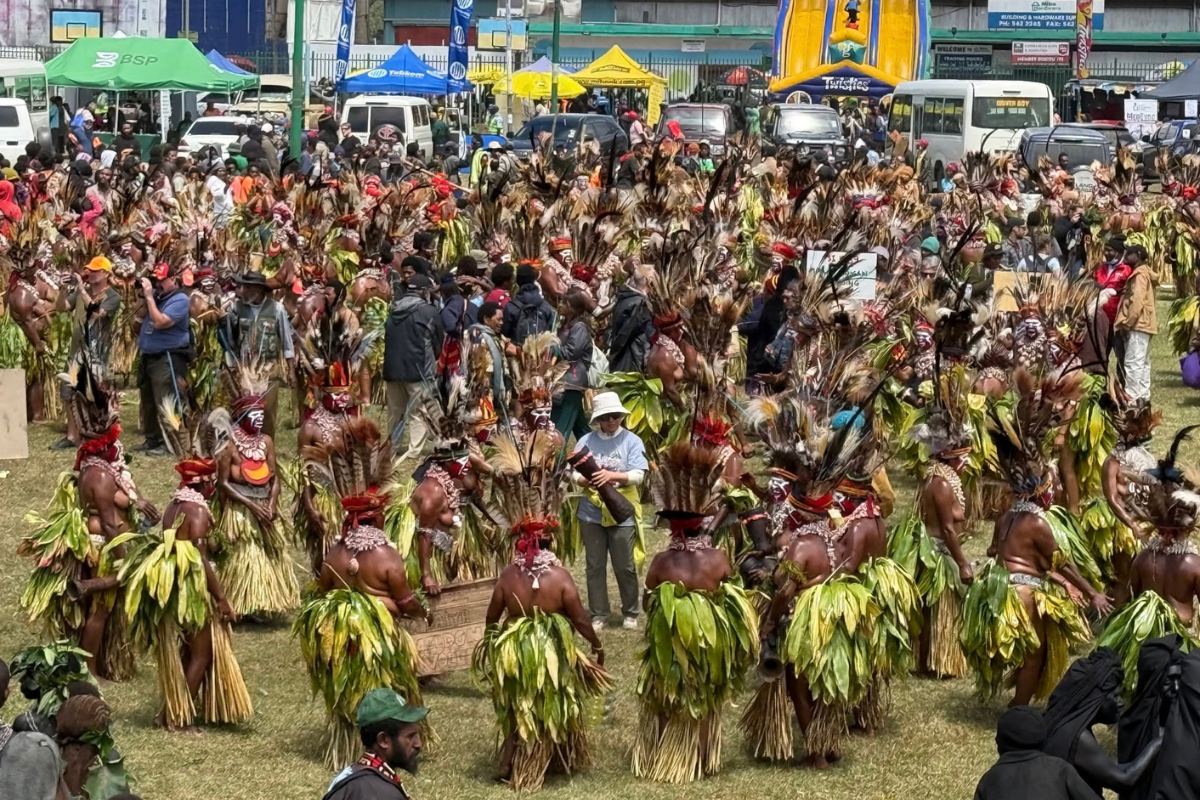
Entering the sing-sing showgrounds next morning was a sensory overload that bordered on hallucinatory. My hotel insisted on providing me with armed escorts to avoid tribal tensions, local feuds, kidnapping and robbery. They whisked me in by minivan with dark tinted windows, not stopping to present my $100 pass to the guards who waved us through.
The cool air vibrated with the thunderous, rhythmic thumping of kundu drums and the soaring chants of some of the 110 distinct tribal groups from this nation of at least 840 languages. The sheer diversity of human expression on display was staggering, but here’s some that stick in my mind:
- The Asaro Mudmen: Creeping through the dust, their bodies smeared in ghostly white clay, wearing terrifying, oversized earthen masks with long bamboo nails snapping at the air.
- The Huli Wigmen: Flaunting faces painted in electric yellow and red, topped with elaborate, crescent-shaped wigs woven entirely from their own hair and adorned with the feathers of the nationally treasured bird of paradise.
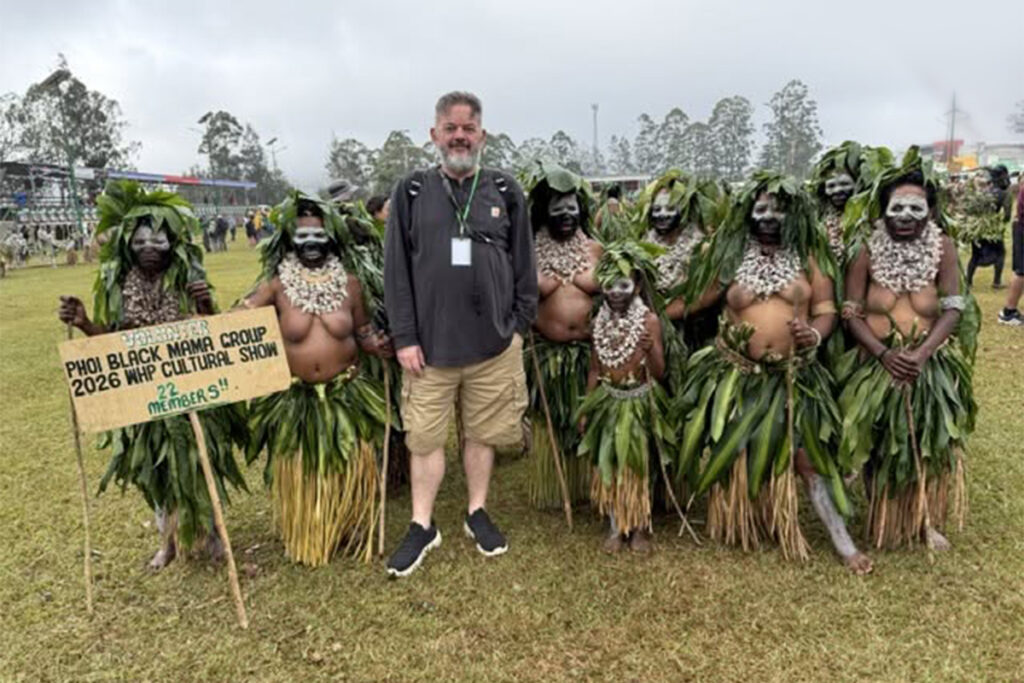
- The topless Black Mamas and Queen’s Park Volunteer Crime Stoppers also drew huge crowds for their swaying grass skirts and white-painted bodies, respectively.
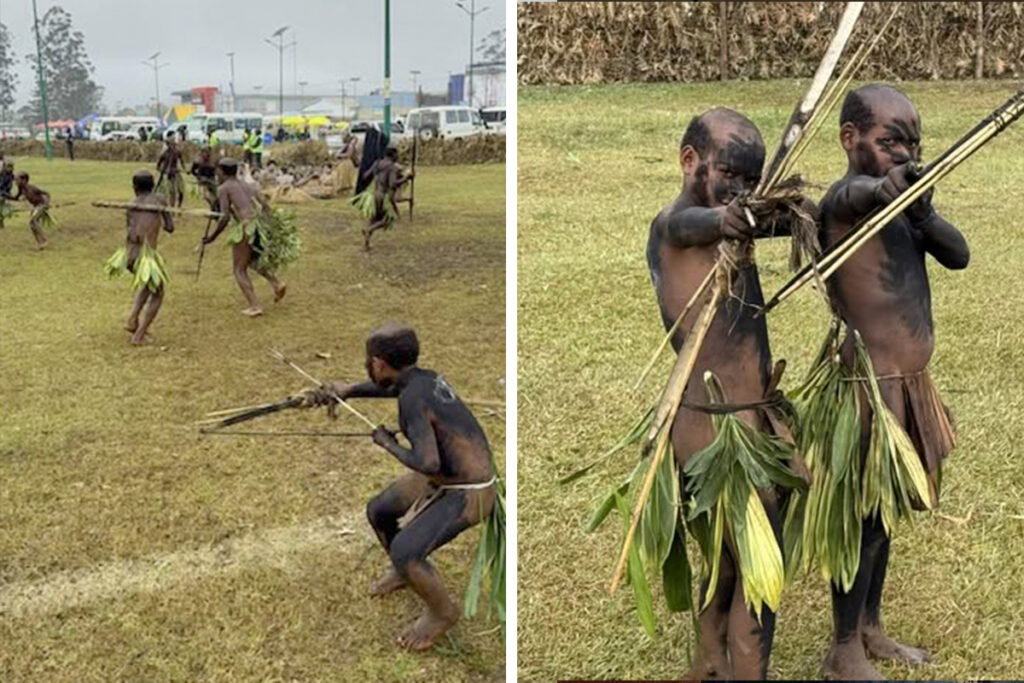
I had numerous spears, clubs, machetes and arrows pointed at me by masked, painted, half-naked males. All in good spirits, thankfully, and before the alcohol flowed and the traditional real fighting kicked off.
Amid the intoxicating and increasing chaos of chanting, stomping, screaming and flashing spears, arrows, machetes and clubs, I sensed the crowd becoming less restrained, so we left. Security guards patrolling the perimeter with antique guns and AK-47s were a stark reminder of the tribal tensions that simmer just beneath the surface. Yet, when you lock eyes with the performers, the fearsome facade melts away. They proudly posed for photos, without expecting tips, eagerly trying to explain in broken Pidgin English the lineage of their ancestral dress and their fathers, brothers and sons lost to tribal warfare. It is an intense and moving privilege to witness.
Navigating the remote “highway”
The next day’s seven-hour bus trip was the only long-distance land journey I could take due to the lack of roads and security. My hotel recommended a trusted driver to navigate the remote highland terrain by local bus. A fellow passenger asked if I had ever been on the “highway” in PNG. Ominously, when I said no, she just laughed, shook her head and looked away. The highway to Gokor was seriously potholed, unlit, partly blocked by landfalls and eroded. We nearly went over a cliff while overtaking petrol tankers and windowless buses with inches to spare on both sides. I stayed with a local tribe near Goroka that advertises on Trip.com, arriving after dark to a warm welcome and mattress, and leaving at sunrise to Port Moresby International Airport.
Price of paradise
PNG is a journey of raw extremes. It drains your bank account with its exorbitant costs and tests your nerves with its unpredictable security and service. It’s a place where you must always glance over your shoulder, yet find yourself constantly looking forward to the next encounter.
As I boarded my return flight to Tokyo, I mused that PNG’s true wealth isn’t its precious metals, oil, LPG, coffee, chocolate or luxury resorts. It is found in the wild leaps of its friendly dolphins, the distant echoing drums of Mount Hagen and the fierce, protective warmth of the people who proudly call this paradise home.