
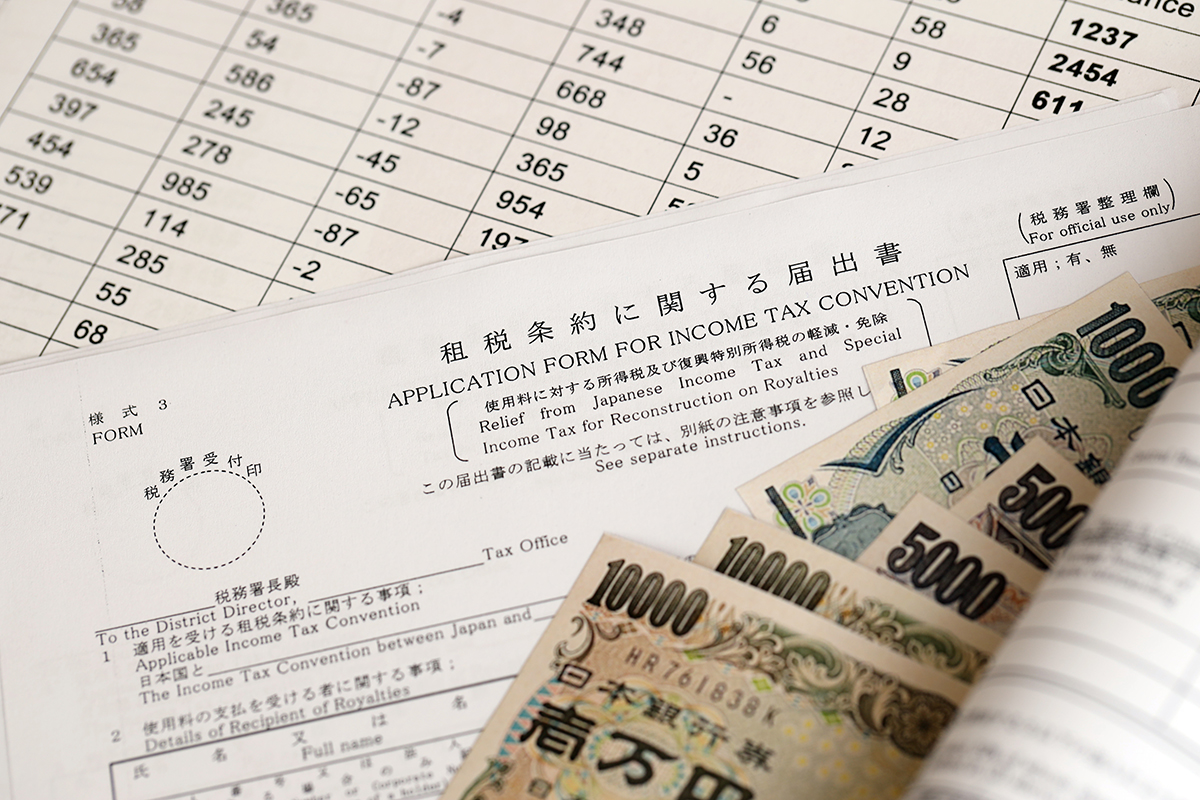
Common Tax Issues for Foreign Property Owners in Japan (2026 Edition)
Buying a property in Japan from overseas can be an incredibly fruitful venture and the search for the ideal property feels like the next step of your Japan experience. But after the purchase, the tax implications quietly begin to pile up, and owners often get caught out by it.
I put the questions most foreign owners ask to Tsuyoshi Hikichi of Axios Management, whose firm manages properties and acts as tax representative for owners living abroad.
He summed it up for me: property tax for foreign owners mostly comes down to timing and knowledge. When I asked Hikichi for the most common mistake in working out rental profit, he named three:
- The cash-flow gap created by the 20.42% withholding tax
- The acquisition tax bill that foreign owners get about six months after closing.
- How foreign investors misunderstand the five year measurement on capital gains tax
Note that his experiences here are purely informative, and don’t constitute advice. He was equally clear that any advice should come only from a registered tax accountant in Japan, which Axios can introduce new investors to.
If you’re looking for guidance on managing Japanese real estate from abroad, learn more about how Axios Management supports overseas investors with tailored tax representation and property management.

Why is 20.42% being withheld from my Japanese rental income?
If you live outside Japan and your tenant is a company, they hold onto 20.42% of your rent and pay it straight to the tax office. Plenty of new owners spot this on the first statement and worry about the rate. It is a prepayment of your income tax, and anything over your final balance is refunded when you file.
“Income tax has a progressive rate,” Hikichi says. “If a property owner is a non-Japanese resident and the lessee is a corporation, there will be a withholding tax of 20.42% of collected income.” That 20.42% comes from the 20% income tax plus a 2.1% reconstruction surtax, and the National Tax Agency (NTA) sets out the rule for non-residents who rent out Japanese property. It’s essentially a deposit. What you actually owe depends on your total income and deductions, so you file a return and get the difference back if the deposit was too much.
Cash flow is where it hurts first time property owners in Japan. The 20.42% withholding tax on Japan rental income comes out before the rent reaches you, but you still owe the loan balance in full.
However, owners with a mortgage can claim a loan deduction that Hikichi estimates will be about 20% of income tax, which he considers quite significant — but plenty of owners don’t even know about the withholding tax, let alone this deduction, and so the first rental invoice is a shock: “Of course excess paid tax will be refunded after the tax filing,” Hikichi says, “but loan repayment is every month, so they have a cash flow problem.”
When you run the numbers on a Japanese rental, he’d advise starting from the cash left after the 20.42% comes out and treat the refund as money that’s untouchable. Your projections will feel much more realistic once you do.
To see how these withholding rules apply to your specific situation and get help building a sustainable rental budget, explore Axios Management’s financial planning and management services.
The Difference a Sale Date Makes
Non-resident capital gains tax on a property bought September 1, 2026
Sold September 2031Short-term rate
30.63%
Sold January 2032Long-term rate
15.315%
Source: Japan National Tax Agency, Tax Answer Nos. 3208 and 3211. 2026 rates.
How is the 5-year holding period calculated for capital gains tax on Japanese real estate?
Japan measures the holding period from January 1 of the year you sell, and the property must have been owned for more than five years on that date to qualify for the long-term capital gains rate.
That extra detail is vital, and skipping over it can be the difference between a profitable sale and one that barely breaks even.
“Capital gains tax is quite tricky,” Hikichi says. “A real estate agent might say it is five years from the acquisition date, but in fact, the calculation date starts from January 1st.”
Take Hikichi’s example of a property bought on September 1st, 2026. “The five-year period for tax purposes will end after January 1st, 2032,” he says. “It has to be five years as of January 1st.”
That extra detail is vital, and skipping over it can be the difference between a profitable sale and one that barely breaks even.
In practice, it looks like this. On January 1st, 2031 the owner has held the property for four years and four months, so a sale at any point in 2031 is a short-term sale. Once January 1st, 2032 arrives, it’s been five years and four months, so a sale in 2032 is long-term. If you aren’t aware of this and sell in September 2031, because it’s been five calendar years since you purchased, you’re going to be surprised when the tax bill arrives: you’ll be paying almost double what you’d budgeted for.
Why? Because Japan’s capital gains tax on real estate runs at roughly 20% for long-term gains and close to 40% for short-term gains. Residents pay 20.315% or 39.63%, while non-residents generally owe no inhabitant tax, so they pay 15.315% or 30.63%. The NTA’s tax answers for long-term gains (No. 3208) and short-term gains (No. 3211) walk through the calculation in more detail, but the core lesson is simple: 5 years, from January 1, puts you in the long-term bracket.
How do foreign owners pay property tax in Japan without a Japanese bank account?
Foreign owners usually solve this with a tax representative (納税管理人), someone in Japan who receives every tax bill on their behalf and pays it by the due date.
Every owner receives a bill for Japan’s Fixed Asset Tax (固定資産税) and another for City Planning Tax. The Tokyo Bureau of Taxation clarifies that this applies to both owning land and buildings. If you live abroad, you probably have no Japanese address for the notices to be delivered to and no local account to pay from. A tax representative covers both of those issues. Once you choose a representative, you register them through the NTA’s notification procedure, and that’s setup complete. If you’re in Tokyo’s metropolitan area, there’s a little more to do, as taxes have their own tax agent notification form covering fixed assets tax, city planning tax and real estate acquisition tax.
Hikichi makes a point of emphasising how their reliability as a tax representative is a core value: “The most important thing is that, by acting as a tax representative, we receive all tax bills and tax-related documents, ensuring payment is made by the due date,” Hikichi says, “meaning there will be no penalty for an owner.”
He is equally direct about what’s at stake: “If an owner doesn’t pay acquisition tax or property tax, the tax office will seize the property.” That is why he says “it is easier for a property owner to let us handle tax and any other expenses so we can manage not only rental income but also expenses.”
When to pay property tax in Japan
Fixed Asset Tax and City Planning Tax are due four times a year. In Tokyo’s 23 wards, the installments fall in June, September, December and February, but other municipalities have their own months.
| Tax or filing | When it falls due | Who is billed | Official source |
|---|---|---|---|
| Rental income withholding (20.42%) | Withheld by the corporate tenant from each rent payment | Tenant pays the tax office on the owner’s behalf | NTA |
| Fixed Asset Tax and City Planning Tax | Four installments a year; Tokyo’s 23 wards: June, September, December, February; other municipalities set their own months | Owner registered as of January 1 | Tokyo Bureau of Taxation |
| Real estate acquisition tax | One-off bill about six months after closing (Hikichi) | Buyer | Tokyo Bureau of Taxation |
| Final income tax return for rent and sale gains | February 16 to March 15 of the following year | Non-resident owner | Tokyo Bureau of Taxation |
| Tax or filing | When it falls due | Who is billed |
|---|---|---|
| Rental income withholding (20.42%) Source: NTA | Withheld by the corporate tenant from each rent payment | Tenant pays the tax office on the owner’s behalf |
| Fixed Asset Tax and City Planning Tax Source: Tokyo Bureau of Taxation | Four installments a year; Tokyo’s 23 wards: June, September, December, February; other municipalities set their own months | Owner registered as of January 1 |
| Real estate acquisition tax Source: Tokyo Bureau of Taxation | One-off bill about six months after closing (Hikichi) | Buyer |
| Final income tax return for rent and sale gains Source: Tokyo Bureau of Taxation | February 16 to March 15 of the following year | Non-resident owner |
What hidden taxes or surprise fees happen after buying property in Japan?
The one that catches people out is real estate acquisition tax, a single bill that shows up half a year or so after close.
“The acquisition tax bill arrives about six months after the sales closing,” Hikichi says. “If a real estate agent doesn’t explain this, it will be a big surprise expense. It is a one-off payment, but the amount is quite large for a large property.”
A good property management company will give you a figure as part of the purchase, and buyers can learn more themselves through the Tokyo Metropolitan Government Bureau of Taxation, who describe the tax in its English tax guidebook.
As a buyer, what you can do to prepare is confirm with your agent when the bill is due and set the cash aside early. After that first bill, real estate tax in Japan for foreigners carries on in the usual way: Fixed Asset Tax and City Planning Tax apply to every owner regardless of residence status, on the schedule above.
Is it a good idea to buy old Japanese properties for tax depreciation?
Hikichi does not recommend it. “If you buy an old building on cheap land, you can depreciate its value quickly,” he says. “However, I wouldn’t recommend it because areas with cheap land often have lower purchase and rental demand, making the property harder to sell later.”
On buying old houses in Japan for tax benefits, he agrees that it can be profitable in certain cases. A quick write-off lowers your taxable rental income, and it helps only while the building stays let and if buyers are around when you want to exit. There are too many variables there for him to condone the idea outright.
What should owners expect from a property manager beyond collecting rent?
Plenty of management companies think their responsibilities end at collecting rent. Hikichi sees management as something wider: understanding any issues and planning for everything from purchase to exit. The goal is to ensure that your client has the best possible experience, not just the minimum.
“A manager must fully understand income and expenses,” he says, and Axios Management clearly provides “comprehensive management services from acquisition through the holding period to exit.” His advice to owners and investors is to pick a management company “that foresees a mid- to long-term period,” because “real estate is a long-term business.”
In all that time, however, the purchase point is where a client will feel the difference most. According to Hikichi, if you buy an overpriced or badly maintained property, it is very difficult to turn it into a profitable one — and your choice of company will weigh heavily into whether that happens.
What’s changed for 2026?
Hikichi pointed out two things he noticed in 2026, both with sources, that may affect current or potential landlords.
Invoice system: An overview from M-Assets reports that from October 1, 2026 the transitional deduction for consumption tax on purchases from suppliers who can’t issue qualified invoices drops from 80% to 70%. It holds at 70% until September 2028, then steps down to 50% and 30% and ends from October 2031. A cap of ¥100 million per supplier a year also applies to taxable periods beginning on or after October 1, 2026.
Minimum tax: A Grant Thornton Japan tax bulletin from May 21, 2026 explains that from 2027 the income threshold falls from ¥330 million to ¥165 million and the minimum tax rate rises from 22.5% to 30%. The bulletin notes that non-residents are taxed on Japan-source income, and that a large sale of Japanese real estate can push the effective rate toward 30%.
Hikichi’s bottom line
Hikichi wrapped up his advice with a line that sums up his entire philosophy on the taxes foreign owners pay:
“I think tax payment is inevitable, so foreign buyers must understand the tax rules and payment schedule. This is where Axios can help and guide a client, including payment before the payment due date.”
It’s a reminder of his earlier statement. The company you go with will be a major determinant of whether your investment will perform — so it’s vital to choose one that makes you feel well informed and in control.
Japan property tax rates for non-resident owners
| Item | Non-resident rate | Notes | Official source |
|---|---|---|---|
| Rental income withholding (corporate tenant) | 20.42% of gross rent | Withheld by the tenant; any excess over the tax you owe is refunded through your final return | NTA |
| Long-term capital gain (owned more than 5 years on January 1st of the sale year) | 15.315% | Residents pay 20.315%, which adds 5% inhabitant tax | NTA No. 3208 |
| Short-term capital gain (owned 5 years or less on that date) | 30.63% | Residents pay 39.63%, which adds 9% inhabitant tax | NTA No. 3211 |
| Buyer’s withholding when a non-resident sells | 10.21% of the sale price | Credited against the seller’s final return; an individual buying for their own residence at ¥100 million or less is exempt | NTA flyer on non-resident property sales |
| Fixed Asset Tax | Standard rate 1.4% of assessed value | Charged yearly to the owner as of January 1st | Tokyo Bureau of Taxation |
| City Planning Tax | Up to 0.3% of assessed value | Applies in designated urban areas | Tokyo Bureau of Taxation |
| Item | Non-resident rate | Notes |
|---|---|---|
| Rental income withholding (corporate tenant) Source: NTA | 20.42% of gross rent | Withheld by the tenant; any excess over the tax you owe is refunded through your final return |
| Long-term capital gain (owned more than 5 years on January 1st of the sale year) Source: NTA No. 3208 | 15.315% | Residents pay 20.315%, which adds 5% inhabitant tax |
| Short-term capital gain (owned 5 years or less on that date) Source: NTA No. 3211 | 30.63% | Residents pay 39.63%, which adds 9% inhabitant tax |
| Buyer’s withholding when a non-resident sells Source: NTA flyer on non-resident property sales | 10.21% of the sale price | Credited against the seller’s final return; an individual buying for their own residence at ¥100 million or less is exempt |
| Fixed Asset Tax Source: Tokyo Bureau of Taxation | Standard rate 1.4% of assessed value | Charged yearly to the owner as of January 1st |
| City Planning Tax Source: Tokyo Bureau of Taxation | Up to 0.3% of assessed value | Applies in designated urban areas |
Notes on the table: Income tax rates include the 2.1% reconstruction surtax, which applies to income until 2037. Non-residents generally pay no local inhabitant tax. Rates checked November 2026; confirm current figures with a tax adviser before acting.
If you have questions about tax structuring, property management or the incoming 2026 regulations, reach out to the Axios Management team for a no-obligation discussion of how they can help.