
If it Looks and Tastes Like a Duck, it Must be Ibaraki’s Kamo Cuisine
Stretching from the Pacific Ocean to the endless rice fields and shallow lakes of east-central Japan, Ibaraki Prefecture features natural beauty, cultural richness and an unexpectedly delightful culinary scene—especially if you love waterbirds and hearty local cuisine.
And my quick trip there in January centered largely on Ibaraki ducks—in nature and on my plate—combining the prefecture’s wide-open landscapes, seasonal rhythms and culinary heritage. From the calm, reflective waters where migratory swans and lively flocks of ducks gather, to the richly flavored roasted magamo (mallard duck) on my winter dinner plate, the experience was satisfying and memorable. Whether you’re a dedicated birdwatcher or simply a curious traveler seeking something off the usual tourist path, Ibaraki is recommended because it rewards with experiences both wild and delicious. My day began with a 50-minute train ride from Tokyo.
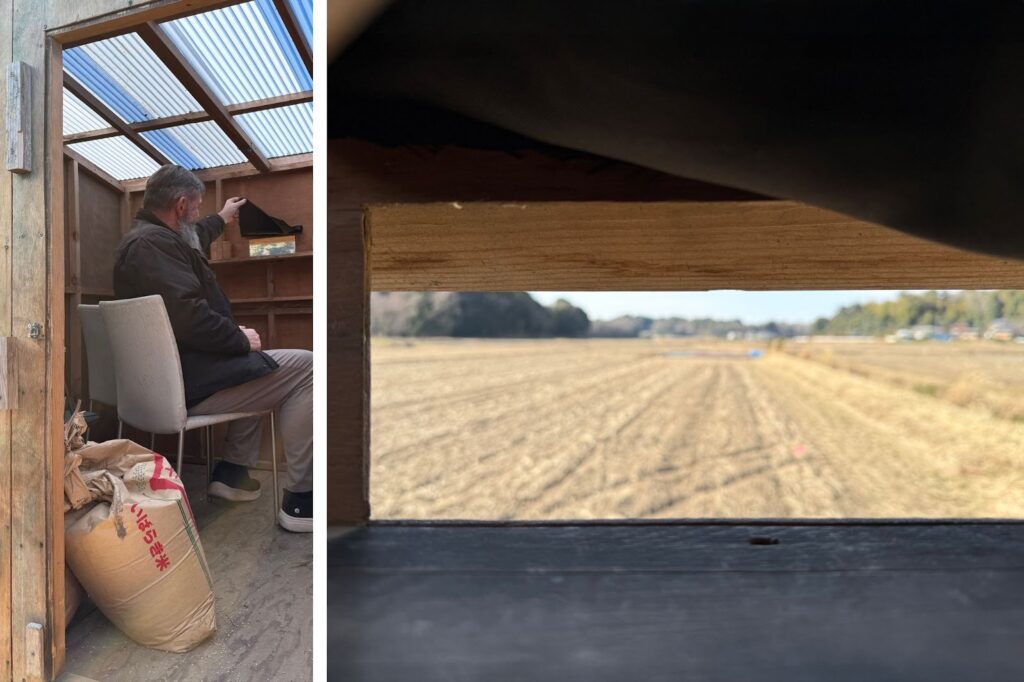
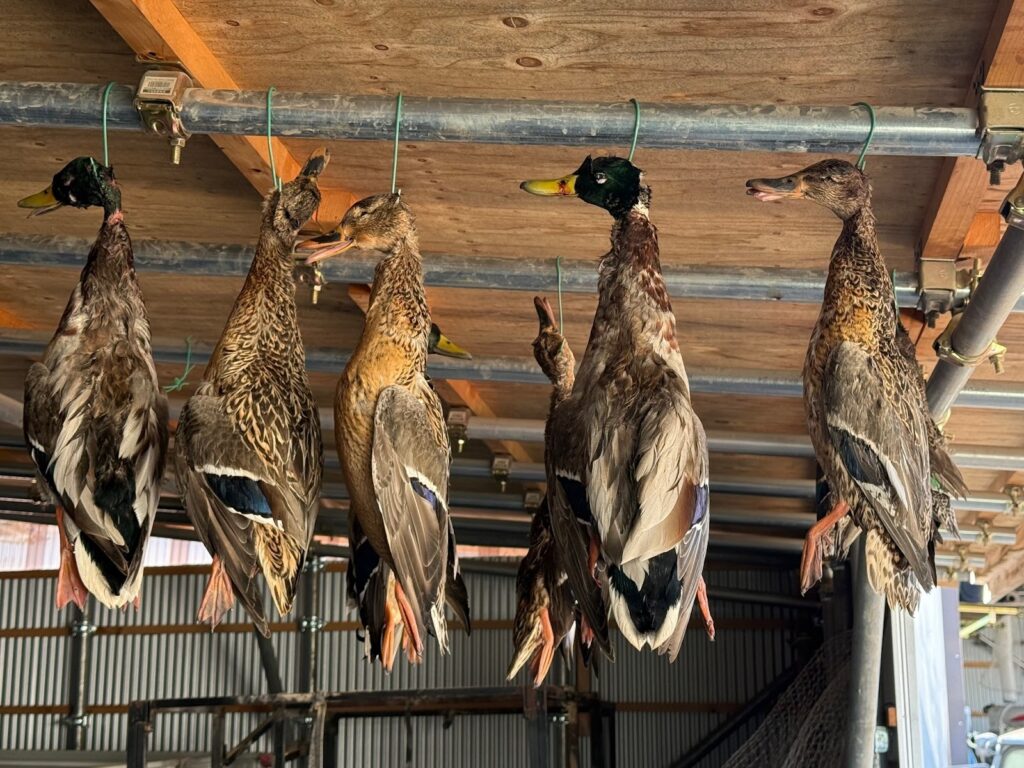
After arriving at Tsuchiura Station, I pondered popping into the celebrated Seve Ballesteros Golf Course for a round or two. However, with limited time, we headed straight to a professional duck netting and hunting preserve in Inashiki City, some 40 minutes’ drive away. Here, local duck hunters proudly showed us their large trapping nets and kamoba (traditional huts), while sharing a few stories.
Ducks were apparently offered to feudal lords in pre-Edo time and locals would often give a female and male duck tied together to a newly-married couple to wish them luck in love and money. The value and taste of local duck meat is preserved by a limit to the number of catches. The birds are caught only when they are well rested, just before they feed, shortly after sunset, to avoid their food creating that unpleasant gamey taste. The meat is tender because they are killed quickly to limit stress.
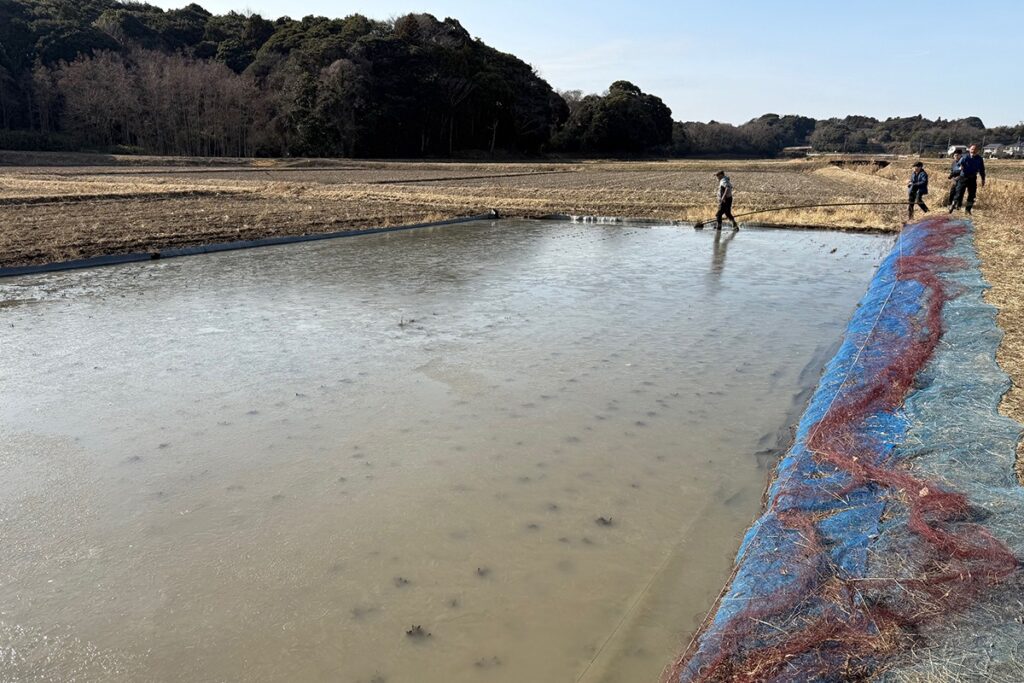
After spectacularly tripping over the wire and setting off the carefully laid and loaded net, to much amusement of the hunters and media, the so-called Stanford Duck Syndrome came to mind as I tried to appear calm and graceful like a duck gliding on water while frantically paddling underneath to manage immense feelings of inadequacy, despite the facade of effortless success. But I soon recovered to crouch in the shooter’s hut and squint through the gun opening for an oblong view of the shimmering pond beyond.
While this area is inland, wetlands and ponds attract wild swans and ducks in the cooler months (January to March). Enthusiasts often visit Inashiki to view assorted waterbirds gathered in winter and early spring. It’s peaceful here in the morning—the light is soft, and as you stroll along the water’s edge, you may spot native ducks paddling alongside mute swans on the water. This made for a lovely first stop on my itinerary. Observing these birds in their winter habitats is a refreshing contrast to the urban life of Tokyo.
Located in the northern part of the Kanto region, meanwhile, Tsukuba is less than an hour’s drive away and perhaps best known internationally for Science City, with about 50 research institutes open to the public. But don’t be fooled. I soon discovered that it also offers plenty for travelers who want to slow down and eat very well indeed. We headed straight for the main course and our raison d’être: a diverse Ibaraki duck tasting with three of Japan’s most famous food critics, including one with major global credentials. Duck dishes in Japan aren’t just delicious, we heard, they also reflect regional terroir and seasonality, particularly in winter when duck meat is most flavorful.
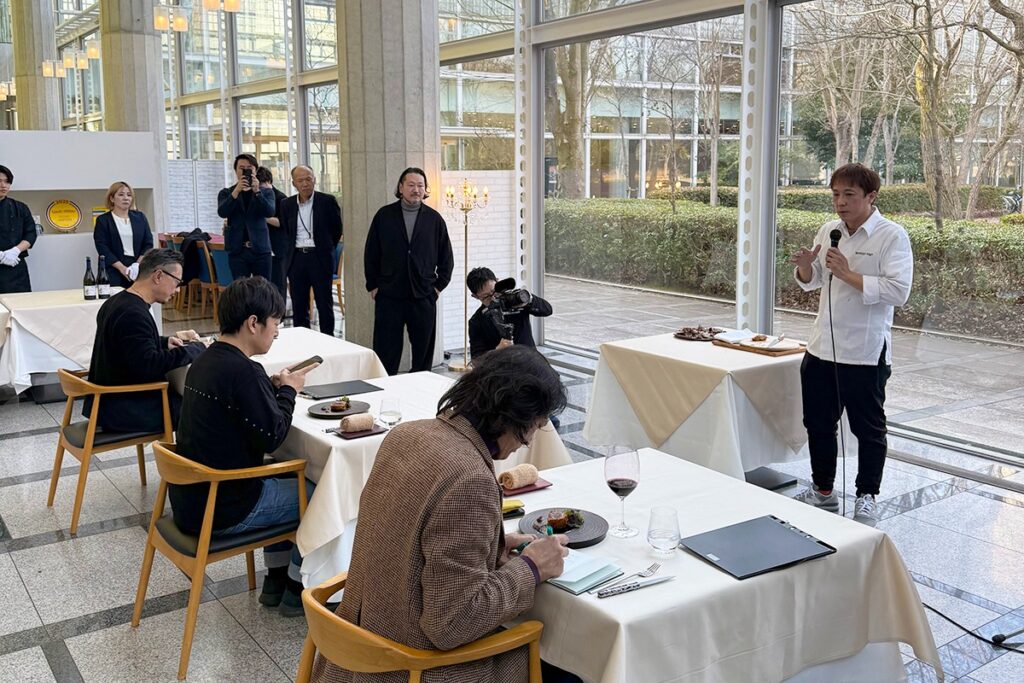
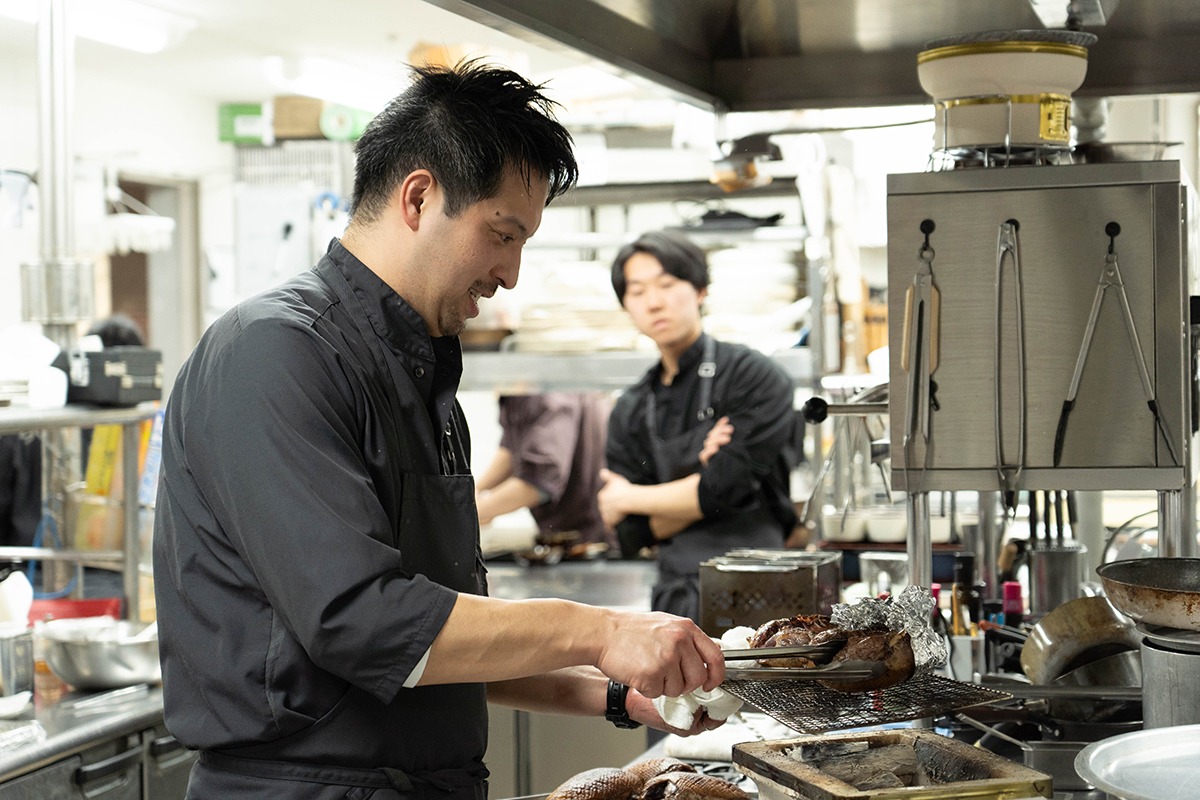
We gathered at the reservation-only, farm-to-table Tsumu, an Italian restaurant which had hosted five local chefs and three celebrity foodies: Takafumi Hamada, the OAD’s (Opinionated About Dining) top reviewer globally who has eaten his way through 127 countries; columnist Takanori Nakamura, chairman of the Japan Council for the World’s 50 Best Restaurants, and Hawaii- and Tokyo-based author and entrepreneur Naoyuki Honda.
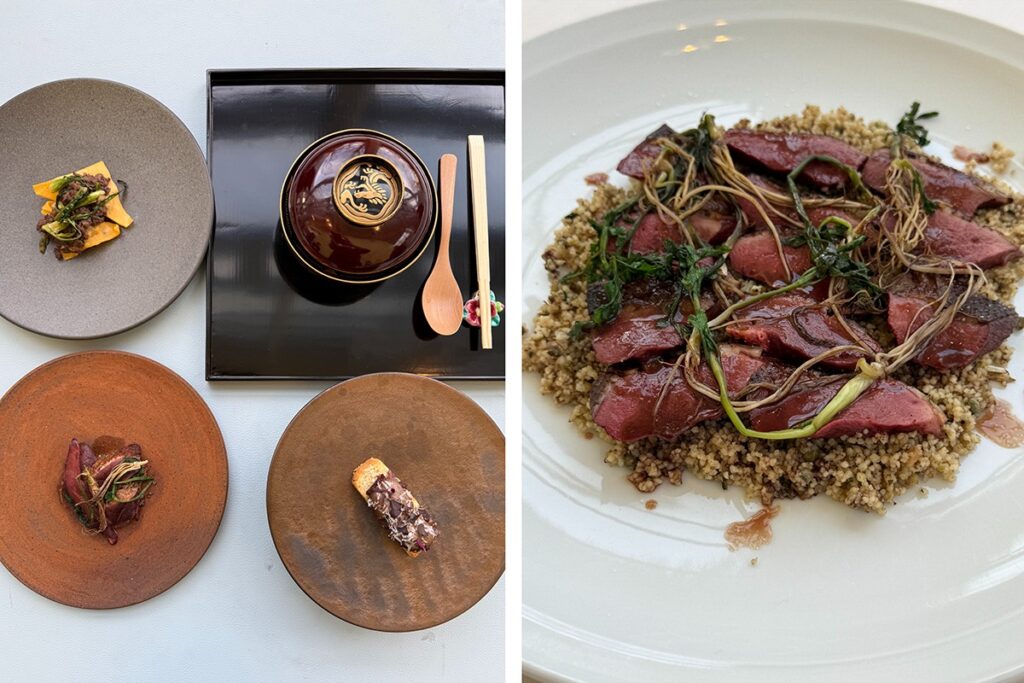
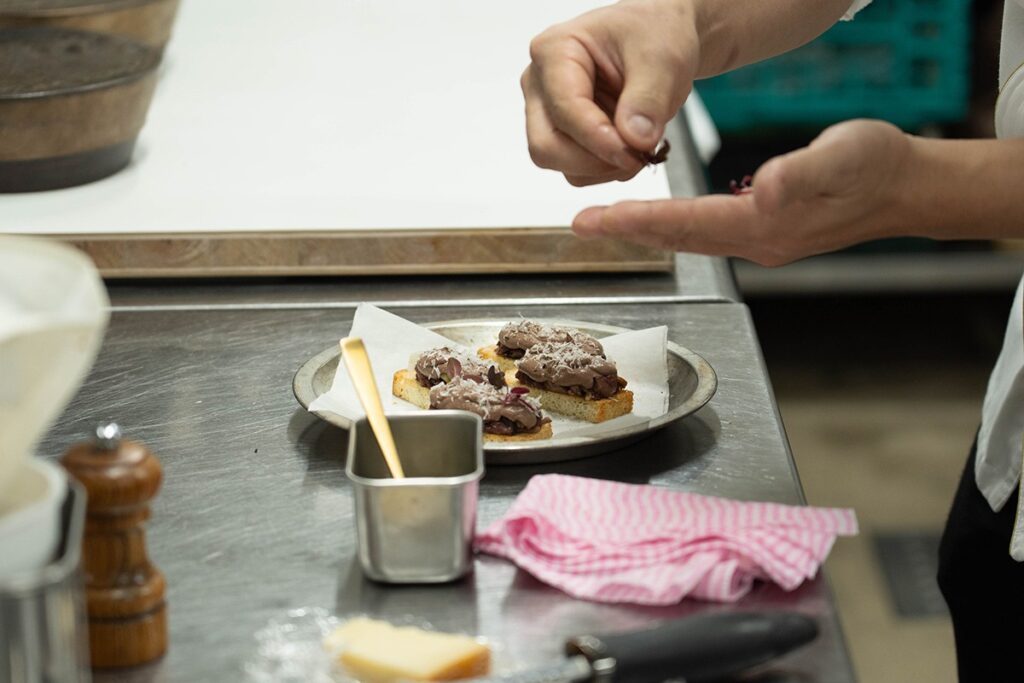
As the foodies sat with serious expressions facing away from everyone in the room sampling the first of five duck courses, we stood patiently with growling stomachs for our turn to try Yoshimachi restaurant’s autumn buckwheat wild mushroom rice porridge, a delicious savory, warming soup made from the bones, innards and thighs of wild mallard. Next came the host venue’s wild mallard crostini, crispy baked focaccias topped with duck thigh, sauteed gizzards and mild liver and heart paste.
Third on the menu, from Ootsu French restaurant, came a light and pleasing charcoal-grilled mallard with couscous, giblets and wild watercress, which came with wild mushrooms and light sauce including wild celery sauteed in duck fat.
A triangoli with wild mushrooms and shiitake was triple-sided ravioli also stuffed with cheese and smothered in a sauce of braised duck leg and persimmon, thanks to the Italian home-style Nonna Nietta restaurant.
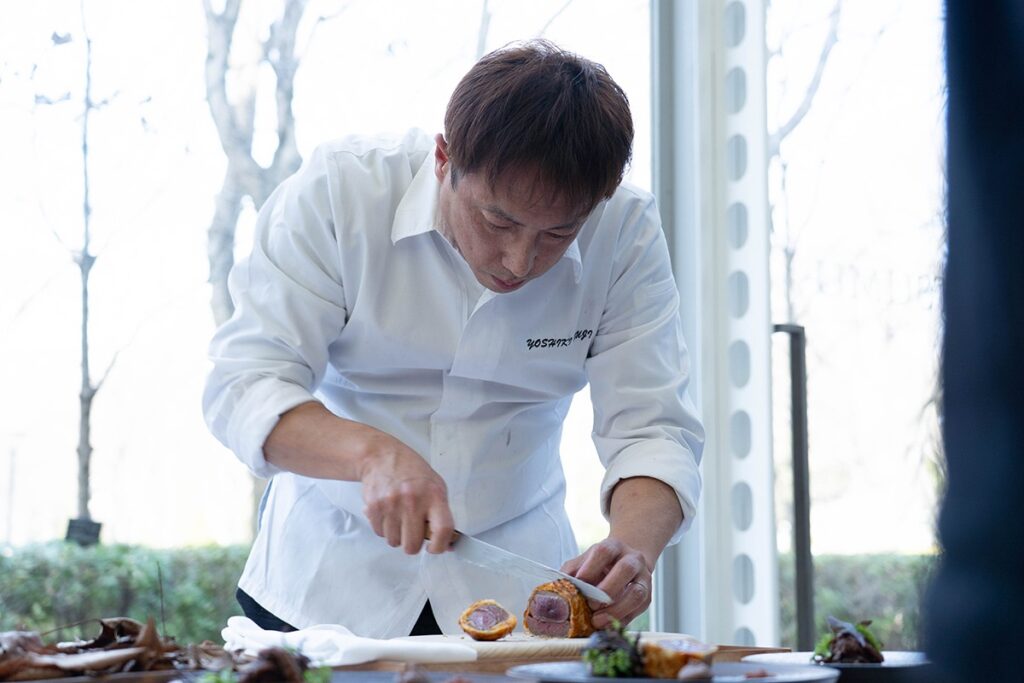
Finally, the pièce de résistance came from the other French restaurant at the event, Yoshiki Fuji, which also specializes in the Basque region of Spain: wild mallard pie bake (above), featuring the neck, wings and thighs minced to wrap and bake the bird’s breast meat. Two sauces complemented this popular dish which was quickly wolfed down, one made from red wine and bones and the other with bean blossom natto. The side dish was a ragout salad with mallard offal and Ibaraki vegetables.
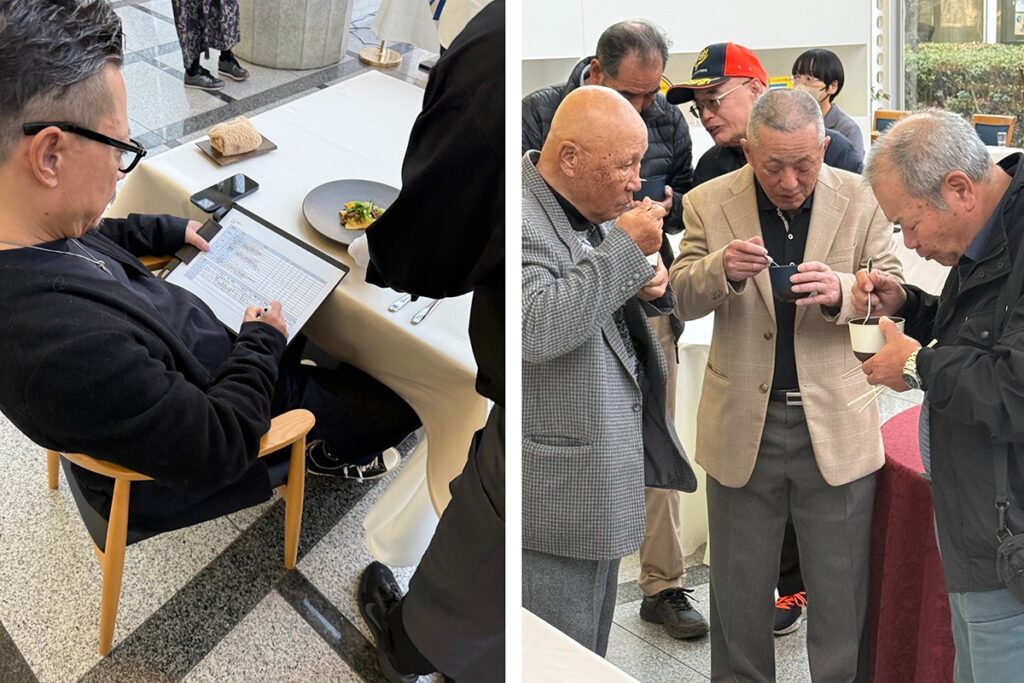
The foodies and media made copious notes (above, left) and the duck hunters (above, right) were easy to spot: short, stocky, weather-worn, heads down and, well, dressed like duck-hunters on a rare day off. I asked Negishi Izumi how he felt being invited to actually taste his prey among such luminaries, “I was happy to see duck cooked and prepared properly. Our ducks are so tasty that other prefectures ask for them,” he replied.
I was having so much fun in Tsukuba, the venue for the tasting event, I asked to stay the night there, which has views towards the mountain and a rustic, welcoming feel that makes everything seem like a local secret rather than a tourist stop.
If you’re staying near Tsukuba Station, there are several places where aigamo (locally farmed duck) dishes appear on the menu—such as duck soba or duck on skewers. Many locals and visitors say the local duck’s rich umami and deep flavor served with soba noodles and duck broth is especially satisfying on a cool day.
Once you’ve had enough duck, Tsukuba is quite global, as I found out with pleasure at the Twin Peaks Taproom & Beer Restaurant, which hand-brews 10 quality craft beers according to traditional German methods and recipes and serves classic German cuisine. The German theme continued a few minutes’ walk away at Backerei Brotzeit, a popular café and bakery serving 20 kinds of bread.
Indeed, the city has a lively cafe culture, with plenty of places to relax with matcha sweets or tea. In winter or early spring, you might even combine a coffee break with continued birdwatching around the parks’ ponds.
Tsukuba’s restaurant scene offers everything from local izakaya and ramen to trendy fusion or casual Italian that incorporate Ibaraki ingredients into creative menus. Many places emphasize locally grown produce, seasonal fare and diners who appreciate fresh flavors—perfect after you’ve explored the countryside and enjoyed rich duck dishes earlier in the day.
If you enjoyed this article, please let us know and share your thoughts at hello@goconnect.jp.