Making the Right Connections: Tokyo’s Train System (Part One)
While the trains make it easy to get around Japan’s capital city, what lies in store once you disembark are the real pearls to discover, digest and cherish once you return home.
Heavy traffic: Tokyo’s busiest stops
Ginza subway station handles an average of more than 230,000 daily commuters as of 2024 and is a stop for the Ginza, Marunouchi and Hibiya subway lines. Famed luxury fashion brands run along the Chuo-dori running north to south that intersects with Namiki-dori, including:
- Armani
- Bulgari
- Cartier
- Chanel
- Coach
- Fendi
- Prada
These retail standouts are joined by the Apple Store, Ginza Place, Ginza Six mall, Yurakucho Tokyu Plaza mall and the Seibu-Hankyu twin malls. A strong presence in the area is also wristwear, with timepiece giants Citizen, Montblanc, Omega and Rolex among others. More must-see retail sectors include the 12-story Itoya stationery building and Tokyo Kyukyodo, established in 1663 in the ancient capital of Kyoto by the Kumagai family and opening in Ginza in 1880 during the Meiji era to serve the Imperial Court. They have an extensive range of traditional Japanese paper goods, incense and calligraphy supplies.
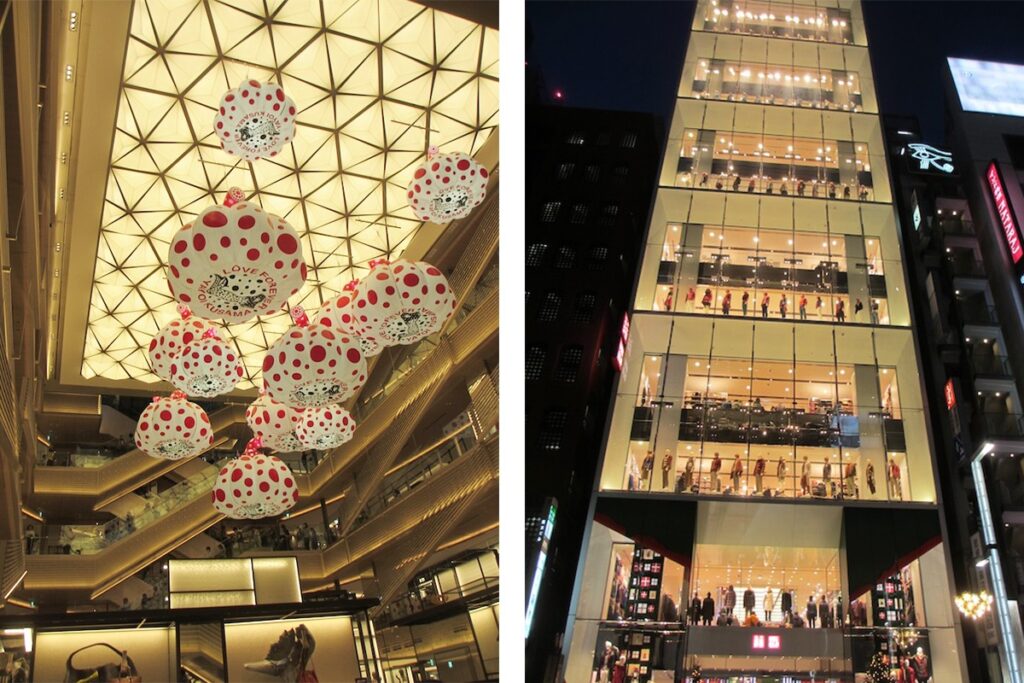
From left: Ginza Six lobby with Yayoi Kusama polka dots and Uniqlo Ginza
Not to be outdone are the fine-dining restaurants vying for supremacy in the district. These hold pride of place on the 11th and 12th floors of Ginza Mitsukoshi department store, a chain founded in 1673 as Japan’s first department store, and the eighth floor of Ginza Matsuya department store, which celebrated its 100th anniversary in 2025.
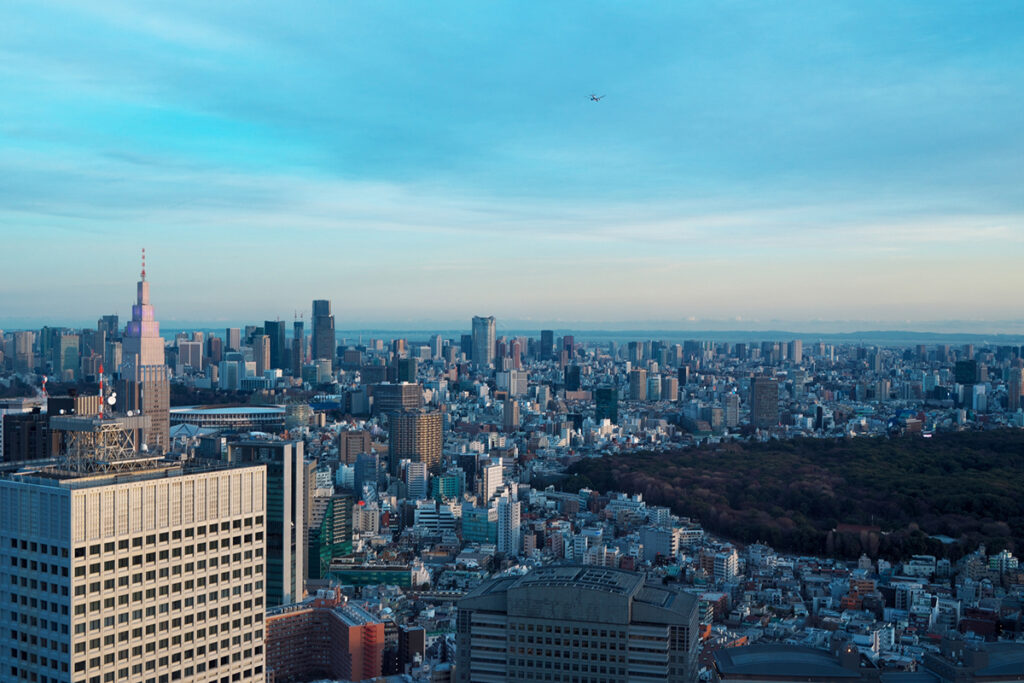
Near skyline scenery
Shinjuku station handles close to 200,000 daily commuters as of 2024, which includes serving as a key transfer point for the Toei subways, East Japan Railway, Keio and Odakyu Electric Railway. Key local points of interest include the Tokyo Metropolitan Government twin towers which have two observation towers, north and south, at 202 meters. Visitors can access them using the elevators on the ground level of Main Building No. 1, and admittance is free. On the 32nd floor of the same building, a restaurant is open on the same days as the offices and can be accessed using a pass issued by the reception desk, seating 863 people. There is also a cafeteria in Building No. 2 on the fourth floor seating 776 people. There are slightly differing hours of operation between the two cafeterias:
- Cafe: 8am to 5pm in Building 1, and 8am to 4pm in Building 2
- Lunch: 11am to 2pm
Both are closed on Saturdays, Sundays and national holidays, and during the year-end and New Year holidays.
Trendy and tourist friendly
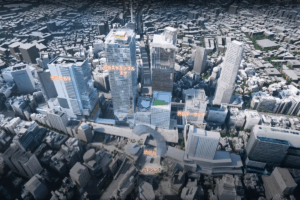
Shibuya station handles more than 191,000 daily commuters and services the East Japan Railway, the Tokyu Corporation and the Keio Corporation. Considered to be Tokyo’s entertainment hub, development around the station, which originally opened in 1950 and is still proceeding, includes:
- The 229-meter-high Scramble Square Central Tower and West Tower with its 47th-floor Shibuya Sky observation deck designed by Kengo Kuma
- Shibuya Cast with shops, multi-purpose spaces, shared offices and rental apartments
- Shibuya Markcity with the Excel Hotel Tokyo, shops and restaurants
- The 183-meter-high, 43-story Hikarie with its ORB musical theater and an 11th-floor free sky lobby
- Shibuya Fukuras with the third through eighth floors hosting Tokyu Plaza and the recent 17th-floor Shibu Niwa overlooking the city in an open-door terrace
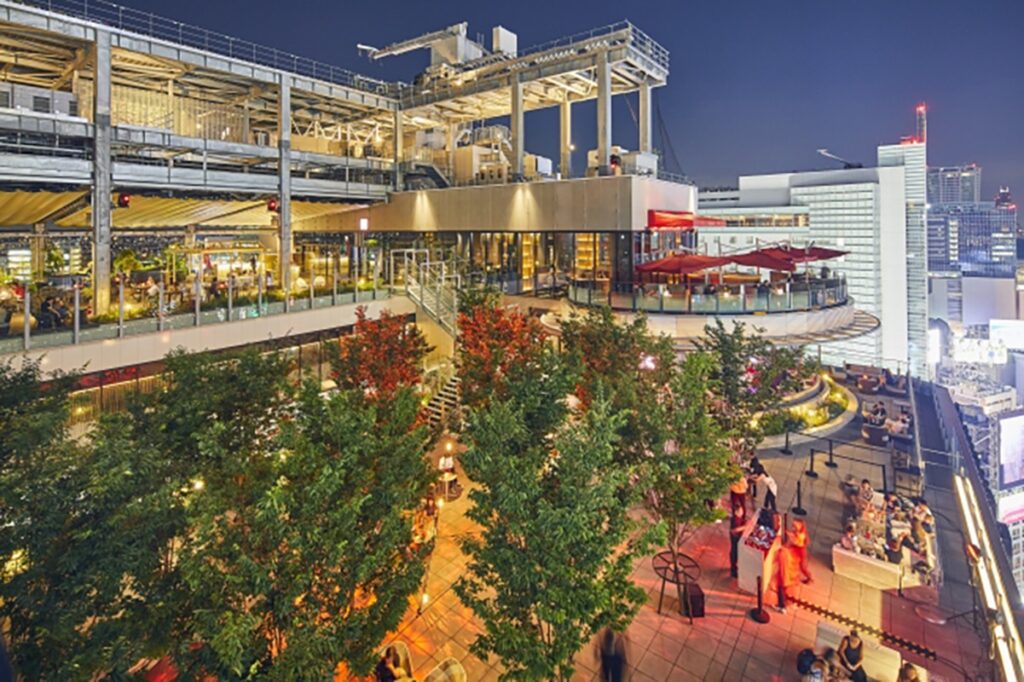
Museums and Zoos
Ueno subway station sees close to 190,000 daily commuters as of 2024 and handles the East Japan Railway and Keisei Electric Railway lines. The station is a major stop along the circular Yamanote line, connecting most of the major commercial districts and popular tourist destinations of Tokyo. Subsequently, the station is surrounded by nine tourist hotels, eight business hotels, two budget/backpacker hotels and two ryokan inns on its website. Inside the station are two shopping centers — Atré and Ecute — with a variety of stores, restaurants, and cafes including Hard Rock Cafe and Vinuls Spanish bar and restaurant. The station also has bars such as Rose & Crown British pub and Stáisiún Irish pub serving both Guinness Irish dry stout and Kilkenny nitrogenated Irish cream ale, both on tap.
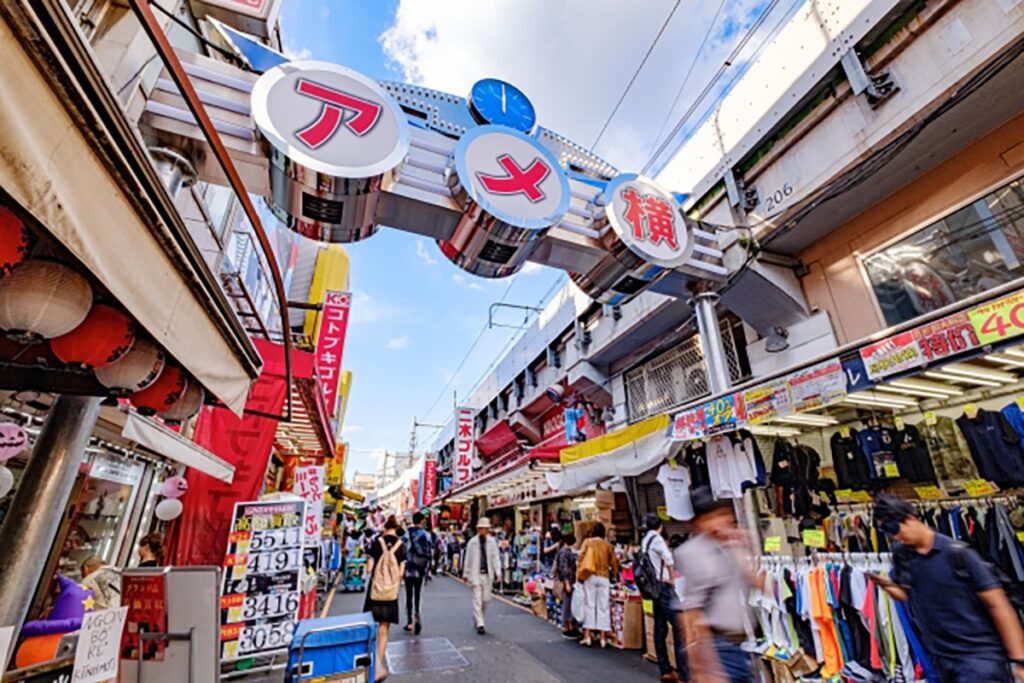
Nearby Ameyoko or Ameya Yokocho, a popular shopping street, extends 500 meters in length and is set to a background of hawking calls by energetic sellers like in olden times. Also close at hand is Japan’s first zoo, founded in 1882. Ueno Zoo is home to 2,500 animals from 300 different species, including Sumatran tigers, western gorillas, South American tapirs and polar bears. Ueno Park houses national museums — including the Tokyo National Museum, National Museum of Nature and Science and National Museum of Western Art — as well as the Tokyo Metropolitan Art Museum, the privately owned Ueno Royal Museum founded in 1972 and the Shitamachi Museum focusing on the culture and history of downtown Tokyo.
Whenever Tokyo feels full of secrets to explore and discover, spare a thought for the system that moves millions, and the literal heartbeat of the city.
To stay updated on more insights about life in Japan, subscribe to the GoConnect newsletter.
If you enjoyed this article, please let us know and share your thoughts at hello@goconnect.jp.