
Traditional Japanese Crafts in Tokyo: Kanzashi, Sashimono and Tenugui
Experience the meticulous beauty of traditional Japanese crafts in Tokyo. We explore the passed-down artisan techniques of delicate tsumami kanzashi, nail-free Edo sashimono wood joinery and chusen dyed tenugui to end your trip with a piece of art that has its roots deep in Japanese history.
Table of Contents:
Delicate tsumami kanzashi: Traditional silk hair ornaments
Edo Sashimono: The nail-free wood joinery of Mogami Kogei
Chusen dyeing: The time-honored craft of Tenugui washcloths
Delicate tsumami kanzashi: Traditional silk hair ornaments
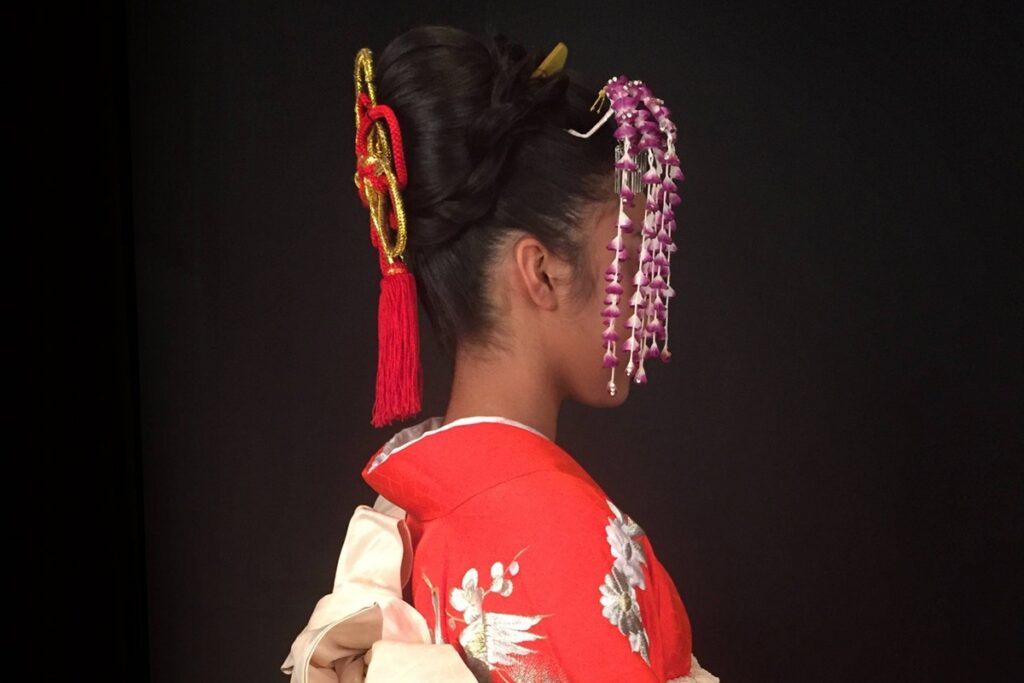
The Tsumami Kanzashi Museum in Shinjuku showcases an elegant collection of rare Japanese hair ornaments, which are especially fitting to wear with a kimono. The process of making kanzashi is so painstaking that only a handful of master craftsmen remain active today. The museum encourages visitors to adopt kanzashi not just as accessories but as beautiful room decorations or fitting gifts for loved ones.
The story of these ornaments begins in the Edo era (1603 to 1868). When the kimono was standard daily wear, people would cut off parts of the nagajuban (under-kimono) and pinch (tsumami) the unused fabric into decorative shapes using tweezers. Today, the Taito, Sumida and Arakawa wards are recognized by the Bureau of Industrial and Labor Affairs as the main hubs preserving the history and techniques of this craft.
Traditional occasions to wear kanzashi include:
- Shogatsu: New Year rites
- Shichigosan: Celebrations marking a child’s third, fifth and seventh years
- Seijin-shiki: Coming-of-age celebrations
For these events, designers create vibrant, lifelike motifs of chrysanthemums, plum flowers, butterflies and Chinese phoenixes using square-cut silk fabrics (habutae). The folding techniques include the marutsumami (round-picking) method for a soft impression and kakutsumami (angle-picking) to achieve a sharper, stronger image.
To experience this firsthand, Mukoujima organizes workshops near the iconic Tokyo Skytree along the Sumida River. Here, you can learn directly from a third-generation craftsman and his wife. Choosing from nearly 100 fabrics, you can apply 300-year-old techniques to create your own unique tsumami kanzashi. Your creation becomes part of the Kanzashi Sugino original brand, Arenca, and you can take it home in a custom frame to brighten your living space. To appeal to a contemporary market, these artisans are continually taking up the challenge of creating new, modern designs.
Edo Sashimono: The nail-free wood joinery of Mogami Kogei
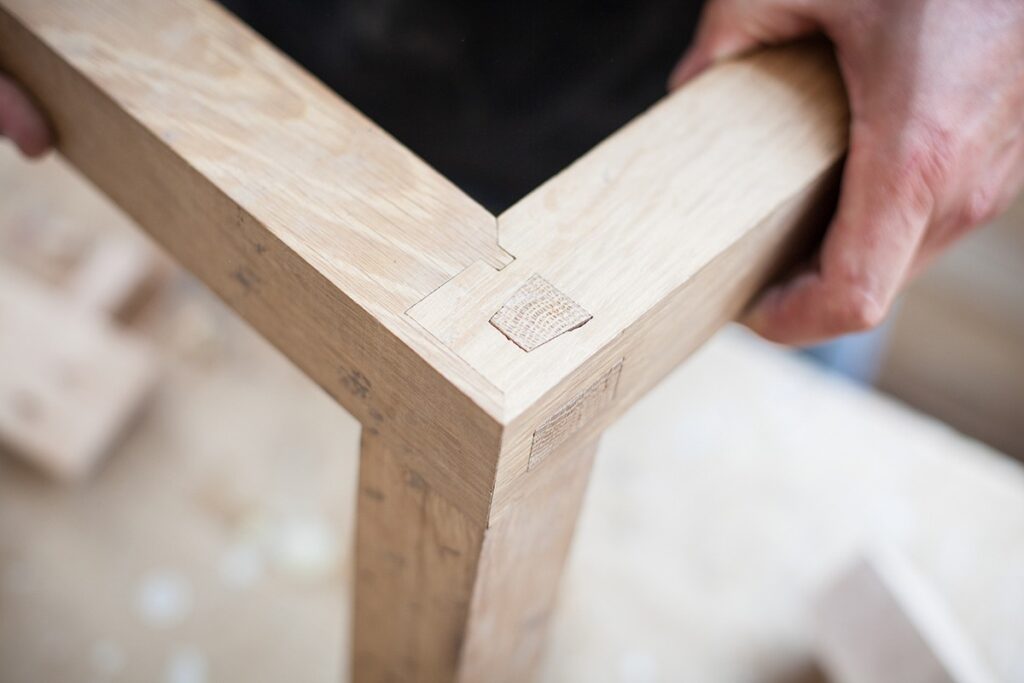
During the middle of the Edo era, material scarcity taught Japanese craftsmen to maximize every resource. The Tokyo Ivory Arts and Crafts Association notes this was true for ivory craftsmen, who became adept at saving even small fragments for miniature sculptures (netsuke) and shamisen plectrums. That same ethos of absolute precision is alive today in the art of Edo sashimono: wood joinery that uses zero nails.
The shop Mogami Kogei has inherited the future of this craft. Just like in the Edo era, craftsmen use thin panels and slender columns compared to other joinery forms. To achieve this delicate look, master artisan Yutaka Mogami utilizes woods like mulberry, Japanese cedar, paulownia, Japanese zelkova and amur corktree. These woods are naturally dried for at least six months and up to 10 to 20 years for longer pieces.
Once the wood is ready, it is shaped using more than 100 different wood planers. This includes a tiny Japanese planer the size of a 4-centimeter pencil, which is pulled rather than pushed like Western tools.
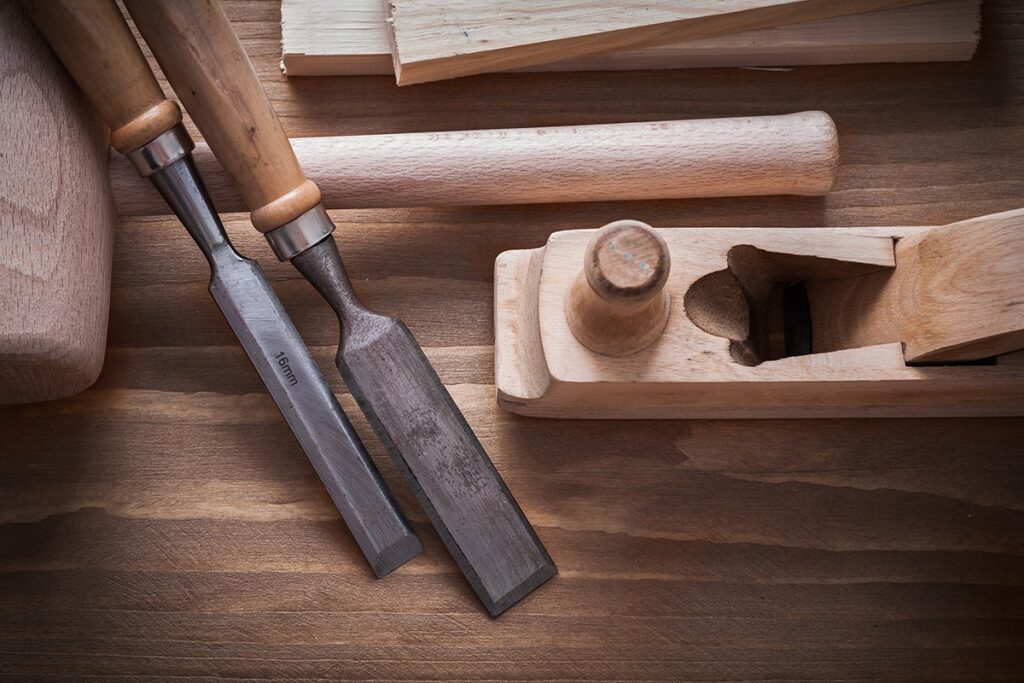
Armed with these tools, craftsmen face their greatest challenge: cutting the joints. The pieces are joined together by cutting a convex shape (hozo), and the size and shape of all slots and holes are adjusted to maximize adhesive strength. If the size of a slot is off by even 1 millimeter, the joint will not fit. If a stiff joint is forced, the board will break; everything must be perfectly accurate. While the resulting furniture looks dainty and elegant, the joinery is incredibly sturdy and brings out the utmost beauty of the wood’s grain and texture.
Despite the undeniable quality of this meticulous work, the craft faces modern challenges. Yutaka notes that while Edo-era furniture was exclusively for people of high social status, wood joinery entered general households during the Meiji era (1868 to 1912). However, the number of sashimono shops has since dwindled, with fewer than 20 craftsmen left in Tokyo.
To adapt and ensure the craft’s survival, Yutaka applies these historic techniques to modern, accessible items:
- Portable Buddhist altars
- Hand mirrors
- Guinomi (large Japanese sake cups)
- Wine stands and wooden neckties (created in collaboration with modern designers and bamboo craftsmen)
Finally, to bridge the gap between these historical customs and modern daily living, Mogami Kogei now opens its doors to the public. The shop hosts interactive workshops for foreign tourists and students on school trips, allowing visitors to witness the precision of Edo sashimono firsthand.
Chusen dyeing: The time-honored craft of Tenugui washcloths
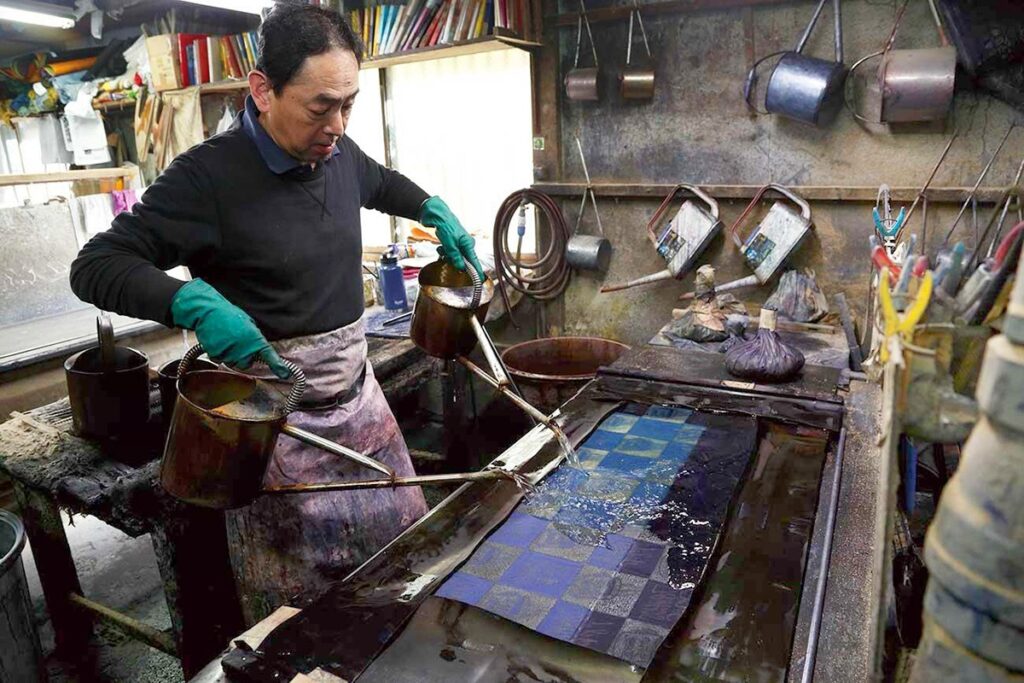
Founded in 1889 during the Meiji era, Tokyo Wazarashi produces washcloths dyed using traditional honzome tenugui craftsmanship. They specialize in the chusen method of dyeing, which literally means “pouring pigment.”
By dropping the dye directly from a kettle onto the fabric, the chusen method allows tenugui to be produced in larger quantities and easily embedded with logos. This was a major advancement over the older naga ita chugata method, which required a wood board to dye cloths one by one.
The meticulous process begins with a stencil dyeing technique applied to a white fabric. A dye-resistant glue is layered on, ensuring the poured dye only colors the exposed areas. Chusen dyeing uniquely colors both the front and back of the garment identically, producing subtle gradations and textures that cannot be replicated by machines.
Murai Senkoujyo, established in 1936, is another pillar of this craft. Run by a third-generation artisan at its current location since 1939, the company produces traditional tenugui in collaboration with a wide range of modern organizations. In the past, there were more than 30 companies in the vicinity making yukata (summer kimonos) and tenugui using the chusen method. Today, only four remain in Tokyo’s Edogawa ward.
The exquisite skills of these remaining artisans produce understated hues — primarily indigo and navy — that embody the essence of iki, the concept of refined Japanese elegance. By exploring these crafts, you can immerse yourself in techniques that have endured for generations, carrying you back in time to their eras.
To stay updated on more insights about life in Japan, subscribe to the GoConnect newsletter.
If you enjoyed this article, please let us know and share your thoughts at hello@goconnect.jp.