Edo Kiriko vs. Satsuma Kiriko: A Guide to Japanese Cut Glass Artistry and Tokyo Workshops
The Bureau of Industrial and Labor Affairs has a lot to say about the art of cut-glass artistry. The cut glass, or kiriko, tradition is sharply divided into two parts. The Satsuma patterns were etched before the emperor was isolated in Kyoto by the Tokugawa Shogunate, which would rule a self-imposed exiled Japan for 250 years.
Yet, during this Edo era (1603-1868) when patrons also were banned from supporting this art form, ordinary people nurtured a different style of cutting glassware, Edo kiriko, that has endured and thrived to this day.
Table of Contents:
Satsuma vs. Edo: A Tale of Two Styles
The Art of Crafting Edo Kiriko
Where to Experience and Buy Edo Kiriko
Satsuma vs. Edo: A Tale of Two Styles
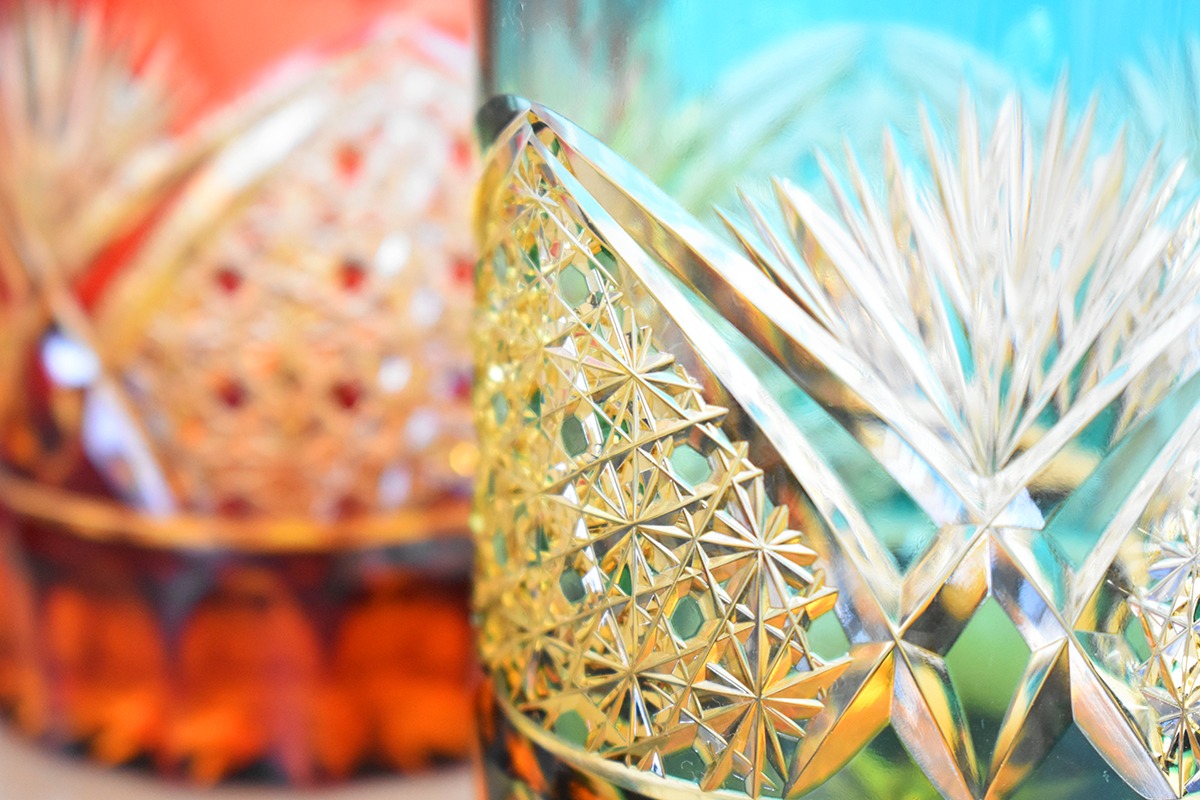
The Japanese Bureau of Industrial and Labor Affairs explains that Edo kiriko cut glassware was born in the 19th century, drawing from European cut-glass techniques. While both styles reflect light like a kaleidoscope and are highly acclaimed for their beautiful designs on transparent glass, they differ significantly in execution:
- Satsuma kiriko: Uses shading techniques to cut colored glass that is 2 to 3 millimeters thick.
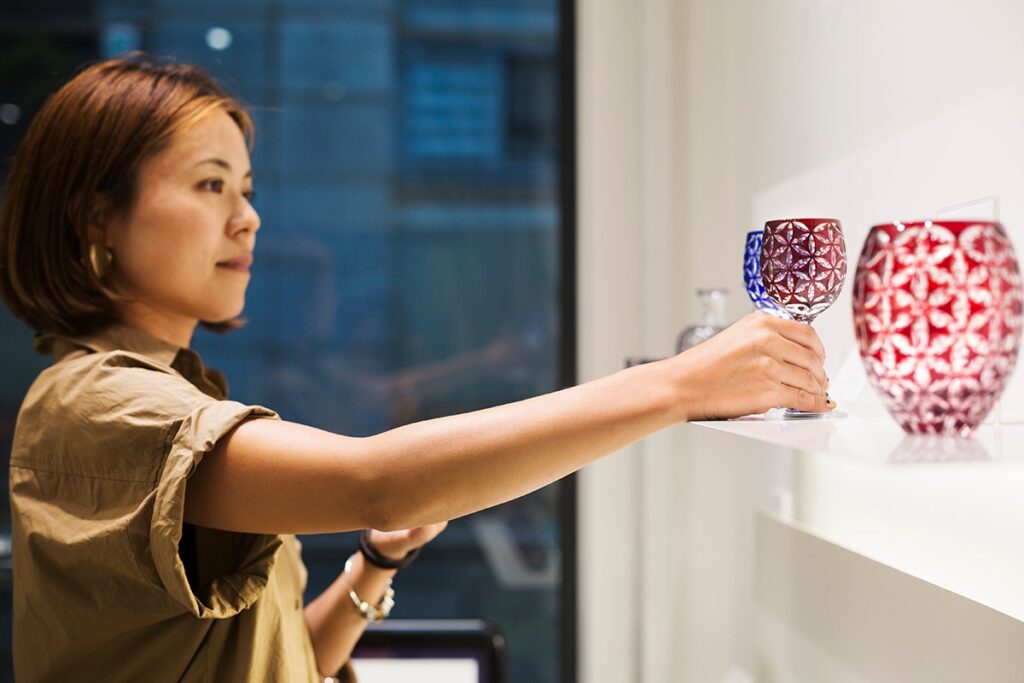
- Edo kiriko: Features fine carving on colored glass less than 1 millimeter thick, creating a sharp, clear shine.
The Nanako pattern looks like a series of fish eggs in reflected light. It offers a range of some 20 classic patterns that inspire “gaiety at the modern dining table,” according to the bureau. Craftsmen create vessels of varying shapes for sake, beer and wine, and the glassware’s durability makes it convenient for everyday use.
The main Tokyo wards manufacturing kiriko are Edogawa, Koto and Sumida. The latter two wards produce 80% of all Edo kiriko.
The Art of Crafting Edo Kiriko
Kagaya Kyubei, who ran a glassware store in Edo’s Odenmacho district near modern-day Nihonbashi, is considered the originator of Edo kiriko. He learned his craft in Osaka, then a leading center of Japanese glassware production. Returning to Edo, Kyubei opened a store producing eyeglasses, thermometers and hydrometers. Over time, Edo kiriko techniques became synonymous with artistic glass, reaching their prewar zenith around 1940.
Today, the basic steps of production include:
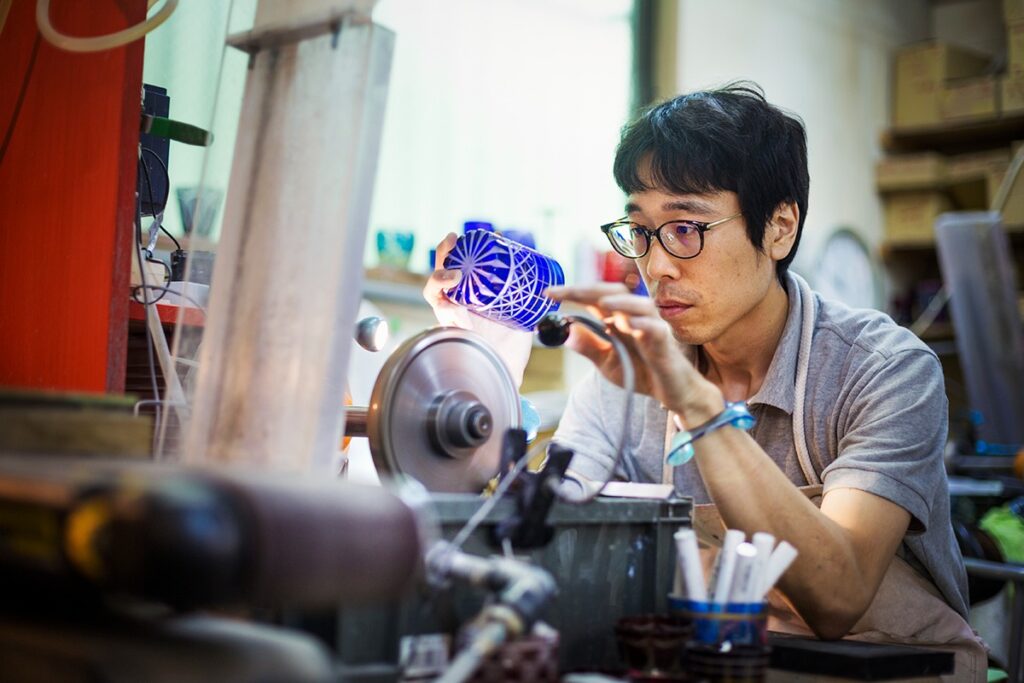
- Sumitsuke (Ink application): A bamboo stick applies ink to the glassware’s surface, creating a basic outline of the patterns.
- Arazuri (Basic grinding): Emery powder on a metal grinding wheel etches the major elements of the design, following the sumitsuke outline.
- Sanbankake (Detailed etching): Finer grain emery powder is used for intricate patterns. Depending on the design, craftsmen may use three different types of grinding wheels.
- Ishikake (Whetstone grinding): Whetstones sourced from Kyushu smooth and define the previously etched patterns.
- Kenma or Migaki (Polishing): Polishing powder on a wooden wheel (made of paulownia or willow) buffs the non-transparent surfaces. This careful polishing heightens the transparency and brings out the traditional luster of the kiriko.
Where to Experience and Buy Edo Kiriko
Sumida Edo Kiriko Museum: This ward-certified workshop offers hands-on Edo kiriko classes, usually Tuesday through Saturday. The experience includes a machinery overview, glass selection, a practice cut and the final cutting.
- Who can join: Fourth-grade students and older. Middle schoolers and adults cut glasses, while elementary students cut lidded containers.
- Schedule: 10:30 a.m. to noon; 1 p.m. to 2:30 p.m.; and 3 p.m. to 4:30 p.m.
- Requirements: Reservations are required. A fee covers all materials.
- Sumida Edo Kiriko Museum’s displays are best viewed from above.
SOKICHI (Asakusa): SOKICHI is a glass factory where visitors can choose from over a dozen glass types and dozens of patterns to create unique glassware, with guidance from instructors. Inquiries can be made in English.
- Who can join: Ages 9 and up (adult supervision required for younger participants). Beginners are welcome.
- Class size: One to 12 people per room (up to 40 people total).
- Duration: 90-minute classes, two-hour classes or a combined instruction/trial lesson course (starting times vary).
- What to bring: Reading glasses and hair clips, if needed.
- SOKICHI class’ glassware range.
Kiyohide (Koto Ward): Kiyohide focuses on creating products that accompany “blissful moments of delicious food and fine drinks.” All Kiyohide’s Edo kiriko glasses are handmade. (Pieces with material inconsistencies are repurposed into accessories, such as necklaces.)
While the visual patterns of Edo kiriko catch the eye, holding the tumbler brings a new level of enjoyment. The deep, smooth cuts engage the senses with every sip.
- Sake cups: According to Kiyohide, the term “guinomi” (sake cup) likely stems from the idea of gulping it down. A slightly smaller cup, the “ochoko,” originates from a word relating to something small or simple.
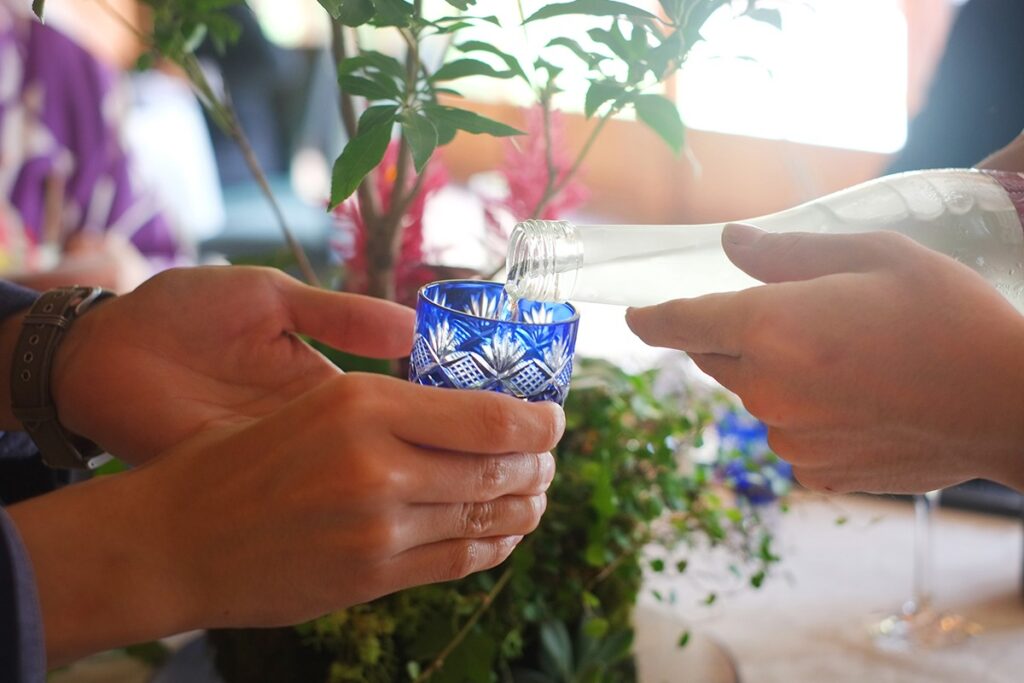
- Rocks glasses: These short, wide-opening glasses (old-fashioned glasses) are perfect for large or round ice cubes, ideal for whiskey on the rocks.
Kamata Kiriko (Ota Ward): Located in the Handicraft Shop Forest, Kamata Kiriko primarily carries its original brand of glassware featuring circular cuts. Its modern designs are suitable for everyday use and make excellent gifts, with options for name engraving and international shipping.
- Notable designs: The Tokyo Water Glasses won the Excellence Award in the “100 Best Ota Souvenirs” category. Other designs include Water Mirror (resembling connected water drops), Wind Wave (inspired by crashing waves) and Urumon (a whirlpool viewed from the bottom).
Japanese cut-glass kiriko relies on manual dexterity passed down for generations and creative ingenuity in a country known today for its high-tech supremacy.