More Than Scholarships: How CWAJ Empowers Women to Shape the World
When you strive for something, determination alone isn’t enough, especially for women and people with disabilities who face barriers in society. The pursuit of learning is essential for those who dream of contributing to something greater. The path is not straightforward — there will be hurdles along the way. But funding, visibility and empowerment are often what they need for that dream to become reality.
What is CWAJ?
Founded in 1949, the College Women’s Association of Japan is a multicultural, volunteer-driven not-for-profit organization with a core mission of scholarship. The group provides opportunities to women who are innovators and disruptors of the current system through education, cultural activities and art. More than that, CWAJ offers support to visually impaired individuals and strongly supports the LGBTQ community.
Through membership donations, collaborations and annual activities, CWAJ provides scholarships to women, and to visually impaired men and women, pursuing graduate studies. To date, the organization has awarded scholarships to more than 870 scholars from 49 countries through CWAJ programs including:
- Graduate Scholarship for Japanese Women to Study Abroad
- Cartier Scholarship
- Graduate Scholarships for Non-Japanese Women to Study in Japan
- Scholarship for the Visually Impaired to Study in Japan
- Graduate Scholarship for the Visually Impaired to Study Abroad
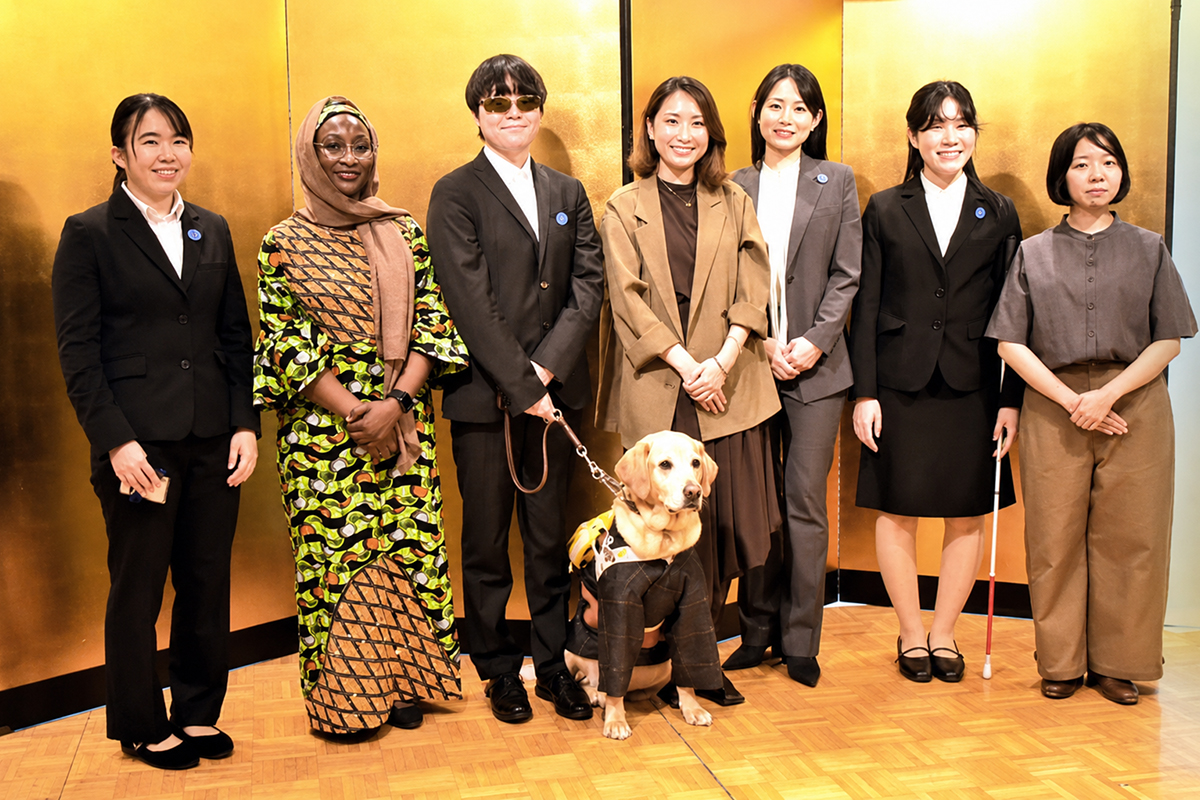
The 2026 scholars
On May 13, CWAJ announced its newest scholarship recipients at The Foreign Correspondents’ Club of Japan. We sat down with three of this year’s awardees to learn more about their stories.
Hiro Miyaguchi: Breaking barriers through creativity
Hiro realized that mathematics was her calling during her third year of university. Although she needed extra support during lectures and writing assignments, she found beauty in solving complex problems. What sets Miyaguchi apart is how she chooses to view her challenges. Despite her visual impairment, she does not view her condition as a limitation. Rather, she sees it as a strength that allows her to solve problems through a creative lens.
She is heading to Imperial College London to pursue a master’s degree in symplectic geometry, a highly specialized branch of mathematics that structures an imaginary space. She chose the institution deliberately because it is one of the few places offering study at the advanced level she requires.
Her career goals are straightforward: to advance mathematics by working through unsolved problems and to give back to society through education. She wants to work with other visually impaired students to provide the kind of structural support she did not experience herself.
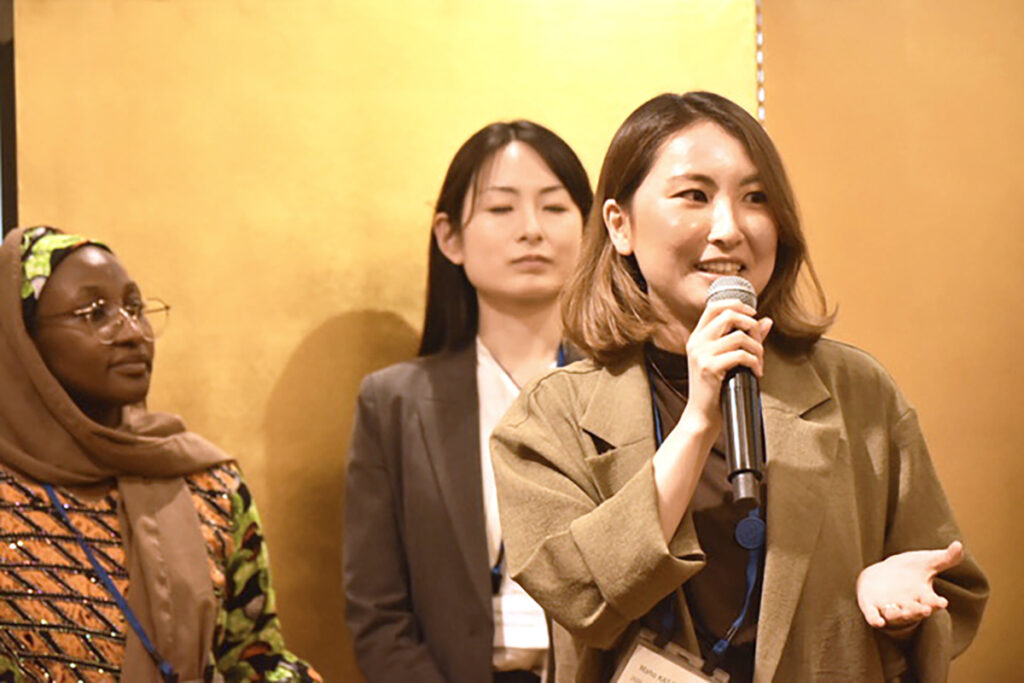
Maho Kasahara: Telling stories to change narratives
Having spent her childhood in Turkey, Maho Kasahara experienced firsthand what it feels like to live in a foreign country. When she returned to Japan, she volunteered to learn more about third-culture children and the struggles of cultural coexistence. This early exposure to living between cultures became the foundation of her academic path.
Before receiving her scholarship, she spent five years working at Suntory, where she observed how gender dynamics play out in a major Japanese corporation. She noted that while women are actively encouraged to lead, unspoken norms still persist, and tasks delegated to women often lean toward supporting roles. However, during her few years on the job and under the tenure of a female CEO, she saw that structural changes are taking place.
Kasahara is heading to New York for a master’s degree in media studies. She notes that New York is an ideal environment because it is a place where people from diverse backgrounds coexist. Her ultimate goal is to build a media company in Japan dedicated to creating open dialogue between minorities and host communities, aiming to change how the media perceive third-culture children. For someone who has lived that experience, it is less a career plan and more a personal mission.
Dr Hafsat Usman: Systemic change through research
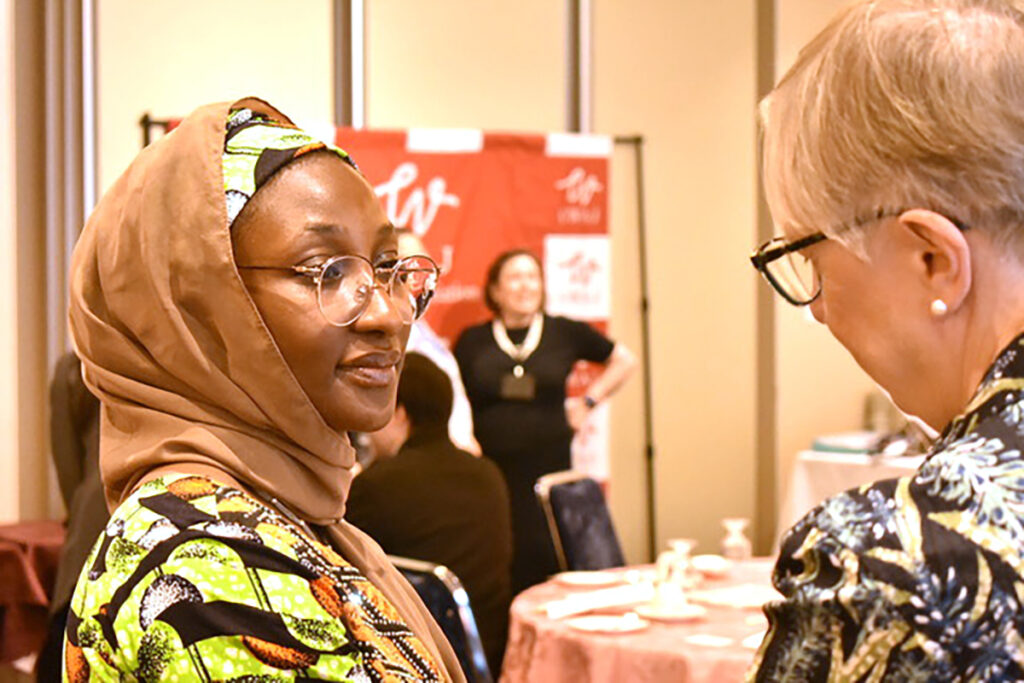
From Nigeria, Dr Usman arrived in Japan to pursue a doctorate in cardiovascular surgery. Although she trained and practiced as a clinician in India, she wanted to reinforce her practical clinical background with academic research. The robust research environment and culture are what drove her to Japan to pursue her goal.
Studying in different countries taught Usman to be independent while recognizing when to seek advice. Her clinical knowledge was guided by her teachers in India, while her mentors in Japan continue to encourage her to be an independent thinker. On the gender gap in healthcare, she offers a nuanced take. She does not characterize the gap as purely discriminatory. For healthcare workers, structural factors such as physical strength can give men certain endurance advantages that female colleagues may lack. The gap is real, though in her view, the causes aren’t always malicious.
With the scholarship’s help, Usman wants to investigate how institutionalized healthcare systems support citizens. The healthcare system in Nigeria, she explained, suffers from an institutional lack of government support rather than a failure of individual practitioners or patients. While each resident in Japan has health insurance, Nigeria lacks a universal system. Through her research, she hopes to influence the Nigerian government to implement systemic changes to build a healthier nation.
Different journeys, one common goal
These three women work in entirely different fields, but a common thread runs through their ambitions: their work matters beyond themselves.
Miyaguchi wants to open doors for the visually impaired students who follow her. Kasahara wants to build spaces where people who don’t fit neatly into one culture can be heard. Usman wants to push for the kind of reform that extends healthcare access to millions.
This is the exact type of ambition beyond education that CWAJ has funded for 75 years. For women like them, the scholarship is a powerful means to a transformative end.
More details: cwaj.org