JMEC 32 Names Business Plan Winners at Tokyo Awards Ceremony
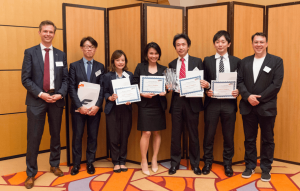
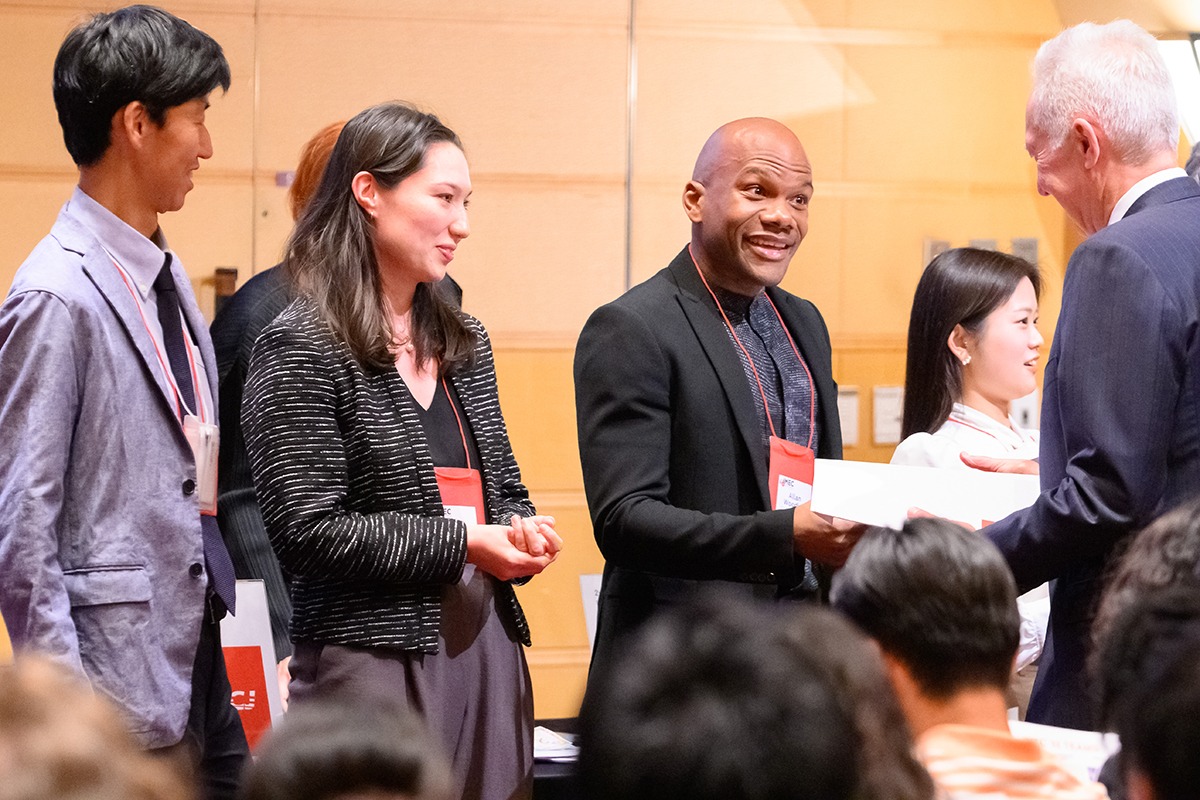
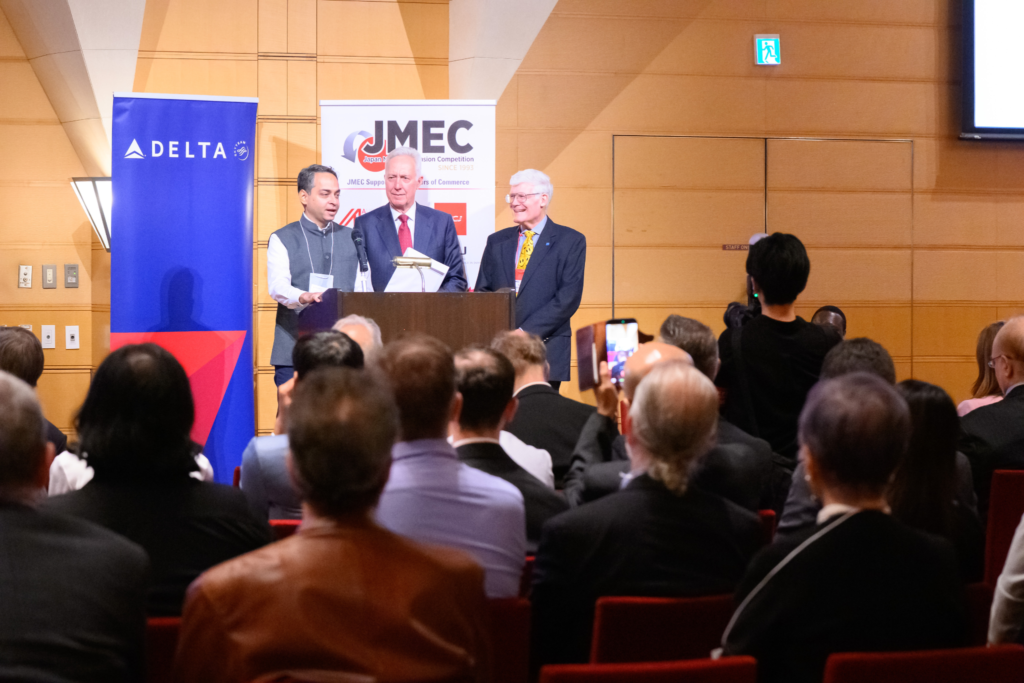
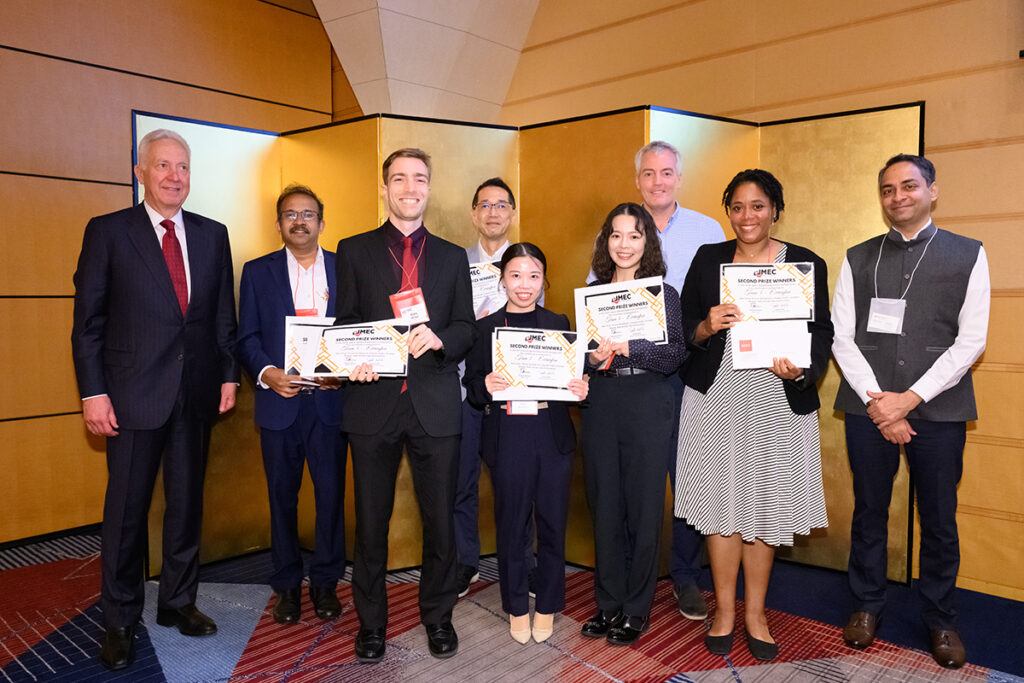
The Japan Market Expansion Competition handed out the awards for its 32nd program on June 3 at the Tokyo American Club. More than 200 guests filled the club’s Manhattan meeting room in Azabudai for the ceremony, which was followed by a Mediterranean and Asian buffet and networking over wine.
Celebrating resilience and strategy
Fifty-five participants from 18 countries completed this year’s program. They worked in small teams to build business plans for seven project clients, ranging from small and medium-sized enterprises to global companies.
JMEC Executive Committee Chairman Tom Whitson told the crowd the participants had “shown resilience, courage, and all of the personal qualities needed for success in business.” He praised their dedication to producing realistic plans for entering the Japanese market.
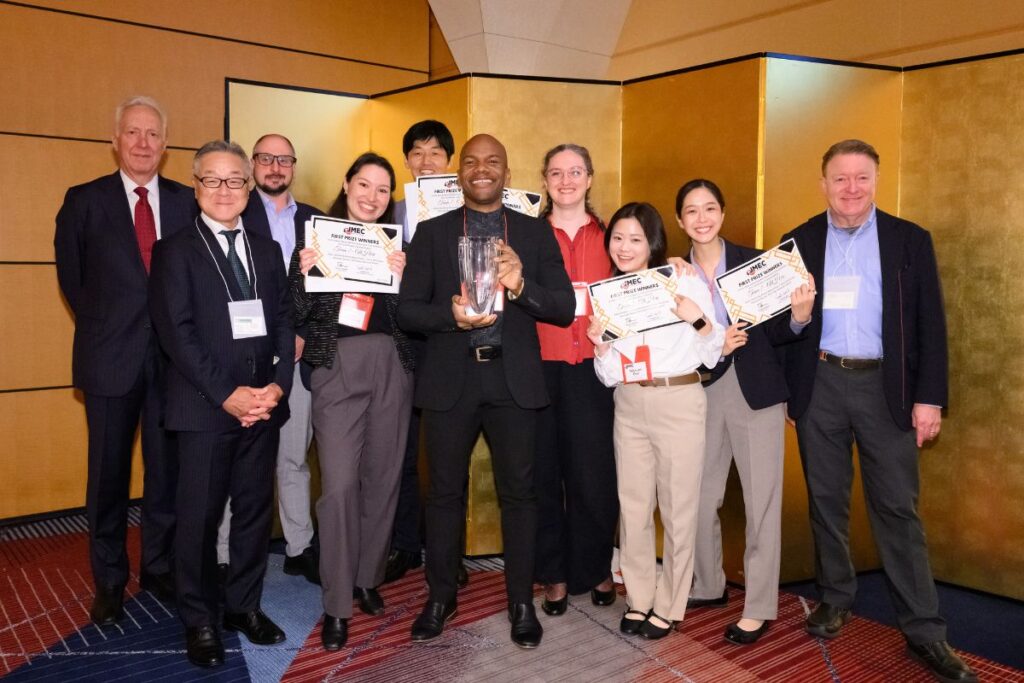
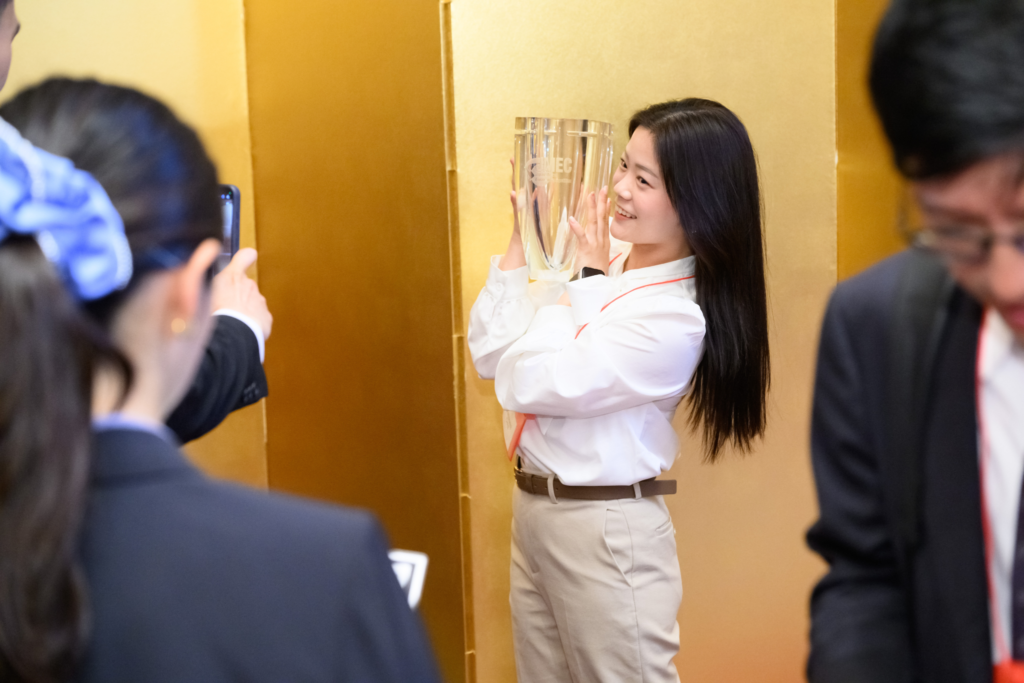
First prize: A roadmap for All Here
The first prize went to the team representing All Here, a Geneva-based organization dedicated to advancing the science and practice of meditation by integrating contemplative traditions, neuroscience and technology.
Mentored by Mitsuhiro Honda, the multidisciplinary team spent months analyzing the group’s vision and scientific foundation to build a comprehensive market entry strategy. Their winning business plan delivered a concrete roadmap designed to help All Here successfully expand its operations and forge new strategic partnerships within the Japanese market.
Decades of shaping Japan’s foreign business community
Founded in 1993 by the Australian and New Zealand Chamber of Commerce in Japan, JMEC is now backed by 18 foreign chambers of commerce operating in the country.
Over three decades, the program has trained more than 1,500 young business professionals and produced 309 business plans for companies entering or expanding in the Japanese market. Participants complete a period of classroom training before joining teams that spend months researching and writing a plan for a real client. They are guided by mentors and consultants drawn from Japan’s foreign business community. Four senior judges review the finished plans before winners are announced each June. Graduates receive a digital certificate issued jointly with Pearson PLC.
Japan Market Expansion Competition Information Sessions
Case study: Errington KK and the CCRC+ model
What the JMEC process delivers for a client company is often easier to see in the plans themselves than in a prize list. One clear example is the work a team did for Errington KK, a venture founded by Jeffrey Schnack, a longtime Japan resident with a background in health care.
Schnack brought JMEC a concept he calls a CCRC+ — a continuing care retirement community aimed at longtime foreign residents of Japan who want to age in place. The model allows residents to move from independent living through assisted living and nursing care to end-of-life care, all within one community. His plan also called for the sites to draw revenue from medical tourism, wellness and rehabilitation stays, providing business income beyond monthly resident fees.
Defining the scope of work
The scope of work Schnack handed to his JMEC team was broad. Teams working on such projects are asked to:
- Size the market by segment.
- Map competitors and their cost structures.
- Identify the government agencies, hospitals and families involved in any decision to enter a facility.
- Weigh business models used in other countries against Japanese regulation.
- Conduct primary research through interviews with decision makers, family members and competitor staff.
For Errington, that meant identifying who actually makes the call when an aging parent or spouse considers moving into a facility, alongside gauging whether foreign retirees wanted the concept at all.
Researching demand and refining the model
Schnack said the research on demand confirmed more than it surprised him.
“The vast majority of long-time expats have deep personal connections here, love what Japan has to offer, and want to stay here through their final days,” he said. Most were also wary of existing elder care options, having heard accounts of bad experiences from parents or friends, which left many wanting to remain at home as long as possible. Once the team described a community built around staying active and social while care needs grow, he said, interest picked up.
Folding in the wellness and medical tourism ideas took more work.
“The core business has to be sustainable on its own,” Schnack noted. “You are dealing with people’s lives here.” He said the team built its financial model around the baseline elder care business first, then layered the additional revenue streams on top, testing what each amenity would add to construction and operating costs before counting it as a selling point.
Uncovering cultural nuances in care
The team’s interviews also reshaped how Schnack thinks about hospital partnerships. With his long experience in Japan’s health care sector, the regulatory findings did not change his overall approach much. However, the interviews turned up something less obvious: even fluent, well-established foreign residents who respect the skill of Japanese medical staff still described friction in their care, particularly around shared decision-making and length of hospital stays.
Schnack attributed that friction to cultural differences that go beyond translation — an issue he expects to grow more pressing as residents age and their Japanese ability declines along with their cognition. This finding sharpened his sense of how central hospital partnerships will be to the business, and how those partnerships could serve the broader foreign population in Japan, not just his own residents.
The value of outside perspective
Asked what he valued most about handing the project to a JMEC team, Schnack pointed to the outside perspective.
“I had a base business framework in my head at the outset,” he said. “The team brought fresh perspectives to challenge and adapt some of my existing ideas, and also helped to build out some parts in much more detail, adding depth and texture to our value proposition that will help me immensely in the next phase of our development.”
That kind of client-facing work — done on a deadline with a real business on the other end — is exactly what JMEC points to when describing what the program teaches. Participants move through market research, financial modeling and client management over a few compressed months. They work alongside mentors who are themselves established figures in Japan’s business community, eventually presenting their findings to senior judges before a room of the people they may end up working for.
JMEC 33 opens with information sessions for prospective participants this August. Details are posted at jmec.gr.jp