
Befriending Your Fears in Japan
My friend and I were enjoying a juice and an oversized Chinese dinner in Nishi-Waseda, Shinjuku. One or two beers had been consumed, and we were in a state of satisfaction and happiness, masters of our own universe. Suddenly, the whole buzzing restaurant went spookily silent, and a roaring sound echoed while the entire restaurant started to shake vigorously. We knew it was not the beer — it was a larger earthquake.
Stories like this are not uncommon in Japan. The recent devastating earthquake in Kumamoto further confirms that we live at the mercy of nature. Every day.
Developing fears of things is not about being sick or weak. It’s an evolutionary defense mechanism to ensure our survival. But when this fear takes over our lives, causes suffering and prevents us from living the life we want, there is a problem.
Understanding trauma and fear
Being afraid of something very scary—people—isn’t that uncommon. In fact, social anxiety is common, and fear of public speaking is known as one of the most commonly feared situations.
So how do we defeat our fear? The simple answer is: We don’t. We either learn to live with it or not.
And sometimes, following a traumatic event, people can develop post-traumatic stress disorder (PTSD) which can affect people after many different types of incidents and is never a sign of weakness.
For treating PTSD, several methods exist. Two well-established, evidence-based treatments are prolonged exposure (PE) and eye movement desensitization and reprocessing (EMDR). Although this guide is not about medical or psychiatric advice, we will be exploring techniques from exposure therapy, including principles also used in PE, for dealing with everyday fears and avoidant behavior.
Step-by-step approach to befriending your fears
Below is one approach to befriending your fears, based on principles from evidence-based methods. Important: Never put yourself or others at risk. Always seek professional help if needed.
1. First, be kind to yourself and identify your fear. It is okay to be afraid. It is usually only ourselves who judge us for being “weak” or different; other people are busy judging themselves anyway. Your “fear” is usually your nervous system trying to protect you, and can we blame it?
Now, identify your specific fear in your life. For example:
- Keeping eye contact with my boss
- Giving a speech at work
- Visiting a local fish market during rush hour
- Riding a roller coaster
- Talking to strangers
- Riding a crowded train in Tokyo
- Re-visiting a place that has a bad memory associated with it
Next, ask yourself: What exactly am I afraid of with this fear? Is it the shape? How does it feel? The feeling associated with it? Any possible danger? The way it looks? Is it the bodily sensation coming up when you picture the place?
There are things in this world worth fearing in a healthy way — it’s how we live with this fear that matters.
2. Tell someone you trust and break down your fear into three to five related actions with escalating distress. Try not to fight alone. Fighting alongside someone can help, or at least tell someone you can trust about your new upcoming challenge.
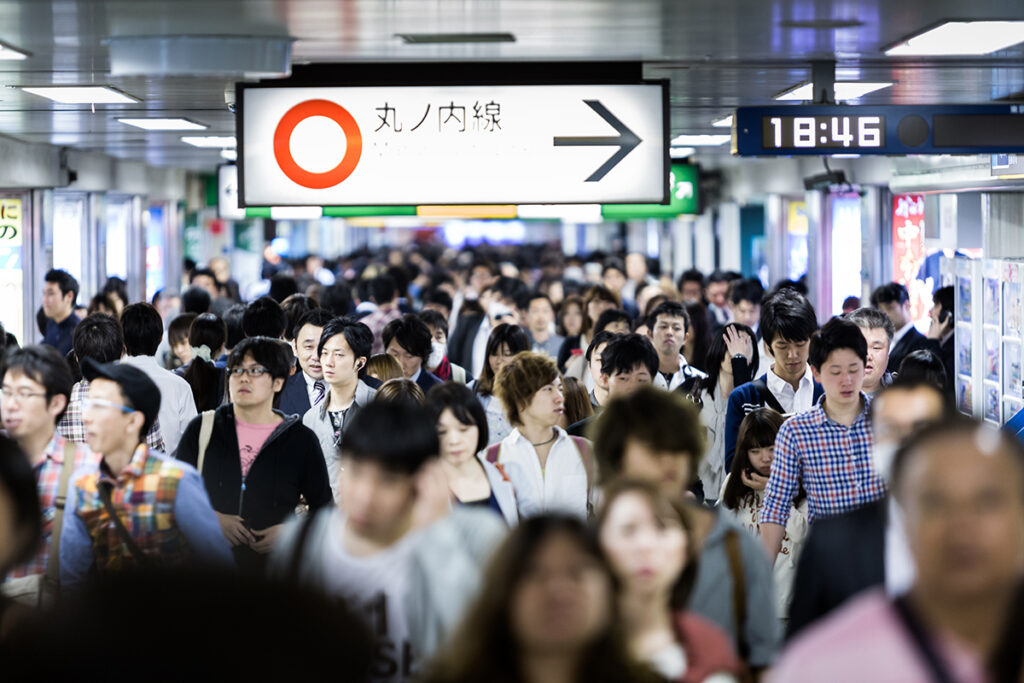
Next, create a personal list with activities or actions for you with the easiest one first. For example, if riding a crowded train in Tokyo during rush hour is your fear after an accident or incident, then your list could look something like this, with escalating distress:
- Watching movies or videos with crowded trains.
- Going to a small train station in the countryside and looking at a train.
- Riding a non-crowded train from a small station.
- Going to a large station during rush hour and standing on the platform without riding the train.
- Riding a train during rush hour from a large station in Tokyo.
3. Now start with your easiest action, and slow down. Once the discomfort hits, remember to stay with it rather than immediately escaping or trying to make the feeling disappear.
During the action, it can help to observe and label any feelings and bodily sensations that come up:
- “My heart is racing.”
- “I feel nervous.”
- “My hands are sweating.”
Let them be there while continuing what you are doing and expanding your focus outward. Remember, stay, stay and stay.
4. After you have performed one action, take a deep breath and reflect on what you learned. What did you expect would happen? What actually happened? How was it different? Write it down if needed.

5. Once one action becomes easier to perform, try changing the context and gradually move toward the next action. For example, if you rode a non-crowded train from one small station, try riding another non-crowded train from another small station on another day. Then move on to the next action once the previous one gets easier to perform. Tip: Prefectures like Chiba or Saitama around Tokyo can offer smaller, less crowded stations.
Repeat until the very action causing the highest distress (in our example, “Riding a train during rush hour from a large station in Tokyo”) is possible to perform.
6. Remember, the point is not to get rid of the fear, but to learn something new. This is a process related to what is called inhibitory learning. There is nothing wrong with always feeling your heart racing before a speech. The learning point is doing the speech anyway and acting in alignment with what matters to you, together with the racing heart. Fear can come along for the ride.
Dealing with fear of people
So now that we have covered how to handle fear in general, what are some related social hacks we can use to work with fears specifically related to socializing with people?
Well, as mentioned at the beginning of the article, social anxiety and fear of speaking in front of people are very common.
Here are some steps you can take right now to start working toward handling this fear. And here is a hint: Yes, you must get out there and socialize. And guess what, Tokyo is a perfect place to do so! It’s easy enough to find information on upcoming events in Tokyo.
- Start small. For example, approach a stranger in town or choose one or two people to talk to at a networking event.
- Identify what you usually do to handle your anxiety in social situations—your safety behaviors. Are you turning away when someone approaches you? Are you clenching your fists? Are you speaking extra fast? Are you looking down at the floor when talking to someone?
- Now, actively focus on reducing or blocking these safety behaviors. Speak a little slower. Allow yourself to make more natural eye contact rather than immediately looking away when you feel anxious.
- As soon as the anxiety hits, stay, stay and stay while continuing the interaction and resisting your usual safety behaviors. Remember: You do not need to wait for the anxiety to disappear. Your job is to stay engaged with the situation.
- Next, shift your focus from yourself. Not “How do I look?”, “What do they think of me?” or “Can they see that I’m nervous?”, but toward actively focusing on the person you are talking to. Cultivate curiosity. Ask yourself: What is their story? What are they saying? What are they trying to convey? Our attentional capacity is limited, so choose a focus that benefits you long-term.
- Continue to practice shifting your attention outward whenever you notice yourself becoming overly focused on yourself. Listen to their words, notice their expressions and become genuinely curious about the person in front of you.
- Afterward, reflect on what happened. What were you afraid would happen? What actually happened? Did you learn anything different from what your fear predicted?
As with everything, practice makes perfect — there is no shortcut. Get out there and gradually, safely face your fears.
Take the next step in befriending your fears in Japan by finding your inner calm and overcoming culture shock with a private, guided tea ceremony and Goma fire ritual at a 1,300-year-old temple.
Some final words
Life is truly precious and is meant for living. Most people would agree.
This is also why, when horrible accidents occur or terrible news is reported, we can feel drained and disheartened. The magic of life can disappear in the moment, but with effort and the help of others, we can bring the magic back.
Not by removing the darkness, but by learning to befriend it and still move toward what matters.
Japan does pose unique challenges, but just as many opportunities to grow as a human being if you choose to look fear in the eye.
If you have any questions about exposure or any comments, I would love to hear from you. Further, if you would like support in working with avoidance, everyday fears or taking gradual steps toward situations you have been avoiding, you are also welcome to reach out through any of the following:
Email: flexiguidance@gmail.com
Instagram: @flexi.coaching