
English isn’t a Target Audience: How to Reach Global Consumers in Japan
Brands often enter the Japanese market asking to reach English speakers in Japan. While it does narrow down the target audience, it isn’t nearly enough. Why? Because it includes the backpacker on a five-day Osaka itinerary, the software engineer three years into a Tokyo posting, the retiree who married into a Japanese family and the fund manager comparing an Azabudai Hills location against options in Singapore. Often, GoConnect’s partners are trying to get in touch with one of these strata, not all of them.
A filter, not a defined audience
Language only tells you what a person might read. But it tells you nothing about what they’re trying to do, what they can spend or how close they are to making a decision. An outreach plan built around connecting with “English-speaking residents” treats all international consumers in Japan as one consistent audience. But while this may ensure clicks and page views, it makes conversions far rarer.
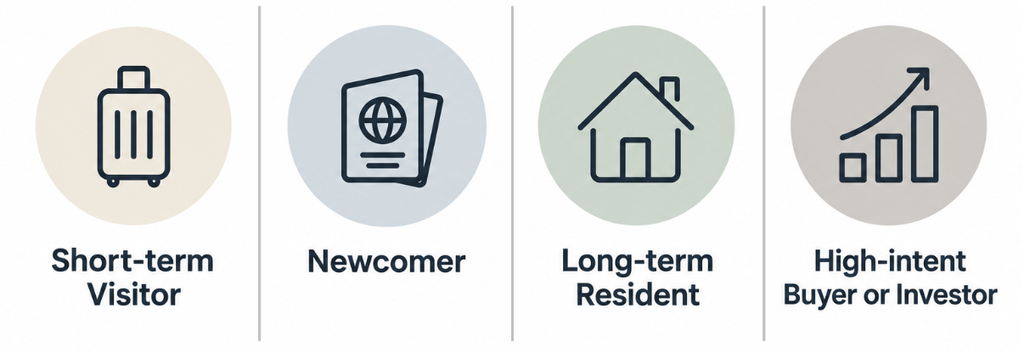
Four buyers, one language
Consider the buyer profiles that English-speakers in Japan contains:
- Short-term visitor: comparing itineraries and price points, unlikely to spend more than a few days deciding anything
- Newcomer: six months into Japan, still solving logistics like phone plans and apartment leases
- Long-term resident: years in, past the basics, looking for access and experiences a more tourist-focused guide won’t touch
- High-intent buyer or investor: evaluating Japan against other markets with real capital behind the decision
Each one needs different content, a different tone and a different call to action. A generic piece of copy may be seen by all of them, but without targeted elements, it is glossed over.
What happens when you target the language
We saw this directly with Gold-Guide, a private tour operator whose clients are long-term residents, not tourists. A generic “Best Things To Do in Osaka” campaign would have reached plenty of English-language readers, but almost none of the intended target audience.
Instead, the article we created was written for a reader who knew Osaka and wanted access to an experience that the short-term visitor wouldn’t hear about. The campaign we created brought in a 4-minute, 37-second average session on a 6-minute article, because it had reached the ideal target audience.
The same logic supports our work with Axios Management. The content isn’t written for English speakers interested in Japanese real estate. It’s written for a specific profile: non-resident investors working through financing, tax exposure and property management. By adding data precise enough to answer their exact questions, we appear on AI summaries and search queries for those questions, capturing their attention with a clear and direct answer.

Defining the audience before the campaign
Before a media plan gets built, we ask who inside the English-language group actually matters to the business. From there, the questions come naturally: What are their pain points? What do they need to know to overcome them? How can we connect them to those things?
The choice is in narrowing down your audience with these questions. It costs page views and casual readers, but attracts a high-intent target audience.
Where this leaves your campaign
If your targeting stops at “English speaking,” you’re still one step away from a real audience. The language tells you who can read the ad. Everything that determines whether they act on it is in the questions we ask after that.
Get in touch to talk about how GoConnect defines and reaches the audience your brand needs in Japan.