High-End Affordable Eyewear Sets Global Standards
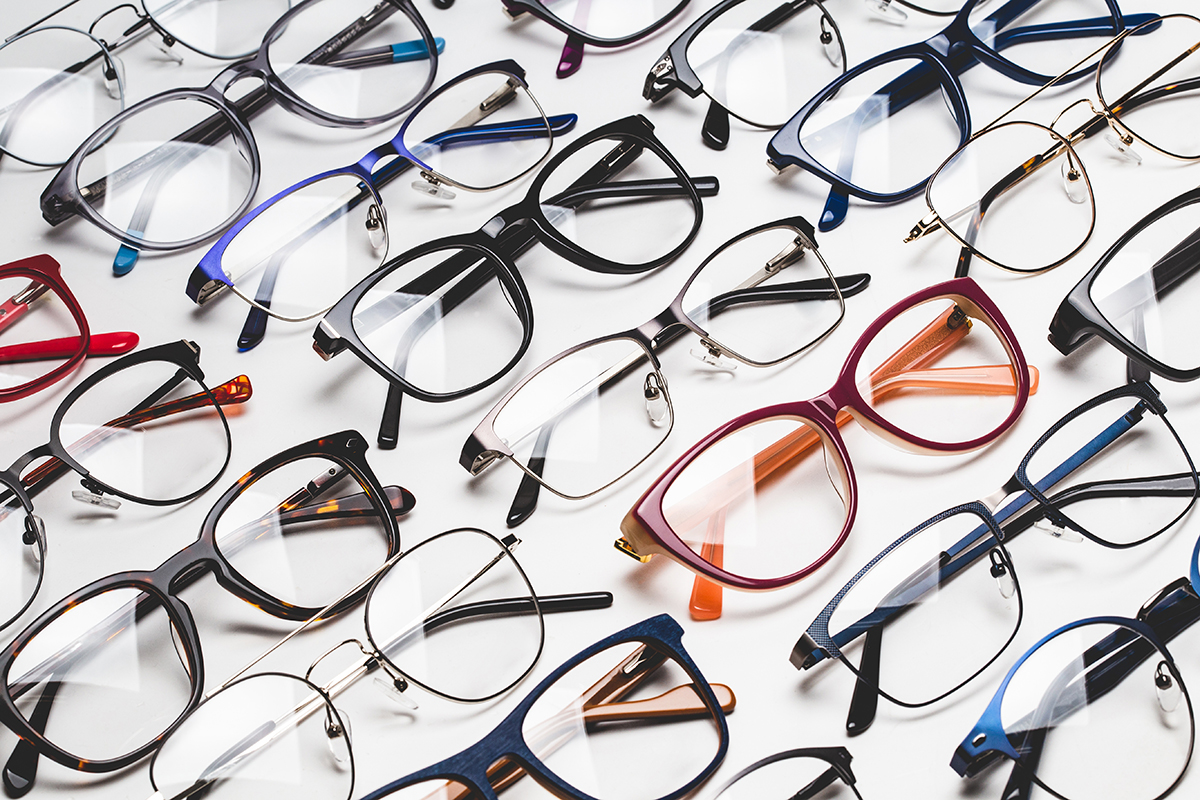
To ensure best-care health services used to mean timely home leaves or, at the very least, big budgets to handle local high prices for top-end brands. Not anymore. Whether for framed eyeglasses or sunglasses, Japanese eyewear brands rank among the very best in global names, offering a seamless blend of luxury craftsmanship and accessibility.
Regional Pride
Fukui prefecture hosts some of the most storied Japanese eyewear brands and stands as one of the three largest production regions for optical frames in the world, alongside China and Italy. Located along the western coast facing the Sea of Japan, the region is north of the ancient capital of Kyoto and the archipelago’s second-largest metropolis of Osaka.
One of the oldest producers defining this standard is Masunaga, established in 1905. Founder Gozaemon recruited skilled craftsmen from Osaka and Tokyo to establish a guild system, enabling full-fledged craftsmen to eventually create their own businesses. To this day, Masunaga Optical develops new models with molds built in-house, ensuring that any problems discovered after initial production are resolved immediately on-site. Making a single optical frame involves as many as 200 manual processes.
Other historic names continue to innovate within the region. KameManNen was founded in 1917 and was nominated for the prestigious Silmo d’Or Award in 2013. Meanwhile, 999.9 (pronounced “Four Nines”) entered the market in 1995; its name signifies that the gold in their products is pure, reflecting the original meaning of “999.9 parts per thousand or more.”
Part of the Culture
Beyond traditional manufacturing, individual designers are embedding eyewear into the broader cultural landscape. Yuichi Toyama, a Japanese video game designer, director and producer who has worked at Taito Corporation since 2017, approaches eyewear as an extension of his creative philosophy. Born in 1967, Toyama designs frames based on five guiding principles: “Look, Think, Draw, Make and Break.”
Toyama combines opposites to emphasize the simple elegance and timeless beauty of eyewear as an everyday object. Remaining consciously aware of the customer, his collaborations have involved fashion giants such as Giorgio Armani and Toga. The Armani duet features a titanium optical style embodying lightness, comfort and strength with minimalist beauty. The Toga collaboration, which commenced with the Spring/Summer 2017 collection, embodies a policy of “tradition and innovation” available in four types combining Toga-like coloring.
New Tradition: Modernizing Heritage
Several brands are actively proposing a new Japanese tradition by reimagining the past. Boston Club applies tooling and drawings that have been preserved for 40 years. They have redesigned popular styles from 1984, ranging from loose and classic metal frames with engraving and acetate inserts to preppy, functional flip-up frames.
Kio Yamamoto, specifically the KT-564U model, is shaped around an idea of harmony—eight gentle facets come together to create a silhouette that feels serene, measured and beautifully resolved. Each line is drawn with intention, with transitions softened to let the form unfold with quiet confidence. The proportions are tuned like a rhythm, guiding the eye with ease to reveal a balance that feels almost effortless.
Matsuda began in the forefront of fashion before focusing solely on eyewear collections. Founder Mitsuhiro was one of the Japanese design talents who formed Tokyo Design Six in 1974—alongside Junko Koshino, Yukiko Hanai, Isao Kaneko and Kansai Yamamoto—creating Tokyo’s first official fashion week. Regarding his frames, the process starts with only the best materials and ends with designs meant to be admired for a lifetime. Painstakingly crafted by hand in the artisanal eyewear workshops of Japan, each Matsuda model features exquisite craftsmanship, exceptional attention to detail and engraved metals.
Under Bright Lights
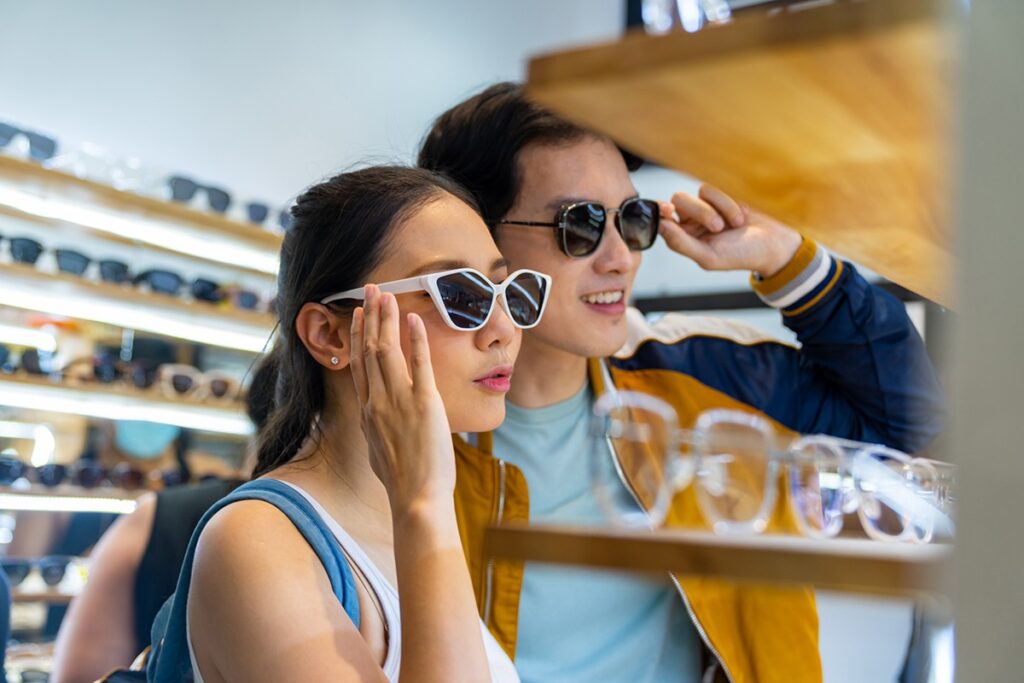
In the world of sunglasses, Japanese eyewear brands shine equally bright. Eyevan was founded in 1972 and relaunched in 2013; its first big splash occurred in 1985 when Madonna and Lady Diana donned Eyevan sunglasses. The brand keeps production small to allow for the use of only the finest raw materials.
Specialty eyewear serves specific needs with precision. Nagai sunglasses are noted for pro golfers, featuring an 8º curve, adjustable nose pads and non-slip temples. For motorsport athletes, Namba sunglasses are standouts, utilizing the classic Wellington style of the ’50s alongside Australian and Californian sunshades of the ’80s and ’00s.
Global cooperation also relies on Japanese expertise. Akoni was established in 2020 in Switzerland but relies solely on master craftsmen based in Japan. Similarly, Shinzo Tamura insists that sunglasses are a medical device, making the lenses an intricate component. These curated sunglasses, with lenses handcrafted in Japan, act as “noise cancellation for your eyes.” Even Ray-Ban (1936), part of Italy’s Luxottica Group since 1999, maintains 18 branches in Japan that carry genuine prescription lenses and in-store vision testing equipment.
Chain Reactions
Major Japanese eyewear brands found in malls maintain the highest level of quality and choice with rapid delivery times.
Jins boasts a proprietary omnidirectional moveable hinge for durability, having withstood a load of approximately 150kg in a load-bearing test. Their invincible coating makes glasses scratch-resistant and improves durability. Jins also offers specialized wear for younger generations:
- Children’s wear: Temple end parts stay in place during movement.
- Kids lineup: Designed for ages 6 to 9.
- Junior lineup: Appeals to ages 10 to 12.
Zoff was the first in the industry to declare that “glasses will cost 5,000 yen” more than 20 years ago. Their Zoff Smart frames are constructed of cutting-edge special lightweight plastic that is comfortable and unbreakable. The frames come with a one-year warranty, and the lenses are made by major manufacturers. Available original lenses include photochromic lenses that change color in UV light, thin aspherical lenses, anti-fog lenses, colored lenses and blue light blocking lenses. The brand frequently features collaborations, including a fifth installment with Peanuts, My Hero Academia, and video creator Tokai On Air.
Megane Ichiba reminds customers of the great range of frames produced in Japan, including square, Wellington, oval, Boston, round, nylon and two-point styles. Their 1,000 stores nationwide provide a complete package of high-quality lenses, functional frames and meticulous fitting services. Staffed by personnel offering personalized service, Megane Ichiba enables customers to discover their perfect pair of glasses.

FAQ
Why is Fukui prefecture famous for eyewear?
Fukui is one of the world’s three largest production regions for optical frames, hosting storied brands like Masunaga. The region is renowned for its guild systems and artisanal workshops that utilize up to 200 manual processes per frame.
Are Japanese sunglasses considered medical devices?
Yes, experts such as Shinzo Tamura view sunglasses as medical devices rather than just fashion accessories. Consequently, the lenses are treated as intricate components, handcrafted to provide “noise cancellation” for the eyes.
What makes Jins and Zoff different from luxury brands?
While luxury brands focus on artisanal hand-crafting, chains such as Jins and Zoff focus on high-tech durability and affordability. Jins utilizes proprietary hinges tested to withstand 150kg loads, while Zoff introduced the 5,000 yen price point using unbreakable lightweight plastics.
Conclusion
From the artisanal workshops of Fukui to the high-tech innovations of modern retail chains, Japanese eyewear brands offer a spectrum of quality that caters to every need. Whether you require the medical-grade precision of handcrafted sunglasses or the durability of daily wear, the market provides options that blend tradition with cutting-edge technology. For those seeking the global standard in optical health and fashion, exploring these Japanese producers is the clear next step in vision care.
To receive more exclusive insights into Japanese craftsmanship and lifestyle, subscribe to GoConnect’s newsletter.