Responsible AI in a Global Context: Building Skills to Navigate the AI Era
Table of contents:
- The launch of a new AI educational initiative
- Why AI skills are critical for the future
- Perspectives from Microsoft and LinkedIn leaders
- How AI is transforming the workplace
- What are the biggest barriers to equal access?
The launch of a new AI educational initiative
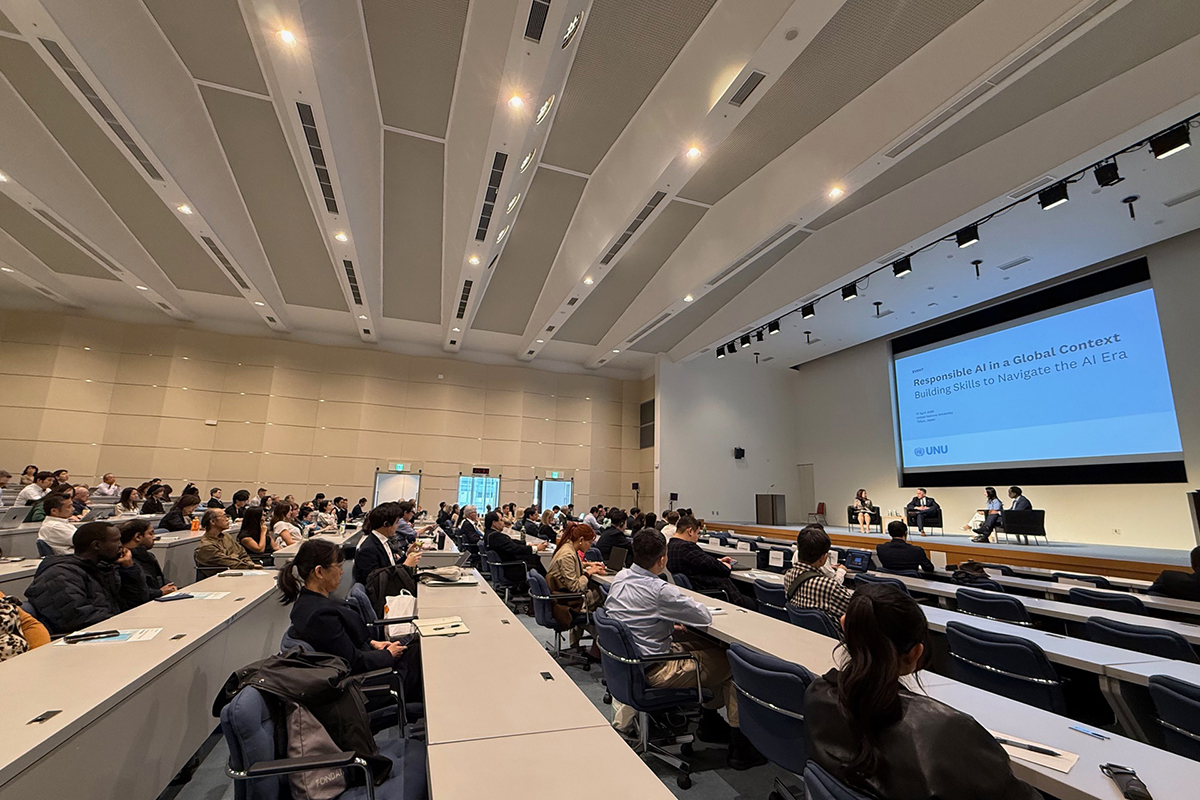
On April 17, the United Nations University (UNU), Microsoft and LinkedIn co-hosted an event to launch a new professional certificate focused on building skills and capacity to responsibly assess, adopt and apply AI.
Responsible AI in a Global Context is a three-course professional certificate developed by UNU in partnership with Microsoft and made available free on LinkedIn Learning.
As adoption and use of artificial intelligence (AI) race through nearly every sector, a UNU statement said, the world faces urgent new AI-related challenges across areas such as governance, inequality, environment and sociotechnical sustainability.
Solutions to these interconnected challenges depend on educational initiatives that ensure people have the skills necessary to thrive in the AI-transformed world and workplaces of tomorrow.
Why AI skills are critical for the future
In the age of AI, achieving decent work for all will require that institutions, communities, young learners and seasoned professionals alike have skills and capacity to responsibly assess, adopt and apply AI.
The bilingual courses are available on LinkedIn Learning, providing a foundation in these exact areas.
“Learners will gain an understanding of AI’s global impact, explore AI risks—and how good governance and human oversight can mitigate these risks—and apply that knowledge to real-world case studies of AI in action,” the UNU added.
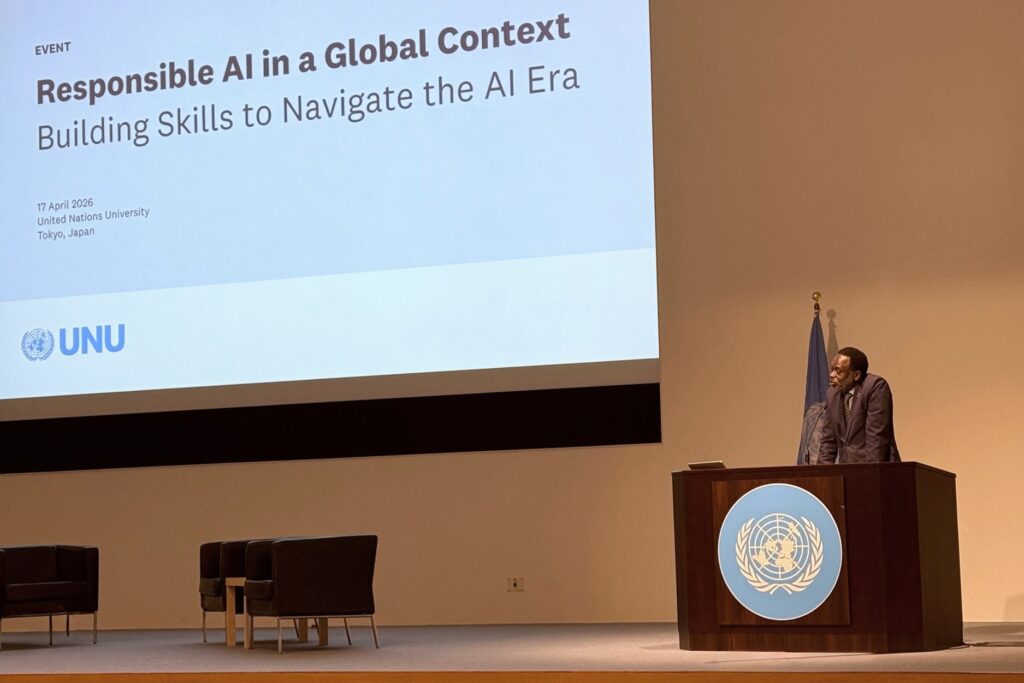
UNU Rector Prof. Tshilidzi Marwala (above) opened the event by saying: “These courses have been made inclusive in easy-to-understand and accessible language for all.”
Perspectives from Microsoft and LinkedIn leaders
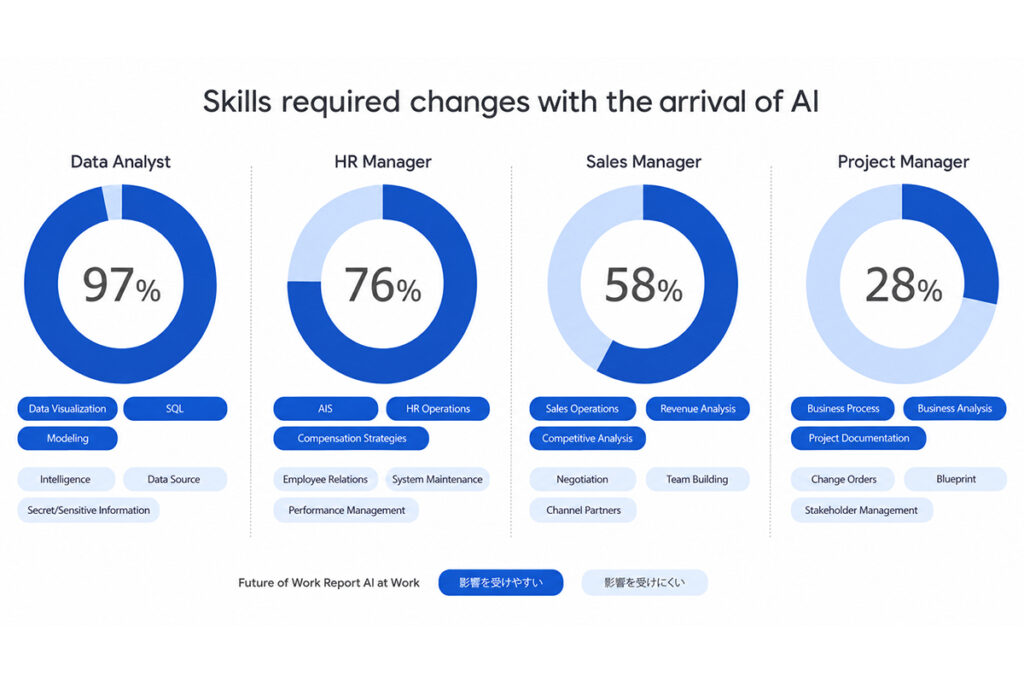
Microsoft Elevate President Justin Spelhaug added: “AI is changing everything, how we play and how we work. The number of AI jobs is growing in all areas and we must make it more inclusive. Our focus is on supporting the workforce to retrain or reskill staff. Japanese people think that AI will not take your job, but it will be used to make your work better. We see the rural and underserved populations and we work on the policy front to help them. That’s how we tackle the systemic divide and leave fewer people behind.”
LinkedIn Japan Country Manager Wakana Tanaka said of her present choice of career: “I’m a mother of a daughter who is at university, so it is important for me to join an employer that cares for everyone. It’s important for your career, family and life to put your skills on LinkedIn. To put it into context, we have 1.3 billion members worldwide and there are 3.3 billion people globally working. We have 5 million members in Japan, many of them Gen Z students. Everyone in Japan must have strong career ownership so you can decide on your career yourself and not be directed by HR. But to do that everyone must reskill or upskill.”
How AI is transforming the workplace
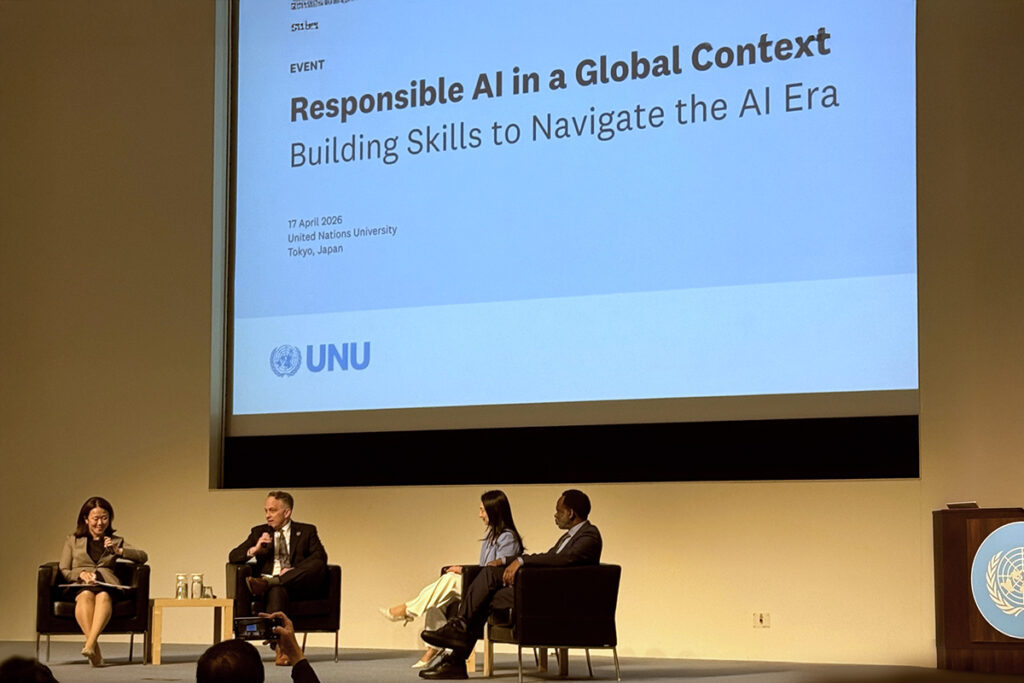
The participants then joined a fireside chat to explore the professional certificate, the breadth of its topics and how this learning partnership represents a pivotal new approach to AI skill building.
Spelhaug (second left) said: “AI is the fastest changing technology; it is breathtaking to see. What we see now is coders doing Microsoft Copilot [AI assistant] not 20x or 30x, but 80 or even 100x.”
He recalled asking a colleague how much time she is saving by using AI and she replied about 15 hours per week. “I asked her what she is doing with those 15 hours and she said, ‘Well, look at my garden, it’s beautiful.’ So those 15 extra hours can make you more effective by changing human-centric skills due to creating more time to play. AI is actually making us more human.”
Replying to a question from the moderator, Tanaka (second right) said AI is not taking away jobs, but is actually creating them. “Yes, hiring is down 20%, but that is due to the economy, not AI.”
What are the biggest barriers to equal access?
But not everyone has equal access to technology; there are different levels of society, countries, regions and cultures with their own unique challenges and demands. So what is the biggest barrier to equal access?
“We must overcome illiteracy. AI has three levels of literacy: basic literacy, device literacy and AI literacy,” Marwala said.
“We must make policies that give equal access to everyone,” agreed Spelhaug. “But we must move faster on these issues.”
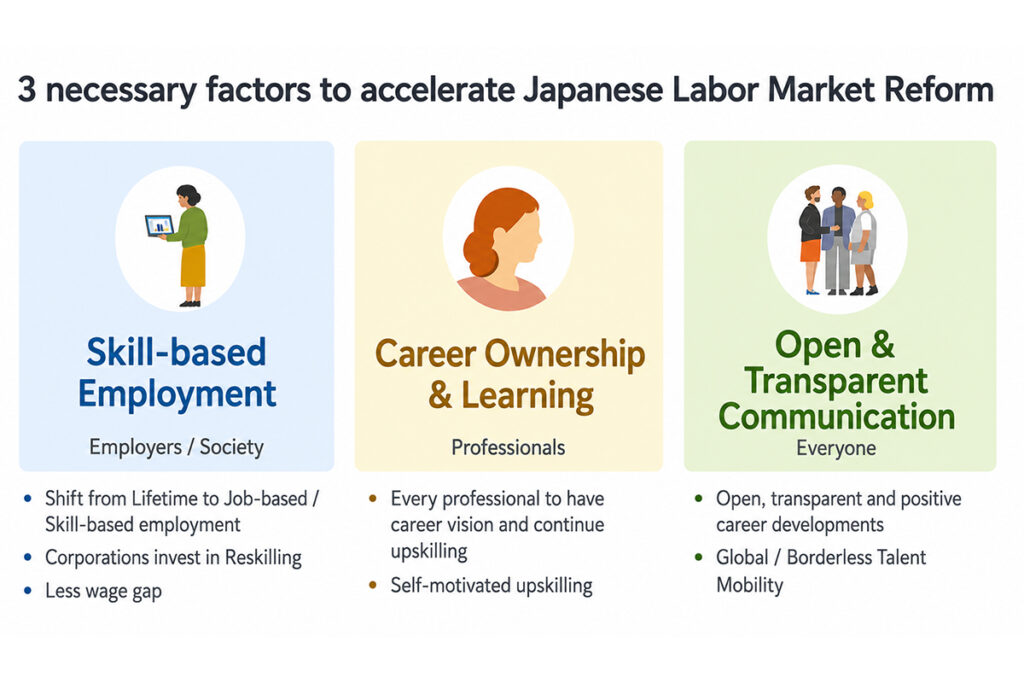
Tanaka, meanwhile, explained that women are lagging behind in technology and AI. “About one-third of tech workers are women, and of workers with engineering skills only 29% are women. But the gender gap is narrowing in 74 countries because women believe AI can boost careers.”