Industry Insights: Japan’s Business Landscape for Female Entrepreneurs
Japan’s share of female founders sits at roughly 30 percent. The Cabinet Office’s own gender equality whitepaper puts the number into print, though most discussions of women in Japanese business acknowledge it briefly and move on. What takes longer to explain is what the gap means for the women working within it, and what support actually exists on the other side.
Over several weeks in May 2026, conversations with scholars, municipal officials and veteran founders produced a picture of a country where the will for change and the mechanisms to produce it are present, but are not moving at the same speed.
Education Pipeline at Home and Abroad
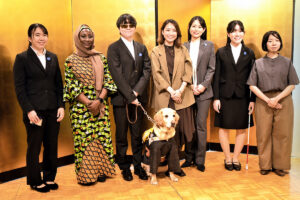
The College Women’s Association of Japan (CWAJ) has supported women’s overseas study since 1949. As we covered in more depth last year, the CWAJ Scholar Award ceremony at The Foreign Correspondents’ Club of Japan, three recipients offered a sense of what Japan’s investment in women’s education looks like when it is working:
Hiro Miyaguchi is heading to Imperial College London to study symplectic geometry, a field where Imperial’s research program is among the most established in the world. Miyaguchi is visually impaired, but she reframes her condition to an advantage: being unable to rely on visual representations forces a different kind of abstraction, which she sees as useful rather than limiting.
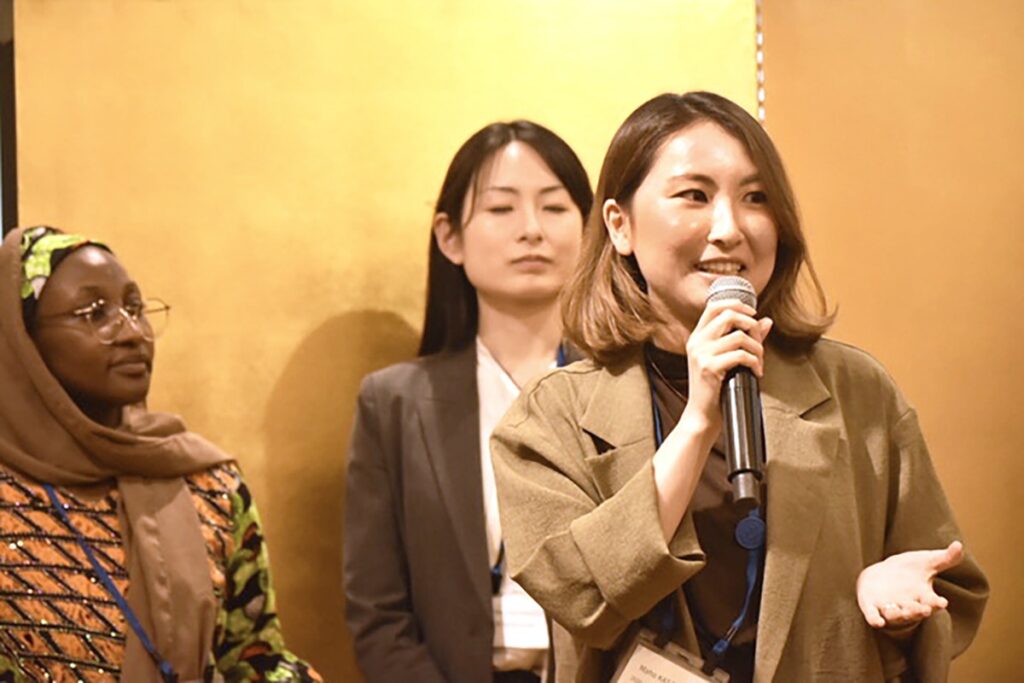
Maho Kasahara will study how media shapes host communities’ perceptions of minorities in New York. This work grew from her childhood in Turkey and five years at Suntory Beverage and Food, where she watched the company push women into leadership while informal assumptions about delegated work remained largely unchanged.
Dr Hafsat Usman arrived in Japan from Nigeria specifically for the quality of its medical research environment. Usman, a cardiovascular surgeon building skills beyond clinical training, pointedly argued that the healthcare gap between Nigeria and Japan is a governance failure, not a resource failure. Her research aims to make that case to policymakers.
These three represent the outward-facing end of Japan’s educational investment in women. Domestically, the infrastructure for women’s advancement has also expanded significantly, with programs specifically oriented toward business, technology and public leadership developed by:
- Ochanomizu University
- Tokyo Woman’s Christian University
- An increasing number of national institutions
- The Japan Women’s Empowerment Bureau
For women who know where to look, educational resources are available. The challenge, as several founders noted, is that knowing where to look is a challenge of access in itself.
What the Govt Offers
Shibuya City launched HerRise in 2025, a year-round support program for women entrepreneurs born of a practical mindset. The city recognized that one-off panels and networking evenings produce inconsequential returns. HerRise is instead structured around ongoing mentorship and peer interaction—built on dialogue rather than one-way presentations to foster community formation.
Shibuya Startup Support, the wider office overseeing the program, also provides a suite of hands-on resources:
- Startup Visa initiatives for international founders
- Proof-of-concept experiment opportunities
- Ongoing support and sustained institutional relationships for startups that receive formal city certification
According to the Organization for Economic Cooperation and Development (OECD) gender data, while overall female business ownership approaches thirty percent, Japanese women are less than half as likely as men to be involved in early-stage, high-growth entrepreneurship—a gap significantly wider than in comparable OECD economies. The Shibuya office is transparent about what it thinks are the causes: the lack of peer community is a major issue. Women starting businesses cannot easily find others who have navigated the same bureaucracy, which raises the cost of learning from experience.
Beyond HerRise, ward-level grants can be highly specific. Shibuya-ku offers equipment grants that go well beyond standard initial-setup funding. The challenge is that many of these programs are not widely publicized, and add to the problem of access.

Beyond the Programs: The Realities of Building a Business
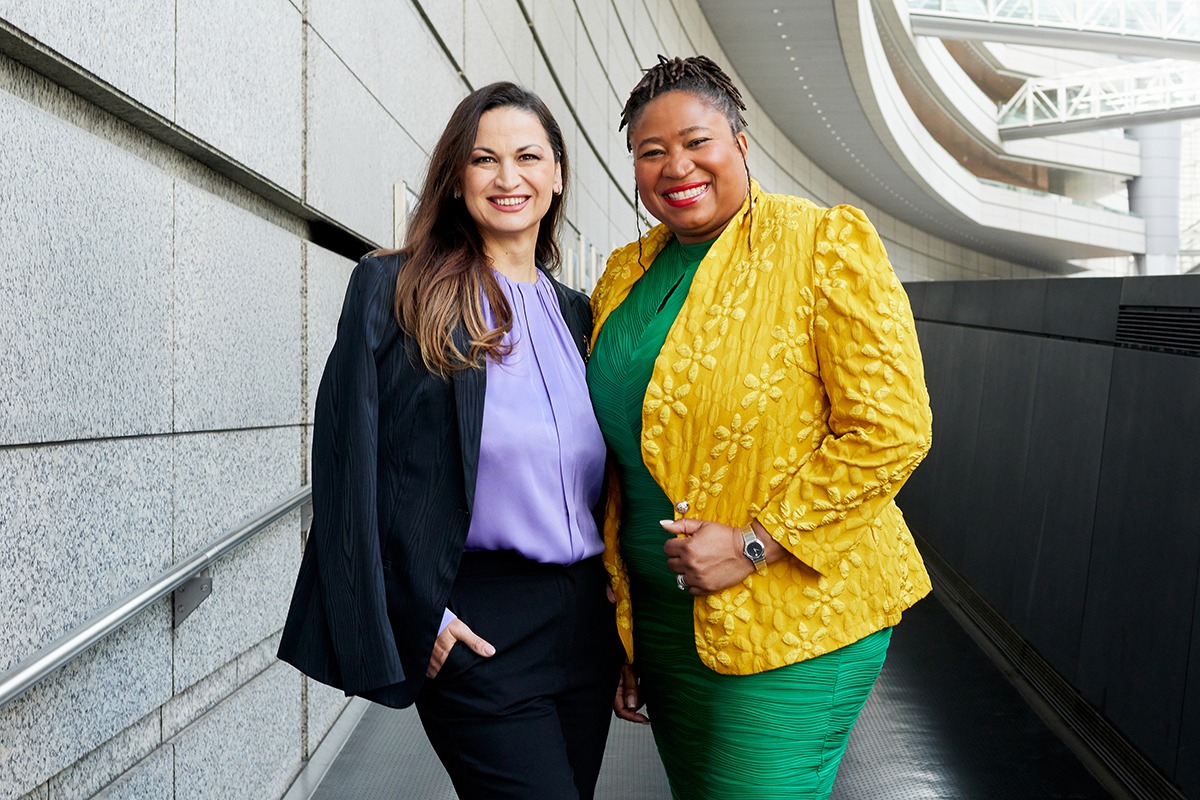
Sasha Lee Seals grew up in St. Mary, Jamaica, and has spent more than twenty years in Japan building Nagareyama L.E.A.D, a bilingual entrepreneurship curriculum for children. Seals has also navigated three major accelerator programs:
- UBS Project Female Founders
- AWS Impact Bootcamp in Tokyo
- Techstars
Her assessment is direct and precise: the programs that worked treated participants as serious founders building real businesses. The ones that fell short were often just designed to fill a reporting requirement about female founder support.
Having watched the conversation around women in Japanese business shift over two decades, Seals acknowledges the progress is moving but highlights a critical discrepancy:
“The rhetoric is running ahead of the structure. Visibility for female founders has improved faster than the underlying systems. Women now appear at conferences and in press releases, but getting into the room as the decision-maker rather than the attendee is still a different experience for women than for men,” she said.
Navigating Institutional Bias and Bureaucracy
Blanka Kobayashi was similarly direct. Over her five years running a construction company—an industry where female leadership is rare enough in Japan to be notable—Kobayashi has experienced an excessive range of biases. She described a Japanese employee resigning because he could not work under a woman and a foreigner, and walking into meetings assumed to be a nod to diversity quotas.
Kobayashi is uncompromising in her criticism of the structural side of the ecosystem, citing a stark reality regarding public funding:
“Estimates suggest that only five to 10 percent of grants specifically designated for women are actually being claimed,” she said.
The money is available, but application processes that assume founders have the time, contacts and administrative bandwidth to navigate bureaucracy are filtering out the people most likely to need the funding. Kobayashi’s consistent advice to founders lost in this maze is to find someone who specializes in grants and retain them. The time saved is worth more than the fee.
Financial Literacy and Startup Survival
Financial literacy sits at the center of Kobayashi’s approach. With her extensive experience in the field, she notes that people often start businesses without a clear model for what they cost or how long the unprofitable period will last. Her standard is six to twelve months of financial runway before opening—a straightforward discipline many first-time founders skip.
For Seals, survival comes back to relationships. Japan’s business culture is built on trust that takes years to develop, and trying to shortcut it is a strategic error. Connection is what sustains a business, and it is the first thing she advises any new female entrepreneur in Japan to start building.

The 2026 Ecosystem
Women building businesses in Japan are operating in a country where the support infrastructure is growing and underlying expectations are shifting, but slowly. The scholarships are real. The city programs are real. But the gap between what those programs promise and what a female founder experiences is also real. All three are true at the same time, and the women succeeding here hold all of them in view while continuing to build anyway.
Looking to start or grow a business in Japan? Explore GoConnect’s Work & Invest section for founder resources, expert insights and support networks for international professionals in Japan.