Inside the Laurus International School of Science STEAM Fair: A Firsthand Walkthrough of Infinity & Beyond
I went into the Laurus International School of Science STEAM Fair expecting a school open house. I left having watched a robot dog clear hurdles on command and eaten salt-dusted ice cream while learning about food chemistry.
If you want to know how Laurus showcases what its curriculum offers, here’s what actually happens inside the Shiba Kokusai Building, floor by floor – that the 3200 attendees over the weekend also discovered.
What is the Laurus STEAM Fair?
The Laurus International School of Science STEAM Fair is an open-school event held every June at the school’s Shiba Kokusai Building campus in Minato City, Tokyo, a short walk away from Mita and Tamachi stations. The 2026 edition, themed “Infinity & Beyond: Space & AI,” ran across four floors (7 through 10) of the building on June 13 and 14, marking the school’s 25th anniversary year. Each floor had its own theme, its own set of exhibits and its own personality. It’s free to walk through and open to families whether or not their children currently attend Laurus.
Floor 7: Ocean
The bottom floor sets an easy, playful tone before things get more technical upstairs. This is where the AI and music exhibit lives, and it was one of the more unexpectedly fun stops of the day. Kids could give simple commands to shift the tone and tempo of a piece of music and hear the change happen in real time. Next to that was a projection mapping setup paired with a food chemistry demonstration on how salt affects freezing point, using ice cream as the test subject. Although the students didn’t get a chance to eat the ice-cream, they were so excited you would have thought they did.
Floor 8: Earth
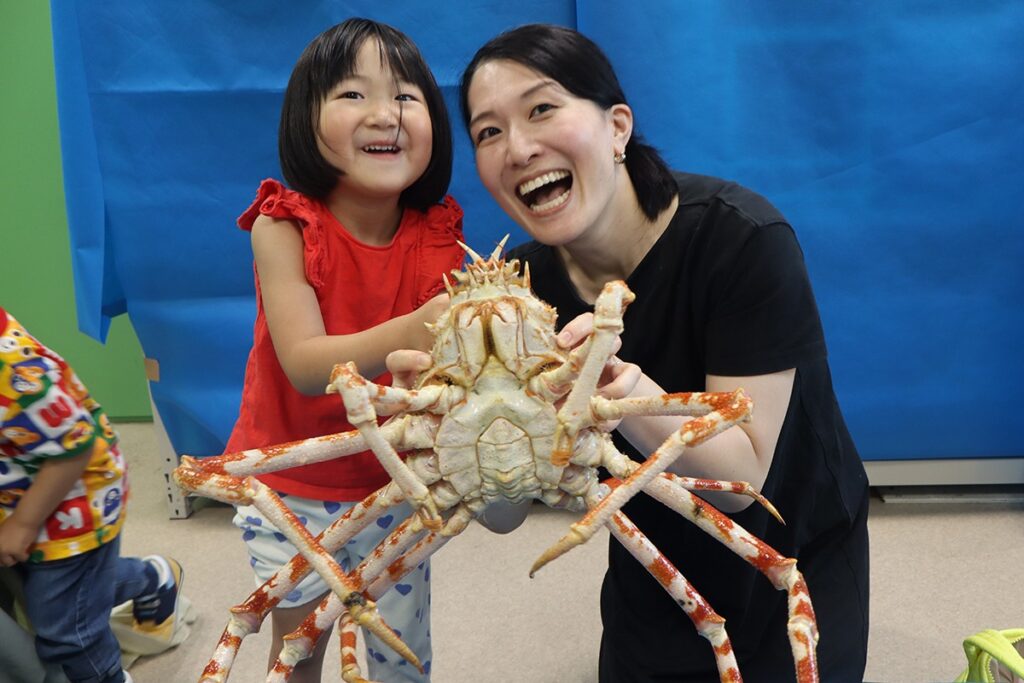
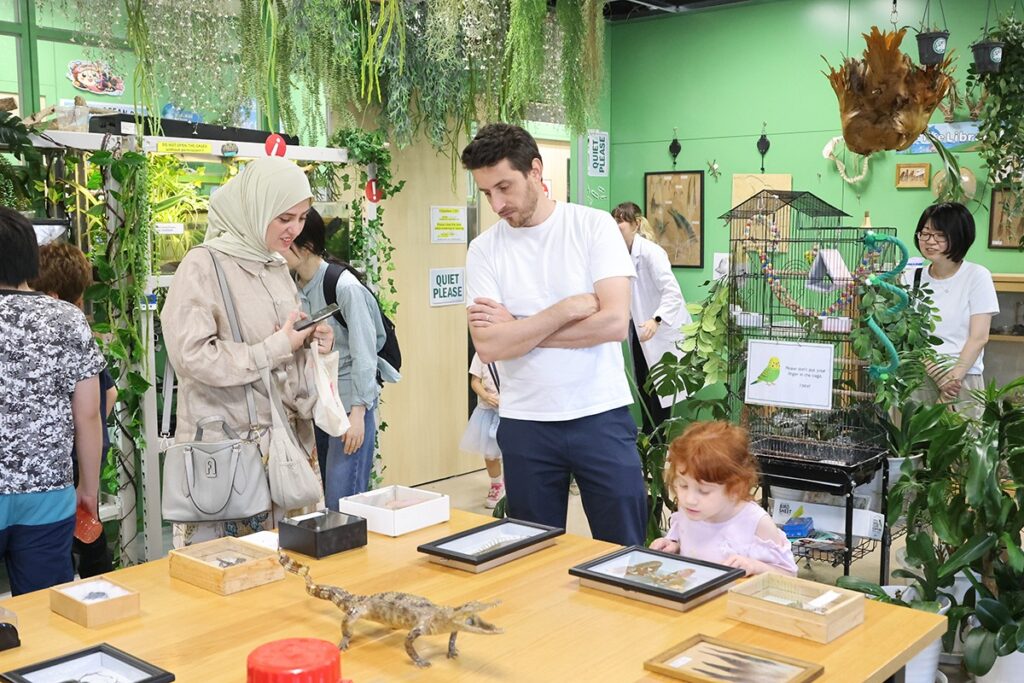
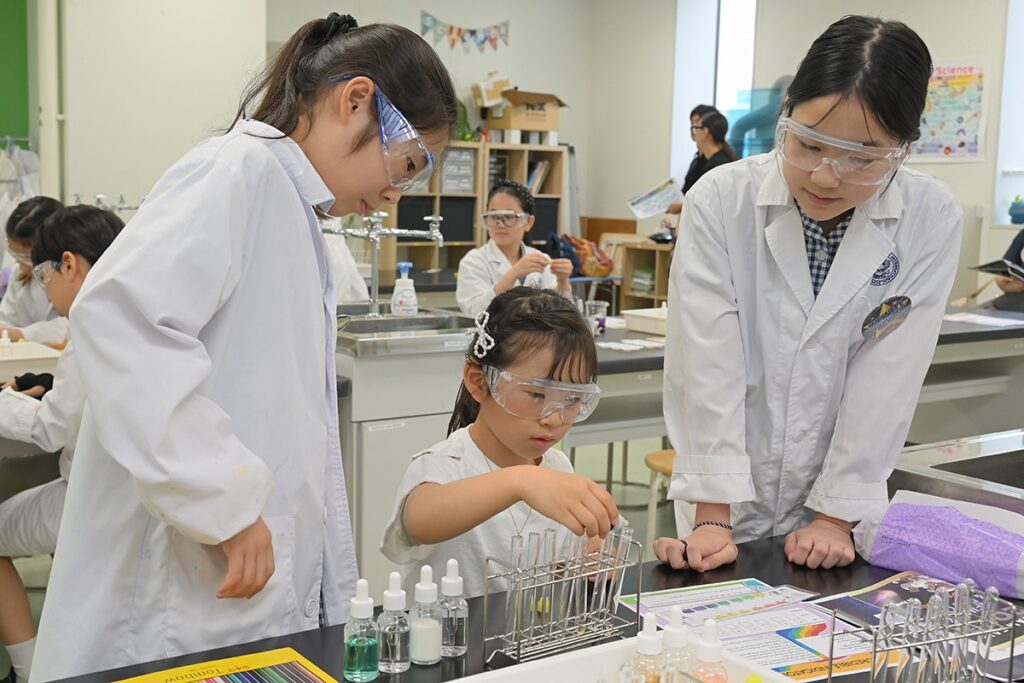
Head up one level and the mood shifts from ocean to ecosystem. The centerpiece here is something Laurus calls the Life Library, a small indoor zoo packed with fish tanks, beetles and potted plants tucked into corners around the room. It’s not a huge space, but the kids were lingering here longer than you’d expect, mostly because live insects are more interesting than a poster about them. Nearby, a pH experiment lets students drop a universal indicator into a row of household liquids and watch them turn into a full rainbow of colors. Simple concept, but the visual payoff meant that it was one of the most popular rooms around.
Floor 9: Singularity
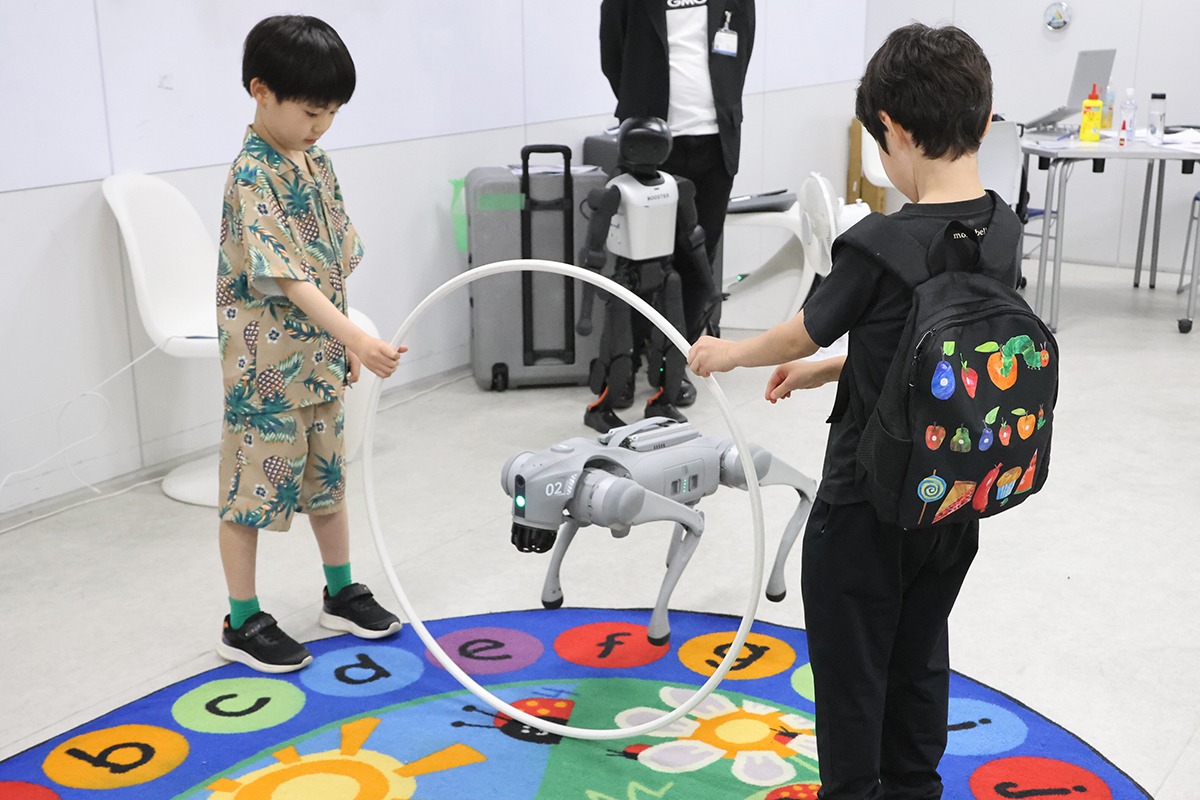
This is where the fair leans hard into robotics, and it’s the floor most kids don’t want to leave. A quadrupedal robot, built to move like a dog, jumped through hoops on command while guests watched, transfixed. A few feet away, a bipedal robot played a version of soccer, steered by a handheld controller. Elsewhere on the floor, a forensics station taught blood typing and fingerprinting through hands-on experiments, which felt more like a mini crime lab than a school booth. The AI art exhibit rounded things out. Students picked random words to build a sentence, fed it into an image generator, and watched their prompt turn into art they could take home. No two pieces looked alike, with “the pumpkins watch for the sacred fountain of cheese” being a particular standout.
Floor 10: Ad Astra
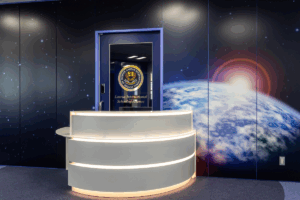
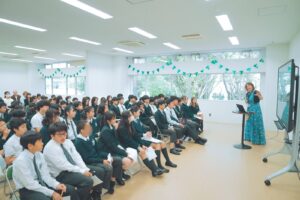
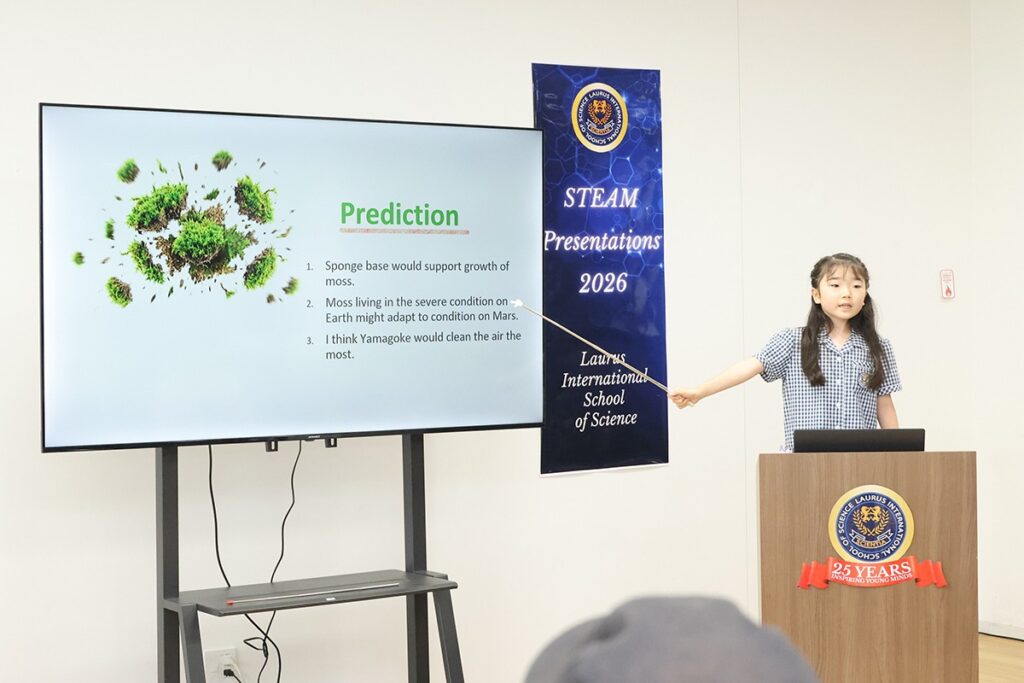
The top floor is where the space theme takes over completely, and it’s also where the school’s older students got a real spotlight. Primary and secondary students gave speeches in English about how they’ve used AI and science in their own space-related projects. Two that stood out to me: one student had built an AI-driven game simulation of exploring Mars, and another had worked on distilling plastics from cicada shells, which is not a sentence I expected to hear at a school fair. The confidence in these presentations was a great demonstration how the program builds public speaking into the curriculum, not just science content.
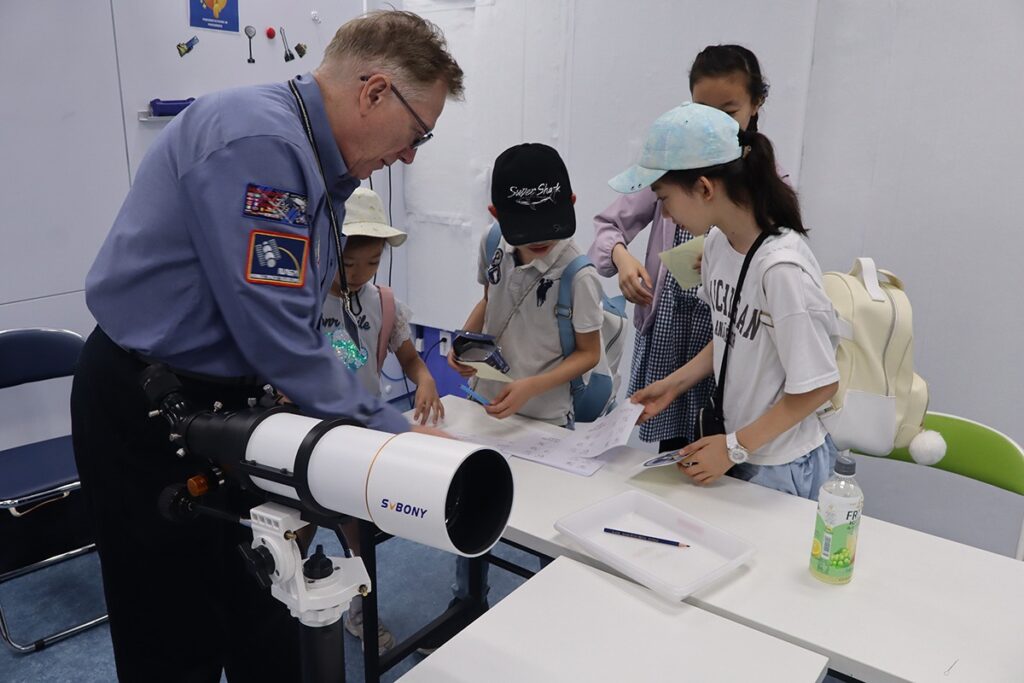
Also on the 10th floor, science advisor and amateur astrophotographer Paul Cizdziel set up a display of celestial photography shot in Japan, walking families through basic telescope optics and what makes stargazing conditions good or bad on any given night. It was a quieter corner of a loud floor, and we ended up spending 20 minutes there asking questions that were patiently but thoroughly answered.
Seminars the real draw
Scattered throughout the day were 45-minute seminars from outside experts, each with a Q&A at the end for parents and kids. I sat in on Casey Galvin’s talk, which tackled a question a lot of parents are quietly asking right now: if AI can do the homework, what’s the actual point of learning anything? It wasn’t a lecture with easy answers, and I appreciated that Galvin didn’t pretend to have one when I asked more. Other sessions included a Japanese-language presentation on AI from Chisato Kunimoto, CEO of Sincerely Inc, and a talk on optical communication from Yoshihisa Takayama of Tokai University. Sessions like these track with the broader push toward hands-on STEM education taking hold across Tokyo’s international school scene. These seminars are reservation-only, so if you’re planning to attend next year, book early for the ones you care about.
Getting there and planning your visit
The fair ran from 10am to 4pm on both days at the Shiba Kokusai Building, 4-1-30 Shiba, Minato-ku, Tokyo. It’s a two-minute walk from Mita Station on the Toei Asakusa and Mita lines, about five minutes from Tamachi Station on the JR Yamanote and Keihin-Tohoku lines, and roughly 10 minutes from Akabanebashi Station on the Toei Oedo line. There’s no on-site parking, so plan on the train. Budget at least two to three hours if you want to see all four floors without rushing, longer if your kids get pulled in by the robots the way so many did.
Was it worth it?
Every staff member I passed was smiling, and it didn’t feel performative. Kids were laughing on every floor, parents were asking as many questions as their kids were, and nobody looked like they were counting down the minutes to leave. For a school event, that’s a hard thing to pull off across four full floors and two full days. If space, AI or hands-on science has any pull on your children, the Laurus STEAM Fair earns its spot on next June’s calendar, and Laurus itself should be on your mind for enrollment. If you want a smaller taste of what Laurus offers before then, the school’s summer programs run a similar hands-on approach on a smaller scale.