
Preserving Japan’s Three-Dimensional Arts: Hagoita, Edo Shishu and the Shamisen
These final craftsmanship categories highlight the importance of preserving traditional arts for future generations. Today’s artisans meticulously handcraft every item, remaining true to the techniques and processes passed down by their ancestors.
Table of contents:
Oshie Hagoita: The art of padded battledores
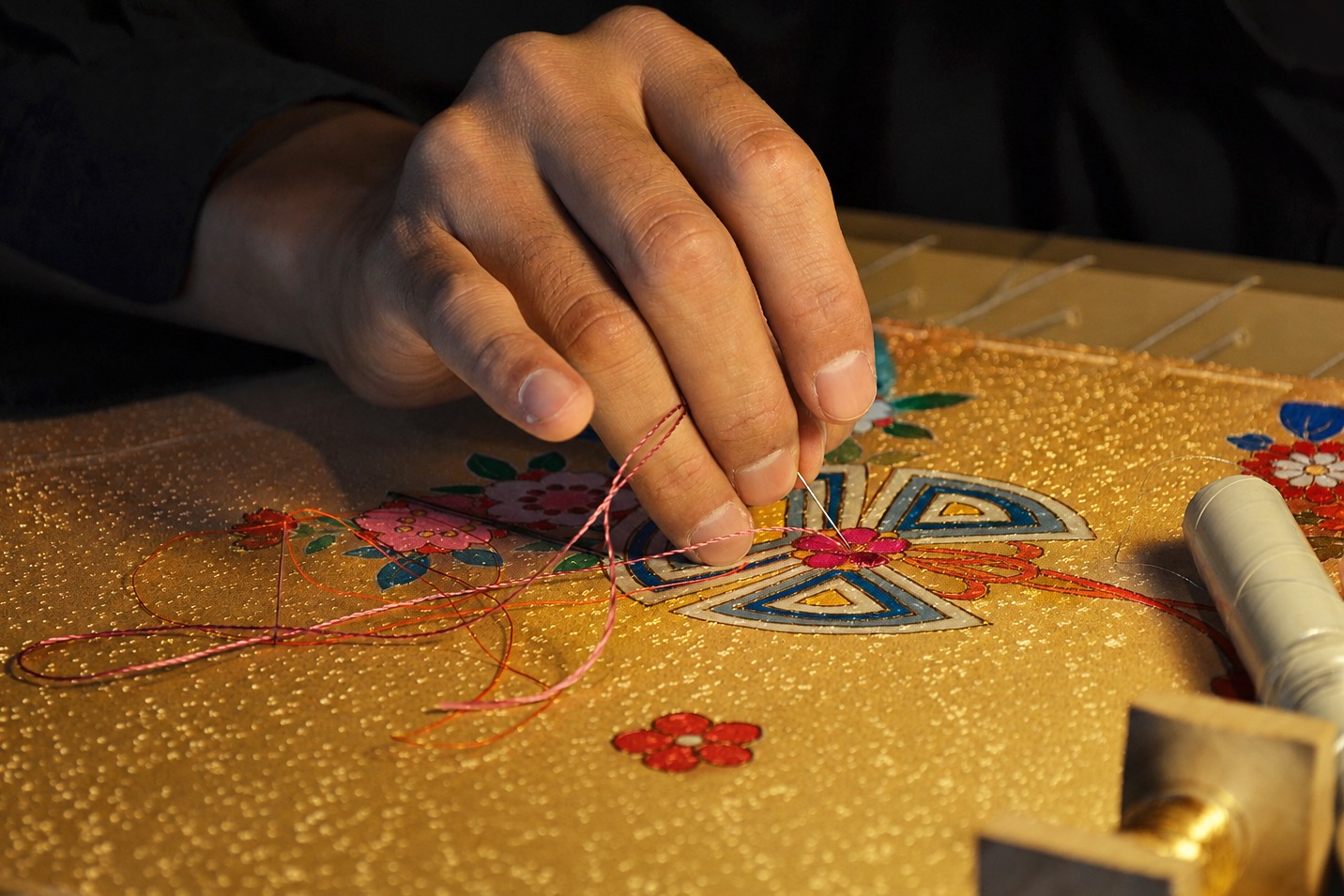
Edo Shishu and Sashiko: The heritage of Japanese hand embroidery
Crafting the Shamisen: Japan’s traditional three-stringed lute
Oshie Hagoita: The art of padded battledores
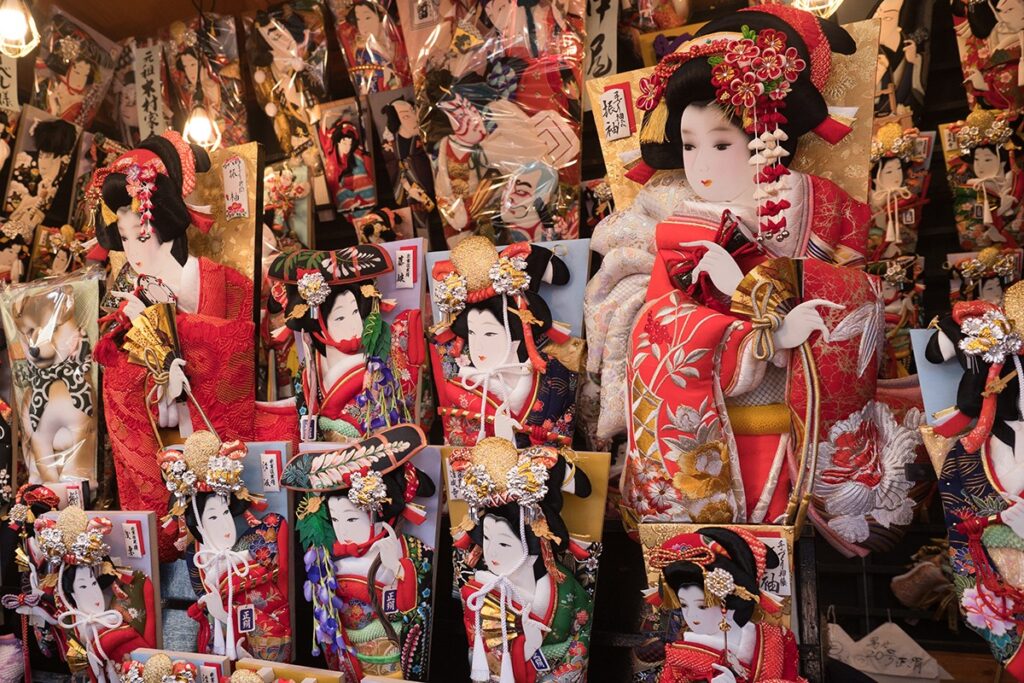
Juho Tougei, located in Aihara on the southwestern edge of Machida in Tokyo, has served customers for 56 years with a wide variety of New Year’s ornaments. Its collection of hagoita (padded battledores) includes floral, oshie, and hanging flower designs, along with cases, kits, and stands.
Artisans create the oshie hagoita by layering cotton padding and fabric to form elegant, three-dimensional compositions. Each piece features a delicately hand-painted face and hair shaped with fine black silk threads. Subtle variations in padding and angles give every hagoita a unique expression. Whether displayed on a simple stand as a refined home accent or given as a gift, it is a striking reflection of Japanese craftsmanship.
At the Saitama Craft Center, producing these decorative paddles involves 200 distinct processes and up to 70 materials. The base is made of kiri (paulownia wood). Historically used for a badminton-like game with a shuttlecock, the modern ornamental hagoita features cardboard covered with habutae silk and raised with cotton padding. Craftsmen recreate dynamic poses, such as the swaggering posture of a Kabuki actor. This otoko-mono (male version) was historically displayed as a lucky charm to ward off economic recession, while the onna-mono (female pose) celebrates the changing of the seasons.
Preserving this art requires immense dedication. The Area Company, for instance, maintains detailed process sketches dating to the Bunka and Bunsei periods (1804–1830). Becoming a certified craftsman requires at least 12 years of practical manufacturing experience and passing three examinations spanning skills, knowledge, and an interview. Even then, certifications are rigorously reviewed every five years.
Notable Traditional Craftsmen Include:
- Kaneyama Hasegawa: Working at Yamatoya, Hasegawa produces battledores using a traditional appliqué technique passed down for over a century. He is one of the few craftsmen capable of restoring antique battledores and was named an outstanding skilled worker by Taito Ward in 2022.
- Toshihiro Suimon: The fifth-generation owner of the Kijiya Suimon Specialty Shop, which has operated since the late Edo Period. Suimon incorporates historical context into his work, studying the stories that serve as themes for his battledores and the era when ukiyo-e woodblock prints were created.
- Shokaku Murata: Operating out of Kasukabe, Murata inherited his craft from Asakusa roots. He is a recipient of the Kanto Traditional Craftsmen’s Association Chairman’s Award and uses Instagram to educate the public about traditional crafts.
- Toyoyama Noguchi: Born in 1950, the third-generation owner of Musashiya began his apprenticeship at age 7 and began producing serious solo creations by age 22.
Edo Shishu and Sashiko: The heritage of Japanese hand embroidery
Takahashi Embroidery Shop in Suginami Ward applies traditional Edo Shishu techniques, allowing for deep individual expression through meticulous hand embroidery. Founded in 1968, the family business is now run by two sisters who preserve tradition while embracing new challenges. They embellish kimonos and obi sashes with han-eri (half collars) and nui mon (embroidered family crests). Their goal is to help customers envision their ideals and deliver results that exceed expectations.
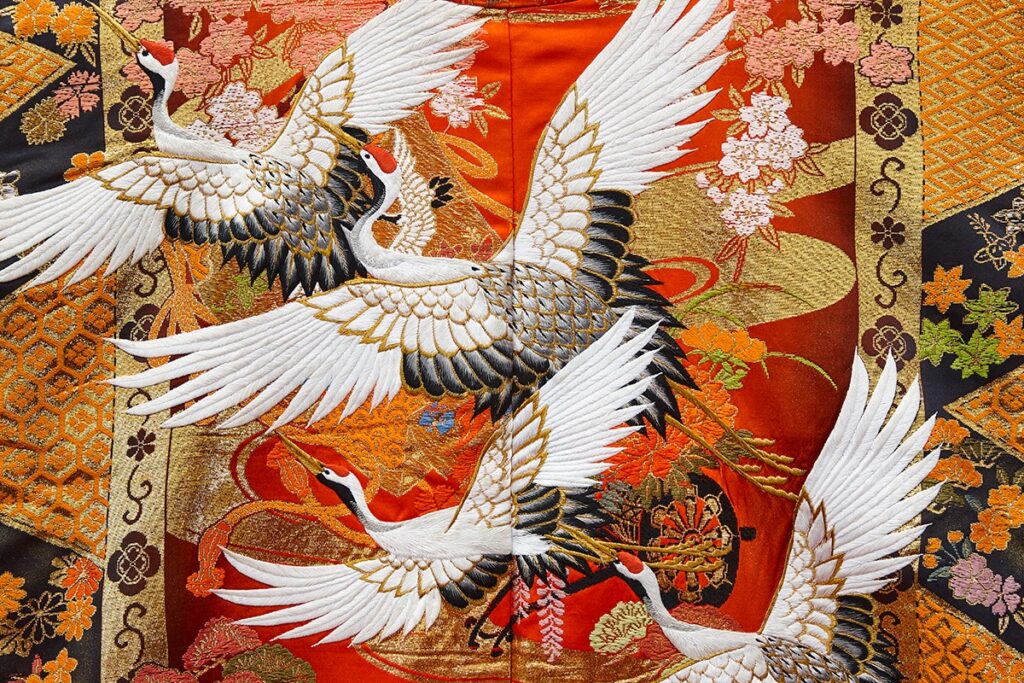
Japanese embroidery dates back roughly 1,400 years, beginning with the creation of Buddha statues. By the 17th century, embroidered kimonos became highly popular among townspeople. Edo Shishu, alongside the Kyo and Kaga styles, emerged as a leading style. Akin to a meticulous painting, an Edo Shishu piece may require tens of thousands of stitches. The unique luster of silken thread, which changes brilliance at different angles, gives these pieces a value and appeal distinct from paintings or photographs.
According to Yuzawaya, a major craft retailer, different techniques reflect distinct cultural backgrounds. Nihon Shishu originated over a millennium ago and was associated with the Imperial court and temple decor. It uses fine silk thread and metallic accents for highly detailed designs. By contrast, sashiko originated in rural Edo-era Japan as a functional way to mend and insulate garments. Farmers and fishermen used simple running stitches of white cotton thread on indigo-dyed fabric to make clothing more durable for cold northern climates.
Today, sashiko is celebrated for a wabi-sabi aesthetic that embraces imperfection and the natural aging of materials. Three of the most widely used motifs include:
- Asanoha (Hemp Leaf): Formed by radiating diamond shapes, this is one of the most recognized geometric designs.
- Seigaiha (Waves): Featuring overlapping concentric circles, it originated on ancient maps to represent the sea. It expresses wishes for peace and enduring strength, contrasting curved lines beautifully against linear stitching.
- Kikkō (Tortoiseshell): Made of interlocking hexagons, this pattern is heavily associated with good fortune and longevity.
Visitors can experience these crafts firsthand at Ekoin Temple in Tokyo’s Ryogoku district. Built in 1657 to mourn the victims of the Great Fire of Meireki, the temple now hosts private workshops. Artisan Kyoko Tanaka, who has over 2,000 embroidery pieces to her name, teaches participants the history of Japanese embroidery and guides them in stitching seasonal flowers onto white lace handkerchiefs.
Crafting the Shamisen: Japan’s traditional three-stringed lute
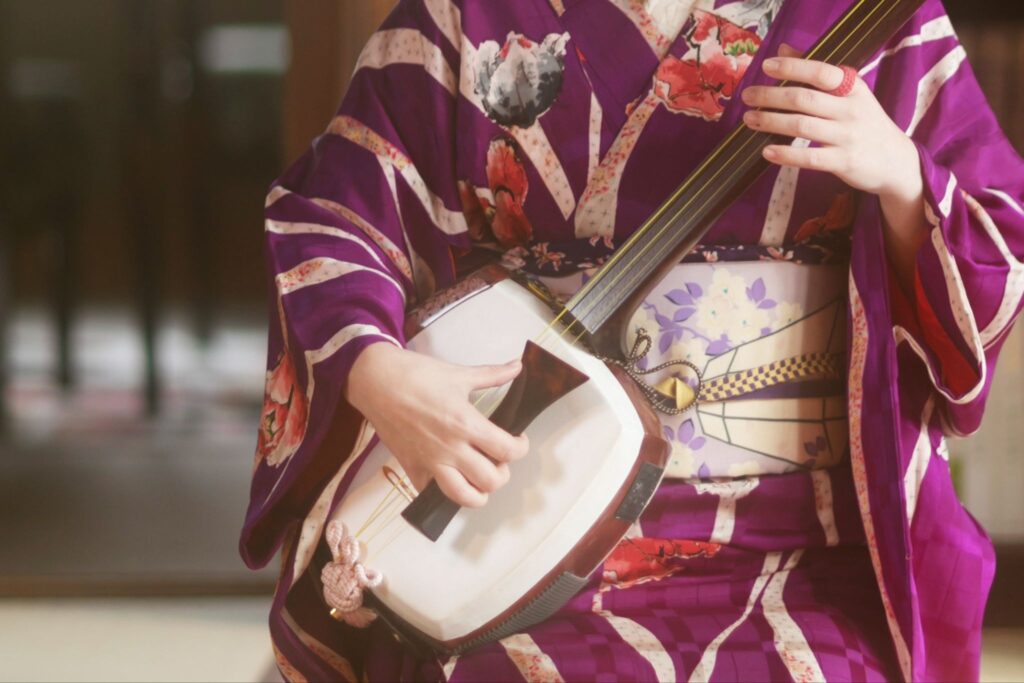
Yasuo Takeuchi is a sangenshi (shamisen maker) at Tokyo Shamisen Shop. He has practiced his art for 60 years and relies on decades of intuition to constantly test the instrument’s sound during production. His hands gently craft instruments that attract listeners with deep, weighted tones. He has been named a “Tokyo Meister” by the governor of Tokyo and was certified as a Contemporary Master Craftsman by the Ministry of Health, Labor and Welfare in 2013.
The craft, however, is heavily endangered. While the Asakusa area once housed 28 shamisen and koto shops, only two remain today. Takeuchi’s shop currently has no successor. Beyond the lack of apprentices, material costs are exorbitant. Crafting a shamisen requires imported red sandalwood from India, rosewood and Chinese quince from Thailand and Myanmar, domestic oak and mulberry, alongside specialty threads and animal skins.
Despite the challenges, a few notable providers continue to thrive. Mukaiyama, located in Edogawa Ward, is one of Tokyo’s leading musical instrument stores, accepting custom orders for shamisen and koto while offering expert repairs.
Further south in Kumamoto Prefecture, Wagakki Ichiba combines 90 years of experience with modern e-commerce. As Japan’s largest online retailer for traditional Japanese instruments for the past two decades, the shop has sold over 1,800 shamisen and 500 kotos. Their premium offerings include the Tsugaru shamisen with red wood and gold inlay, ensuring these traditional sounds continue to find an audience.
There are centuries-old crafts in Japan that define the country’s rich heritage. While many remain endangered due to a reliance on generational skill-sharing and a lack of successors, you can help preserve these artifacts by supporting the present-day artisans still hard at work.